
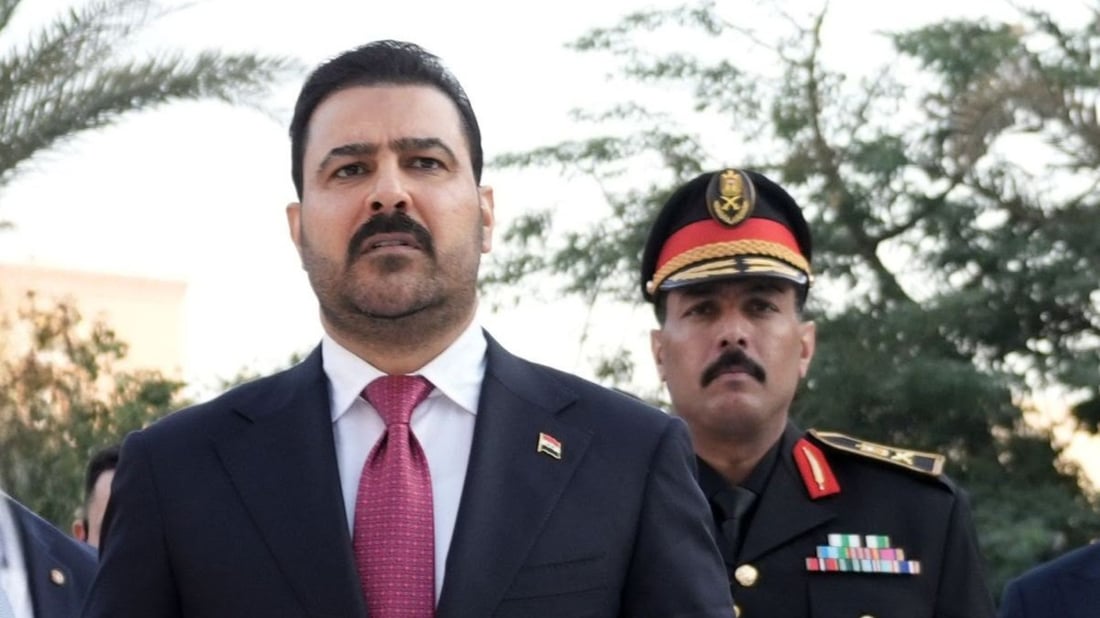
Iraqi Prime Minister Ali al-Zaidi
Zaidi fires border chief, orders Kurdistan Region border crossings under Baghdad control
BAGHDAD — Prime Minister Ali al-Zaidi on Tuesday ordered the federal government to take over every border crossing in the Kurdistan Region and removed Iraq’s border ports chief and Kirkuk’s two top security commanders after an inquiry into oil smuggling.
Zaidi also suspended the head of the state-owned North Oil Company and his deputies, told the Kurdistan Regional Government to issue no oil export permits without the federal Oil Ministry’s approval and sent the inquiry’s findings to the judiciary.
Sabah al-Numan, spokesperson for the commander-in-chief of the armed forces, announced the decisions after Zaidi reviewed the report of a special committee investigating suspected smuggling at the North Oil Company, the Kirkuk-based state company that runs oil fields across northern Iraq. The statement gave no timetable for the handover of the crossings and did not say how it would be carried out with authorities in Erbil.
Baghdad and Erbil have long been at odds over control of the Region’s oil production, exports and revenue, and in March the KRG’s Ministry of Natural Resources accused Baghdad of misrepresenting why exports had stopped through the Iraq-Turkey Pipeline.
The orders take the government’s campaign against oil smuggling beyond Jurf al-Sakhar, the northern Babil area where it began this month, to Kirkuk and the areas bordering the Kurdistan Region.
Zaidi relieved Lt. Gen. Omar al-Waeli, head of the Border Ports Authority, of his post. He dismissed the commander of the Kirkuk Operations Command and the Kirkuk police chief for failing to follow up on the smuggling of petroleum products, the statement said.
The commander of the Energy Police’s 1st Brigade, his deputy, the brigade’s intelligence director and the head of its checkpoints division were also relieved. The Energy Police is the Interior Ministry force that guards oil and power sites. The heads of the National Security Service and the Iraqi National Intelligence Service in Kirkuk were reprimanded.
The North Oil Company’s director general and his deputies were suspended pending an investigation by the Federal Commission of Integrity, and the company’s former director general was referred for investigation. The head of the Kirkuk inspection department at the state-owned Oil Products Distribution Company was relieved for failing to do his job.
Two officials at the Ministry of Industry and Minerals, the director general of industrial development and the director general of the Mining Industries Company, were suspended pending the commission’s investigation.
The statement did not name the other officials or say whether any of them had been charged.
The Federal Commission of Integrity will investigate the suspected violations and present its findings to a judge at the Central Anti-Corruption Criminal Investigation Court, the statement said.
Investigators are to audit contracts for the sale of petroleum products between the North Oil Company and other companies, among them al-Mihwar al-Fiddi, and check the quantities supplied. They will also compare the crude the Oil Ministry sent to the Bazian and KAR refineries in the Kurdistan Region with the amounts the refineries received.
The inquiry will look at suspected negligence by North Oil Company managers and staff, and at industrial licenses the Industry Ministry issued to factories and companies suspected of wasting public money. It will also examine payments to civilian guards hired to protect the company’s pipelines, after the investigation found that some guards were not at their posts.
Investigators will also look at petroleum products moved without laboratory tests and try to establish how much was exported from Iraq through crossings in the Kurdistan Region.
In the Region, the Oil Ministry was told to take over the management of all federal oil fields in Diyala, Kirkuk, Salah al-Din and Nineveh governorates that are under the KRG’s security control. The rule on export permits was meant to prevent overlapping responsibilities, the statement said.
The Border Forces Command was ordered to close all unofficial crossings on Iraq’s international borders, including those in the Region. The Defense Ministry’s 1st and 2nd joint coordination brigades will close unofficial roads and tracks between the Region and the four governorates.
The Energy Police will take over the protection of all oil fields and watch them with cameras, including federal fields under the Region’s security control.
The two brigades were part of a 17-point security agreement Baghdad and Erbil reached on Sept. 9. It was meant to stop smuggling networks and remnants of the Islamic State group from using the gaps between federal and Peshmerga positions. Under that deal, a committee headed by the Border Ports Authority was to survey the Region’s border crossings, close unauthorized ones and keep recognized ones open under joint administration.
Zaidi also ordered a single procedure for moving petroleum products between governorates and through border crossings, to be followed by every government agency involved. Pipelines and wells will be monitored by a national digital system to detect smuggling, and the Oil Ministry will fit electronic meters to every operating oil well in Iraq.
Engineering teams from the prime minister’s office will set up facilities at the checkpoints on the approaches to Sulaymaniyah, Erbil and Duhok. Staff from the Oil Ministry, the Energy Police and the National Security Service will work there, and new laboratories will test petroleum products headed into the three governorates. The statement did not say when the monitoring system, the meters or the laboratories would be working.
The Industry Ministry has six months to move oxidized asphalt and naphtha plants outside federal security control in Diyala, Salah al-Din, Kirkuk and Nineveh to sites within the same governorates where federal forces are in control.
Separately on Tuesday, the Oil Products Distribution Company said its Nov. 22 suspension of petroleum product supplies to industrial facilities in the Kurdistan Region did not cover cooking gas, liquefied gas plants or kerosene for households. Supplies to the affected factories and businesses would resume once they showed documents from the Industry Ministry confirming valid licenses and actual industrial activity, the company said.
Oil Minister Basim Mohammed Khudair al-Abadi said Monday that government committees were investigating suspected smuggling in northern Iraq and would make recommendations when they finished. He said violations had taken place at North Oil Company fields that had come under KRG control, but that investigators had not yet established how much oil had been smuggled. Iraq needs advanced monitoring equipment, early-warning systems and calibrated pipeline meters to detect tampering, he said.
The Federal Commission of Integrity formed an investigative team on Nov. 11 to look into suspected smuggling from fields between Kirkuk and the Kurdistan Region. On Nov. 17, parliament’s oil smuggling inquiry said it would send lawmakers to Kirkuk, Basra and Nineveh. Parliament Speaker Haibat al-Halbousi had also told it to examine intelligence that oil from the Kirkuk fields and the Kurdistan Region was smuggled through Iran to Afghanistan.
On Nov. 14, Zaidi removed nine senior security and oil officials after a government committee confirmed oil smuggling and found refineries in Jurf al-Sakhar. Among them were Babil’s police chief and the head of the state-owned Oil Pipelines Company. That official, Ali Abdul Karim al-Mousawi, has since been arrested, a source told 964media on Thursday. No official statement has confirmed the arrest.
Iraqi forces began replacing the brigades of Kataib Hezbollah, the Iran-aligned armed faction that holds Jurf al-Sakhar, on Friday, and the Energy Police took over the pipeline through the area. Kataib Hezbollah denies smuggling oil and has called the reports fabricated.
The campaign has also reached Najaf. On Saturday, a court ordered the arrest of provincial council energy committee chair Mohammed Ali al-Hasnawi and his brother over oil smuggling through a pipeline on their family’s land. Security forces arrested Hussein Ali al-Hasnawi, the emir of the Bani Hassan tribes, the same day, and military intelligence seized an excavator and its driver on Monday. Tribal leaders said the emir was held over digging on his land, not over the pipeline, and that he and the council member were innocent.
On Sunday, the Supreme Judicial Council said a suspect and several Energy Police personnel guarding an oil pipeline between Basra and Dhi Qar governorates had been detained, after investigators uncovered what it described as an organized operation to puncture the pipeline and carry the crude away in tanker trucks.