
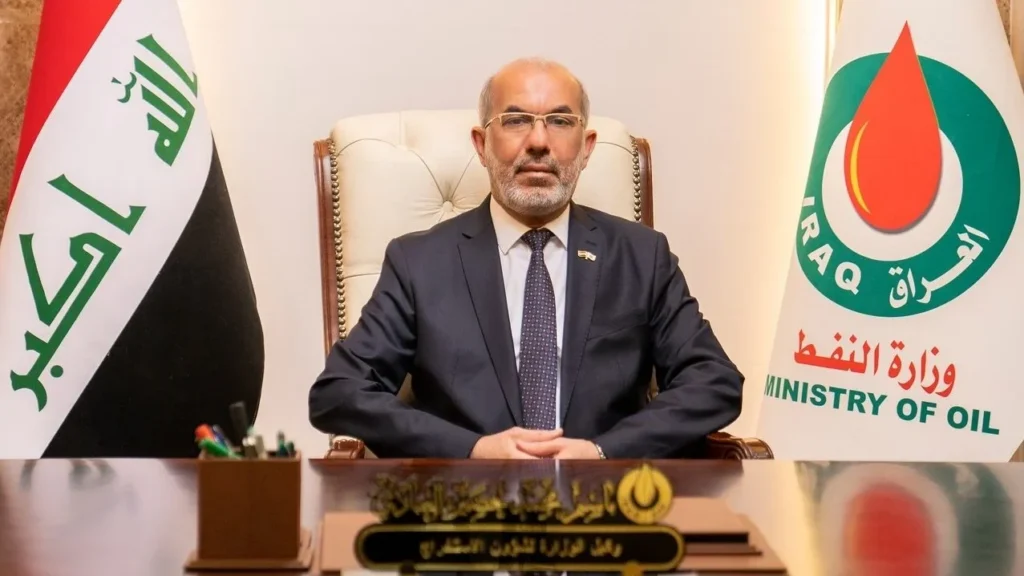
Iraqi Oil Minister Basim Mohammed Khudair al-Abadi at his office in Baghdad
Iraq oil minister denies resigning, says he is under pressure
BAGHDAD — Iraqi Oil Minister Basim Mohammed Khudair al-Abadi on Monday denied reports that he had resigned and said he was under pressure from several parties over his efforts to fight corruption in the ministry.
His remarks came hours after local media reported, citing unnamed sources, that Prime Minister Ali al-Zaidi was considering dismissing him for failing to act against oil smuggling. 964media could not verify the reports, and Abadi did not address them.
“The resignation story is completely untrue,” Abadi told the state-run Iraqi News Agency. “I hold a trust, and when I decide to resign in the future, I will declare it openly,” he said, adding that he would announce any such decision to the government and the media.
Taking office imposed “a national and moral duty to preserve the country’s oil wealth,” he said. That duty included putting qualified people in the right posts and pursuing corruption cases inside the ministry, he said.
Those steps were not easy because the ministry was under pressure from several parties, but the pressure would not stop him from doing his job, Abadi said. He did not name the parties.
Judging the minister and the ministry was the government’s job and should rest on results on the ground, he said. Any future decision to resign would depend mainly on his performance and on what happens next, he said.
Abadi, a former deputy oil minister, took office in May with Zaidi’s government. He did not link his remarks to the oil smuggling case in Jurf al-Sakhar, an area in northern Babil governorate that the government says is held by the Iran-aligned faction Kataib Hezbollah.
On Nov. 14, Zaidi relieved nine security and oil officials and ordered everyone accused of the smuggling referred to the courts. Those removed included the director of the Oil Ministry’s state-owned Oil Pipelines Company. Zaidi’s investigating committee had confirmed an Interior Ministry intelligence report on oil smuggling and found refineries in the area, his military spokesperson said.
The next day, a parliamentary committee hosted Abadi and senior ministry staff for a briefing on oil smuggling in Jurf al-Sakhar, Kirkuk and the Kurdistan Region, INA reported.
Ali Nuhair al-Saadi, a member of parliament’s Security and Defense Committee, told Shafaq News on Nov. 16 that some of the smuggling had been given legal cover through letters and approvals issued by the Oil Ministry. Further measures could reach the ministry, he said. 964media could not verify the claim.
A judicial committee inspected the suspected smuggling sites in Jurf al-Sakhar on Tuesday, Nov. 17. Ali Abdul Karim al-Mousawi, the ousted director general of the Oil Pipelines Company, has since been arrested over confessions to the judiciary about oil smuggling, a source told 964media on Thursday. The source did not say whose confessions they were.
On Saturday, government spokesperson Haider al-Aboudi said authorities had not ruled out arresting influential figures, officials and politicians in the case, which has gone to the judiciary. Anyone whose name appears in the investigations will face legal accountability, he said.
Kataib Hezbollah denies smuggling oil and has called the reports fabricated. Iraqi forces began replacing the faction’s Popular Mobilization Forces brigades in Jurf al-Sakhar on Friday, and the Energy Police took over the 5-kilometer stretch of oil pipeline that crosses the area.