
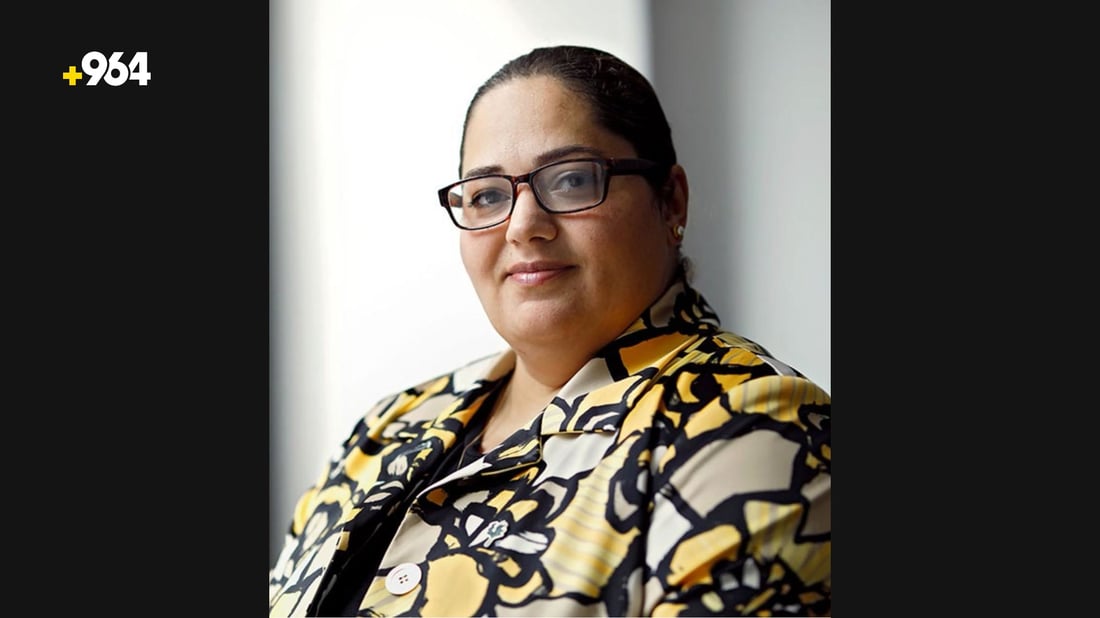
Tanya Gilly Khailany is co-founder and vice president of the SEED Foundation
Opinion
The child brides our statistics do not see
The Kurdistan Region’s General Directorate of Combating Violence Against Women and Family received nearly 12,500 complaints last year, and its director general says the trend is rising sharply. Physical violence, family disputes, sexual abuse and online violence are among the cases the directorate works on. Still, anyone who works in protection will tell you how rarely a child marriage case turns up among them.
The last time official figures on child marriage were made public, 81 cases of forced marriage were recorded across the entire Kurdistan Region between 2018 and the middle of 2023. Eighty-one, in five and a half years.
I have been doing this work for more than 20 years, and I would be surprised to meet anyone here who thinks these numbers reflect reality. The government’s own 2021 women’s survey found that more than one in five women aged 15 and older in the Kurdistan Region had married before 18. Our courts registered 61,328 marriages last year, a fifth more than the year before.
Unfortunately, child marriage is common here, but complaints about it almost never happen. That is despite our domestic violence law, Law No. 8 of 2011, which names child marriage as a form of domestic violence, punishable by prison.
Federal Iraq is worse, and its figures are older. The Planning Ministry’s 2018 household survey, still the latest full count, found that 28% of women aged 20 to 24 had married before 18. Unicef’s child marriage data for Iraq use the same figure.
The judiciary’s numbers are harder to look at. The Supreme Judicial Council recorded the divorces of 2,594 girls under 15 in courts outside the Kurdistan Region in 2021, up from 1,498 the year before. A girl divorced at 14 was married at 12 or 13, and an Iraqi judge signed the papers ending it.
Then there is the amendment to Iraq’s Personal Status Law that was passed last year, which gets described wrongly, often by people on our side. Parliament did not legalize marriage at age nine in January 2025. That clause was in the August 2024 draft, and Iraqi women fought and had it taken out. What passed in January let couples choose whether the 1959 civil Personal Status Law or a sect-based code would govern their marriage and family affairs. On Aug. 27, 2025, parliament approved the Jaafari code. It sets no minimum age for marriage. It simply says puberty, which Jaafari jurisprudence reads as nine lunar years for a girl.
So the age of a bride has moved out of the statute book, where parliament votes on it and the public can fight it, and into sectarian jurisprudence, where neither can happen.
The Kurdistan Region has done better, and I want to say that plainly. In 2018, Duhok and Sulaymaniyah had the lowest rates in the country, 8.1% and 13.5%. Our minimum age is 18, though judges can allow 16. The Jaafari code is not applied here, and the senior judge at Erbil’s Personal Status Court has said it would need a vote in the Kurdistan Region’s parliament before it could be applied.
That vote is what worries me. Our protection rests on something parliament has not done. Silence is a thin wall, and it holds only until the politics change.
Our courts count badly too. The Kurdistan Region Judicial Council’s 2025 figures show marriages by governorate and even note the 107 second marriages approved. They have no column for the bride’s age. We count second wives. We do not count child brides.
What protects girls is known. A 2023 UNFPA study, using the federal and Kurdistan statistics offices’ survey data, found that girls attending school were 97% less likely to marry between 15 and 18 than girls who had never been to school. Of the girls who said they left school to marry, seven in 10 had married before they turned 17. The years that matter are roughly 14 to 17, when dropping out peaks. The girls who get through them unmarried are, overwhelmingly, the ones still in a classroom.
The Kurdistan Region can make four changes to protect our girls, none of which are expensive.
First, put the Region’s refusal of the sect-based codes into law. Do not leave it to interpretation and the Federal Supreme Court.
Second, raise the judicial exception from 16 to 18 and enforce it. The UN Committee on the Rights of the Child asked Iraq for this in May 2025, and it named the Kurdistan Region as well.
Third, publish every bride’s age in the Judicial Council’s marriage and divorce figures. It is one more column.
Fourth, connect the courts and the schools to the directorate. When a marriage involving a girl under 18 comes before a court, whether it is being performed there or was performed outside it, the judge should safely refer the case to the directorate. When a girl under 16 leaves school to get married, the school should do the same. A complaint system can only count what reaches it, and right now almost none of this does.
Baghdad has one job above the others: to punish the officiant. UN figures put a third of Iraqi marriages outside the registry, with girls under 14 in 22% of those. No federal law penalizes the officiant, so no age parliament sets will stop him.
Friday was World Children’s Day, held this year under the theme “My Day, My Rights, My Future.” For child brides, all three begin with being counted. The next chance to see them clearly is already under way: the next national survey, run with Unicef, is in the field. When its results come out, I want the Kurdistan Region’s figure to be well under one in five. I would also like us to know it is falling before a survey tells us. We can only do that through legal protections, accurate data and real accountability.
Tanya Gilly Khailany is co-founder and vice president of the SEED Foundation, a women-led organization in the Kurdistan Region that works on gender equality, child protection, human trafficking and mental health. She was an Iraqi MP from 2006 to 2010.