
Daily currency exchange rates
Dinar up
Dollar edges lower in Iraq’s parallel markets, remains above official rate
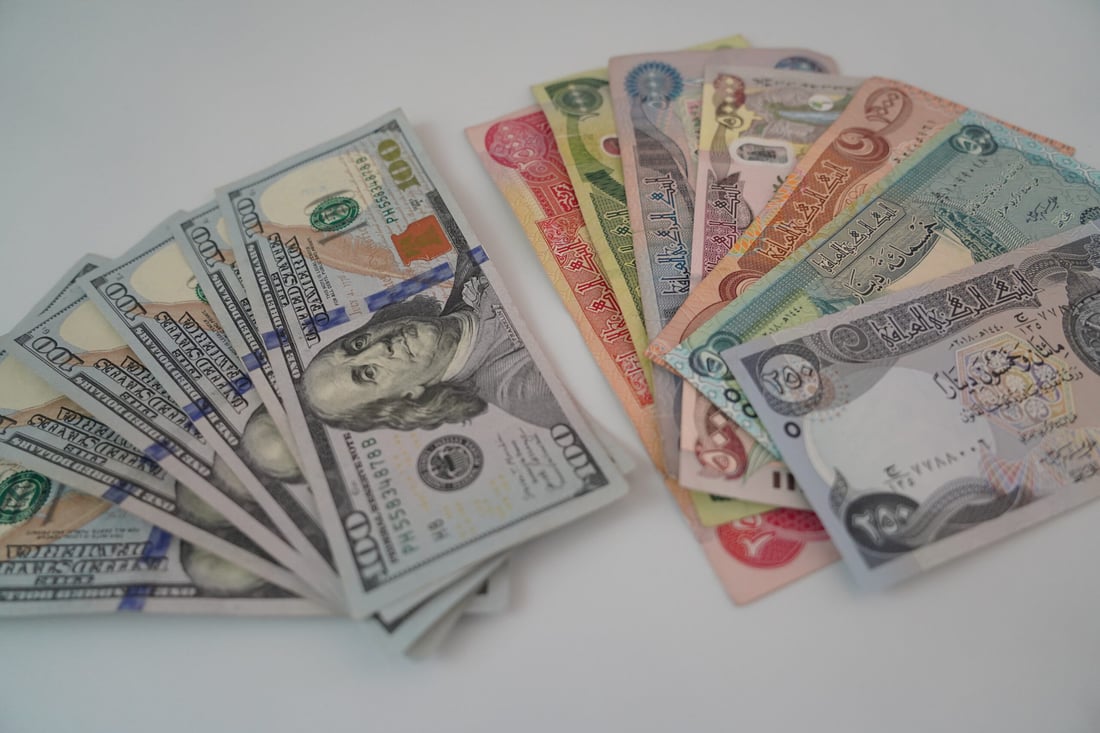
BAGHDAD — The dollar edged down against the Iraqi dinar on the parallel market on Wednesday, selling for 168,250 dinars per $100 in Baghdad, about 11% above the Central Bank of Iraq’s official rate of 152,000.
Exchange shops in Baghdad bought the dollar for 167,250 dinars per $100, with both rates down 250 dinars from Tuesday’s 168,500 and 167,500.
In Erbil, the selling rate fell to 167,700 dinars per $100 from 168,000 on Tuesday, and the buying rate to 167,100 from 167,350. In Basra, the dollar sold for 168,000, down from 168,100, and was bought for 167,500, down from 167,750.
Across the three cities, the dollar traded between 167,100 and 168,250 dinars per $100, below the 169,000 selling rate recorded on Saturday.
Prime Minister Ali al-Zaidi said Friday that Washington would send $1 billion in cash to Iraq and that the parallel rate would soon fall to 155,000 dinars per $100. He gave no delivery date.
Two aircraft carrying dollars have arrived, each with about $500 million, Mahmoud Dagher, an adviser to the Central Bank governor and the bank’s spokesperson, told the state-run Iraqi News Agency on Tuesday. More shipments will follow in the coming days, according to the prime minister’s statements, Dagher said, adding that their arrival depended on security conditions. He did not say when the two aircraft landed.
Government spokesperson Haider al-Aboudi said on Oct. 14 that the government and the Central Bank had a plan to bring the parallel rate down to 155,000 dinars per $100, backed by enough reserves to keep financing trade and imports, without saying how.
Since Oct. 7, the Central Bank buys dollars from the Finance Ministry at 1,500 dinars, sells to banks at 1,510 and sets the public rate at 1,520, up from 1,300, 1,310 and 1,320. In his interview with Al-Iraqiya TV on Friday, Zaidi said keeping the old exchange rate would have left future governments with problems “that would be impossible to resolve.”
Zaidi told the parliament speaker and committee chairs on Oct. 8 that devaluation was necessary to keep paying salaries without more borrowing, after the government had weighed compulsory savings deducted from salaries, paying public employees every 45 days and taking on more debt.