
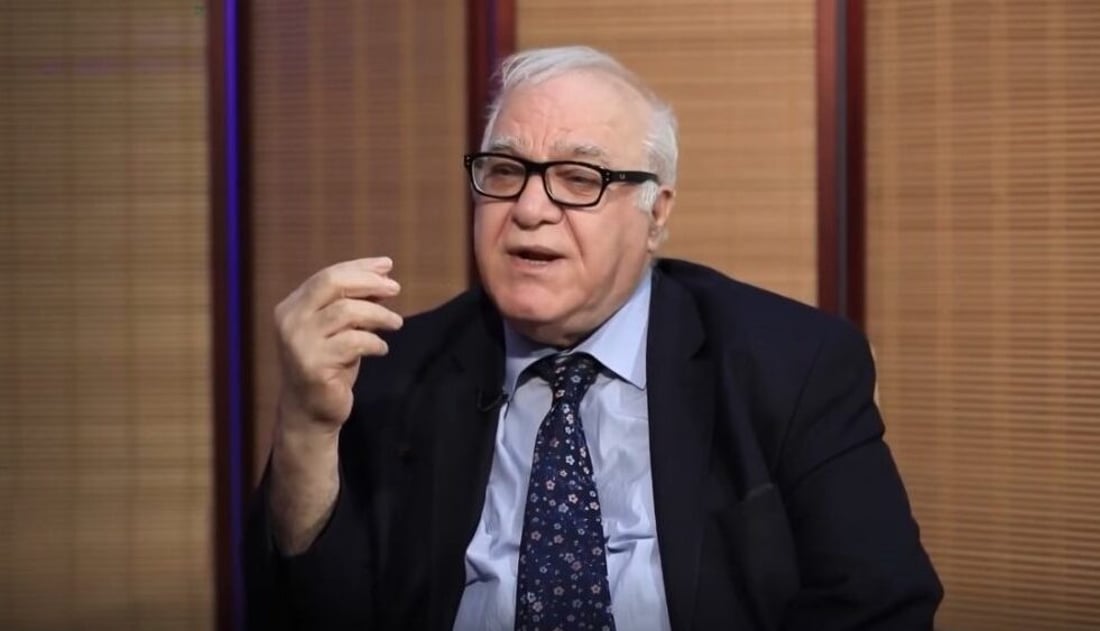
Prime Minister’s financial adviser Mazhar Mohammed Salih
Digital dinar could draw hoarded cash into Iraq’s banks, PM adviser says
BAGHDAD — A digital dinar could draw cash hoarded outside Iraq’s banks into savings and lending and make payments more transparent, Prime Minister Ali al-Zaidi’s financial adviser, Mazhar Mohammed Salih, said Wednesday.
Salih told the state-run Iraqi News Agency that the electronic dinar, as he called it, would be a digital extension of the existing dinar, not new money, if it rested on a full legal, technical and regulatory framework. He said it would make payments and transfers faster and give more people access to banking.
“The electronic dinar does not automatically create additional liquidity, but rather raises the efficiency of managing existing liquidity,” he said.
It would help move money out of cash circulation and hoarding and into savings, credit and productive investment, Salih said. He said it could also reduce unregulated financial dealings.
Iraq has important foundations for joining the digital economy, he said, but the project would need better telecommunications infrastructure, stronger cybersecurity, updated legislation and greater public trust in electronic transactions.
Salih praised the Central Bank of Iraq’s work on electronic payment systems, digital wallets, bank cards and the national payments and settlement infrastructure. He said this had laid the groundwork for more advanced financial services.
“The next stage requires integrating efforts among the Central Bank, the government, banks and the private sector,” he said.
He gave no timetable or technical details and did not say whether the Central Bank had decided to issue the currency. Salih made a similar case to INA in August, calling a digital dinar a promising strategic project but warning that it would not solve Iraq’s cash shortage on its own.
Iraq’s economy still runs largely on cash. About 102 trillion dinars (about $77 billion at the time), nearly 92% of the currency issued, was held outside banks at the end of June, according to Central Bank data.
Central Bank spokesperson Mahmoud Dagher said on Nov. 10 that account openings, card issuance and electronic payments inside Iraq had grown clearly over the past three years, with domestic electronic payments now running into trillions of dinars.
On Nov. 8, the bank told banks and payment companies to apply the official rate of 1,520 dinars per dollar to card payments abroad and to keep fees to a minimum. It said it wanted to encourage electronic payments.
In July, the bank cut travelers’ monthly cash dollar allowance from $3,000 to $2,000 and urged them to use cards instead. It raised the allowance to $3,000 from Nov. 3, available once every two months.
The digital dinar is a separate matter from removing zeros from the currency. The Central Bank denied on Aug. 26 that it had printed notes with zeros removed, and a government source told INA on Oct. 1 that no plan or timetable had been approved.