
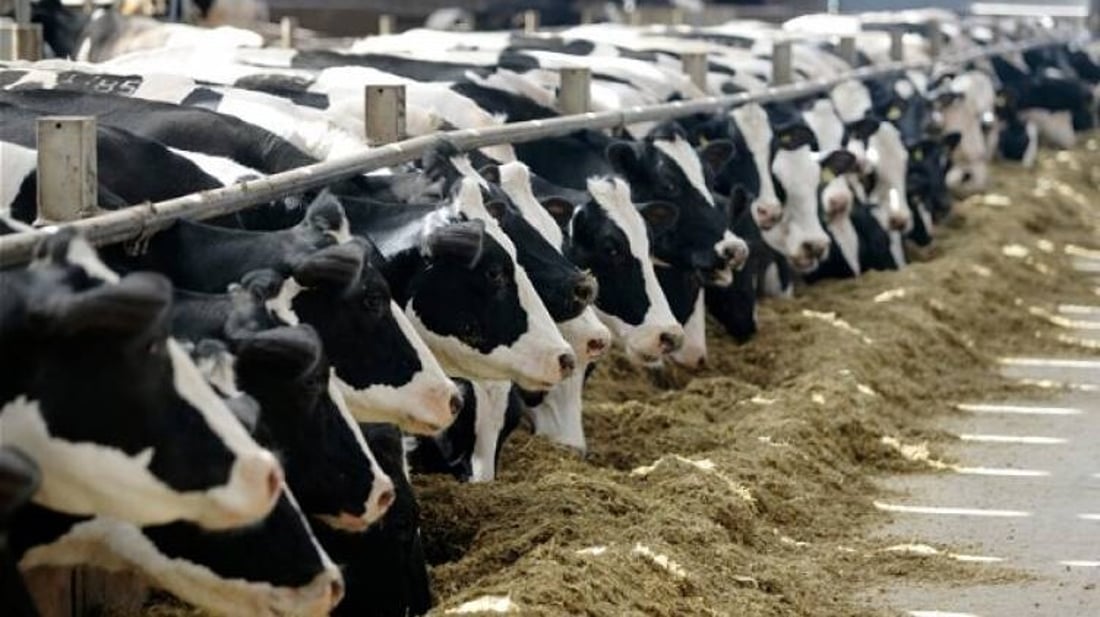
Iraq to widen state loans for livestock and poultry farms from early 2027
BAGHDAD — Iraq plans to let more livestock and poultry projects borrow from the state-owned Agricultural Cooperative Bank from early 2027, to raise local output of meat, dairy and eggs, the Agriculture Ministry said Tuesday.
Ministry spokesperson Qusay al-Hattab told the state-run newspaper Al-Sabah that the bank, which falls under the Finance Ministry, already had funds set aside for both crop and livestock projects. The ministry intends to extend that lending to more animal farming businesses next year, he said.
Hattab gave no figure for the money available, the number of projects expected to benefit or the repayment terms.
Supporting livestock breeders would strengthen Iraq’s food security and put more locally produced meat, dairy and eggs on domestic markets, he said.
The ministry’s Livestock Department works with private livestock farms, broiler farms and egg producers, supporting them and monitoring their output, Hattab said. The businesses must file detailed monthly reports on how much they produce and supply to the market.
The ministry uses those reports to track how much is available in local markets and to identify the projects’ financing needs and problems, so it can plan to raise output, he said.
On Nov. 7, Hattab told the state-run Iraqi News Agency that the ministry was already financing integrated livestock projects for breeders and unemployed agricultural engineers through the bank, at up to 700 million dinars (about $460,000 at the official rate) a project. Some of those projects had raised output, he said, while others had stopped operating.
The plan follows the ministry’s own report of a shortfall in egg production. On Oct. 31, Hattab said Iraq produced about 6 billion eggs a year against a need of about 9 billion, five months after the ministry reported a 2025 surplus of 1.2 billion eggs. He did not explain the difference between the two sets of figures.
In September 2025, the ministry banned imports of frozen chicken and processed poultry to protect local producers. After the dinar was devalued on Oct. 7, Prime Minister Ali al-Zaidi postponed customs duties and taxes on imported eggs, chicken and livestock, and the Cabinet later exempted all imported food from customs duties.
Producers say the trade is shrinking. In Hamdaniya, in Nineveh governorate, a broiler farmer told 964media on Nov. 5 that most poultry houses around his family’s farm, once about 100, had stopped production. He blamed economic conditions, migration and damage to farms.
In January, the ministry began rolling out an electronic farmer card that records holdings and livestock for every farmer, which it said would also simplify applications for agricultural loans.
In March 2025, the ministry said it was activating a subsidized agricultural loan fund for crop and livestock production, marketing and food processing, with repayment over one to 10 years depending on the project.