
Est. 1980
Hamdaniya’s poultry trade shrinks as one family keeps its farm going
NINEVEH — Bassam Khader Karoumi’s family has raised broiler chickens in Hamdaniya since 1980, but most of the roughly 100 poultry houses that once worked around their farm have stopped production, he told 964media.
Karoumi blamed economic conditions, migration, damage to some farms and the closure of others. He estimated that the farms still running hold about 100,000 chickens between them and said the number of people working in the trade has fallen from about 400 to 500 to between 40 and 50.
Hamdaniya district, whose main town is the largely Christian Qaraqosh, lies southeast of Mosul in the Nineveh Plain. The Islamic State group held it from August 2014 until Iraqi forces retook it in October 2016.
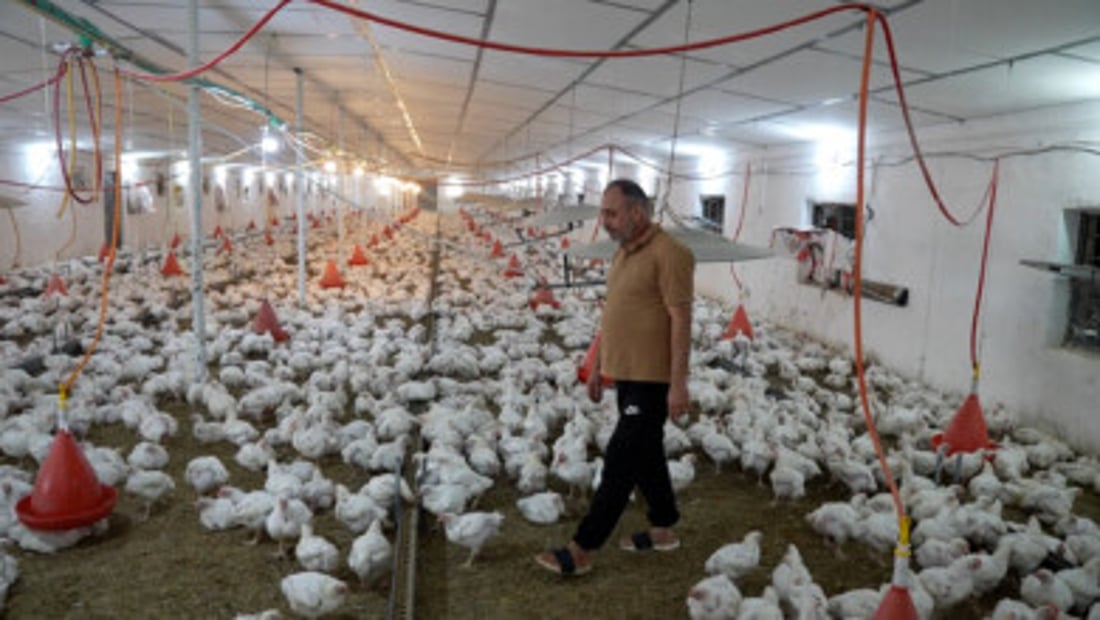
Karoumi’s farm raises chickens for meat rather than egg-laying hens. Its poultry house holds about 9,000 birds, and the current production cycle has about 6,500.
The chickens are ready for sale at 35 to 50 days old, weighing 1.5 to 3 kilograms depending on conditions and growth. Their feed is soybeans, wheat, corn, vitamins and toxin-binding supplements.
The farm makes no set profit from one cycle to the next, Karoumi said, because its income depends on market prices for chicken, which he said swing between about 2,000 and 3,500 dinars (about $1.20 to $2.10 at the street rate).
Iraq’s Agriculture Ministry announced a ban on imports of frozen chicken, chicken parts and processed poultry in September 2025 to protect local producers. After the dinar was devalued on Oct. 7, Prime Minister Ali al-Zaidi postponed customs duties and taxes on imported eggs, chicken and livestock.
The work runs around the clock. Workers rotate through day and night shifts of about six hours each to watch the chickens, give them feed and water and check their health.
Karoumi’s son, brother and nephew work with him. Over the years, he said, the family has learned to spot the signs of disease before calling a veterinarian to diagnose and treat the birds.
Bird flu and Newcastle disease, a highly contagious viral infection of poultry, are the diseases local farmers fear most, Karoumi said. He said prevention depends on biosecurity, vaccination, constant monitoring and veterinary treatment when birds fall ill.
In October 2025, Nineveh veterinary officials recorded a bird flu case at a farm in nearby Bashiqa and said it had been contained.
Karoumi called poultry farming sensitive work that needs close attention, given the risk of disease, swings in the market and the economic pressure on farm owners.
The Nineveh Plain has long been known for farming, livestock and poultry, he said. Despite the decline, families in the area still keep up those trades and pass on what they know, as his family has done for more than four decades.