
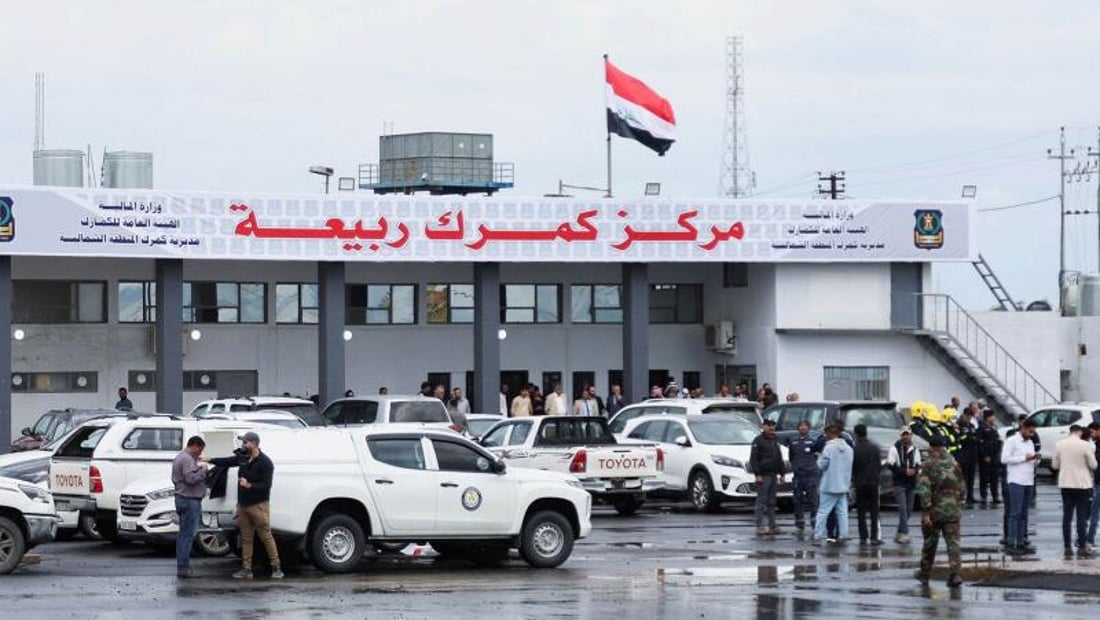
Vehicles and personnel outside the Rabia Customs Center in Nineveh governorate, near Iraq’s border with Syria
Iraq exempts food and medicine from customs duties after dinar devaluation
BAGHDAD — Iraq’s Cabinet has exempted all imported food and medicine from customs duties, backdated to Oct. 7, the day the dinar was devalued, to protect food security and public health, the government said Wednesday.
The decision was taken at Tuesday’s Cabinet meeting chaired by Prime Minister Ali al-Zaidi. The statement did not say how long the exemption would last, how it would be applied, or whether importers who had paid duties since Oct. 7 would be refunded.
On Oct. 7 the official selling price of the dollar rose from 1,320 to 1,520 dinars, the first change since 2023, raising the cost of dollars bought at the official rate to pay for imports. The parallel market passed 170,000 dinars per $100 in Baghdad and 180,000 in Erbil after the change and stood at 163,000 to 164,000 on Sunday.
The Coordination Framework’s blocs called on Oct. 8 for a protected basket of essential goods, including food, medicine and construction materials, to be exempted from customs duties for six months, alongside measures to curb currency speculation and stop traders exploiting the devaluation. Zaidi had already postponed customs duties and taxes on imported eggs, chicken and livestock on Oct. 8. The Finance Ministry also suspended an advance customs collection mechanism on Oct. 7 that had required importers to pay duties before transferring money abroad.
The devaluation disrupted trading in local markets. In Mosul’s Bab al-Saray food market, some merchants stopped selling on Oct. 8 while they repriced, with rice, cooking oil, tomato paste and sugar all rising. Economist Nabil al-Marsoumi has argued that better customs and tax collection could raise much of the 10 trillion to 11 trillion dinars a year he estimates the devaluation will bring in.