
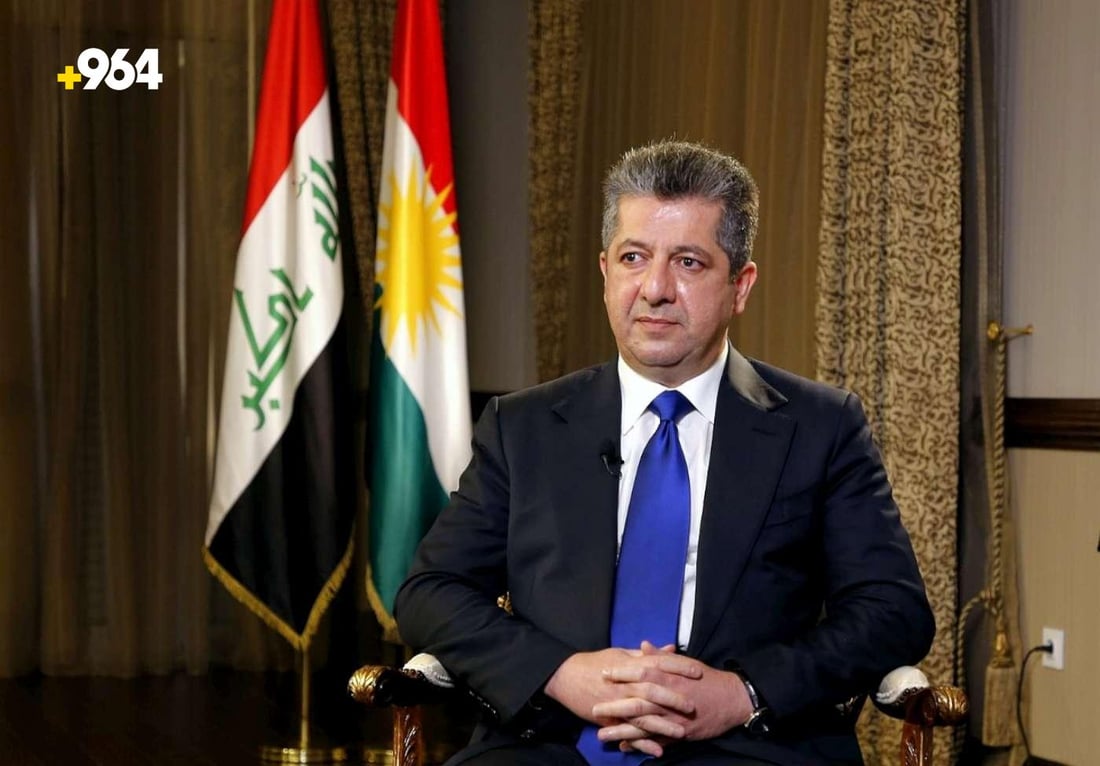
KRG Prime Minister Masrour Barzani
Masrour Barzani rejects Zaidi’s border and oil orders as ‘unacceptable’
ERBIL — Kurdistan Region Prime Minister Masrour Barzani on Tuesday rejected Iraqi Prime Minister Ali al-Zaidi’s orders placing the Region’s border crossings under federal control and widening Baghdad’s authority over its oil, saying they contradicted earlier talks between the two governments.
“What was done today is truly surprising and in no way acceptable,” Masrour Barzani told reporters in Erbil.
He said his government had been taken aback by the decisions, which ran against the substance of its negotiations with federal authorities. Federal representatives had visited the Region several times with messages that disputes would be settled through dialogue and solutions based on Iraq’s constitution, he said.
His government would comply with constitutional decisions but would not accept measures it considered unconstitutional, he said. He rejected suggestions that the Region itself would act outside the constitutional framework.
Masrour Barzani said his government’s priority was serving the Region’s people and preserving its constitutional status, and that disputes with Baghdad should be settled within the constitution.
Zaidi issued the orders earlier Tuesday after an inquiry into suspected oil smuggling at the North Oil Company, the Kirkuk-based state company that runs oil fields across northern Iraq. He ordered the federal Border Ports Authority to take over all crossings in the Kurdistan Region, removed the authority’s head, Lt. Gen. Omar al-Waeli, and dismissed Kirkuk’s operations commander and police chief. He also suspended the company’s director general and his deputies and sent the inquiry’s findings to the Federal Commission of Integrity and the judiciary.
Under the orders, the Kurdistan Regional Government may not approve exports of crude or petroleum products without the federal Oil Ministry’s authorization. The ministry is to take over the management of federal oil fields in Diyala, Kirkuk, Salah al-Din and Nineveh governorates that are under the KRG’s security control.
The Border Forces Command was told to close unofficial crossings on Iraq’s international borders, including the Region’s, and two Defense Ministry joint coordination brigades will close unofficial roads between the Region and the four governorates. The Energy Police, the Interior Ministry force that guards oil and power sites, will protect the oil fields and monitor them with cameras.
Baghdad gave no timetable for the handover of the crossings and did not say how it would be carried out with Erbil.
The orders came two weeks after Zaidi and Masrour Barzani met in Baghdad on Nov. 9 to discuss the Region’s share of the 2027 federal budget, the management of oil fields, oil and non-oil revenue, public-sector salaries and the long-stalled oil and gas law. Both sides agreed to work toward settling their disputes under the constitution, Zaidi’s office said.
After those talks, Masrour Barzani said the two governments had reached understandings on protecting salaries and keeping a single budget allocation for the Region. He also spoke of cooperation on raising Iraq’s oil production and said disputes should be settled through constitutional means.
The two brigades now ordered to close the roads were set up under a 17-point security agreement Baghdad and Erbil reached on Sept. 9. Under that deal, a committee headed by the Border Ports Authority was to survey the Region’s crossings, close unauthorized ones and keep recognized ones open under joint administration.
Budget allocations and oil revenue have also divided the two governments. On Monday, government spokesperson Haider al-Aboudi said salaries for the Region’s public employees would not be tied to other disputes, calling that a binding directive from Zaidi.
Masrour Barzani leads an outgoing cabinet. The Region has had no new government since its Oct. 20, 2024, parliamentary election, and on Nov. 5 the Patriotic Union of Kurdistan said it was quitting the KRG. On Nov. 9, Kurdish leader Masoud Barzani urged the PUK to sit down with his Kurdistan Democratic Party and end the Region’s political crisis, saying the interests of the Region’s people outweighed every other interest.