
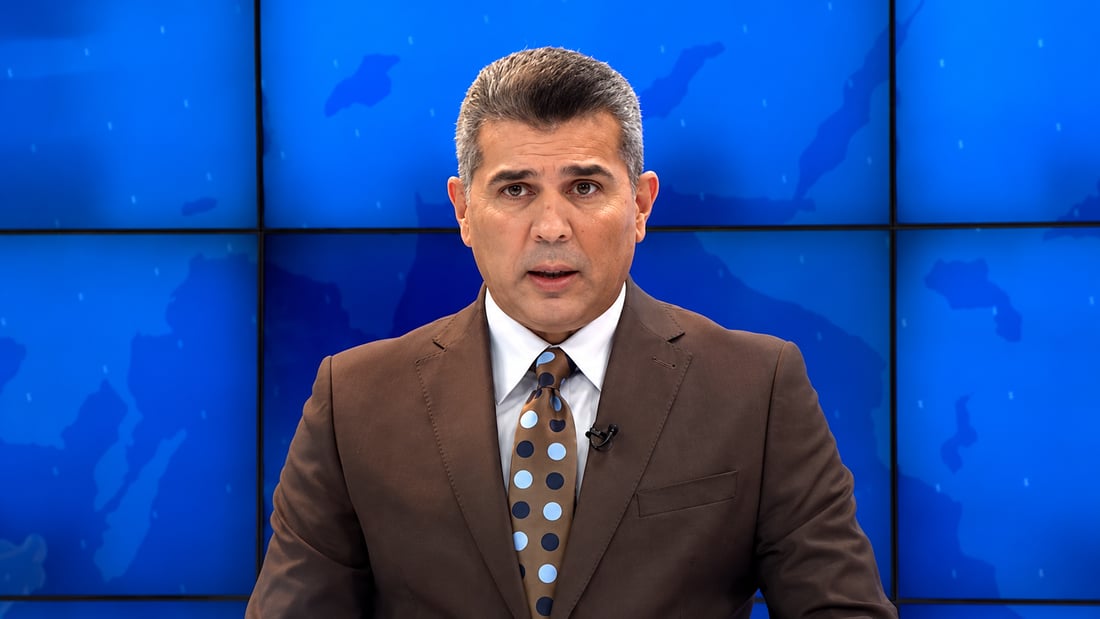
Security Media Cell chief Lt. Gen. Saad Maan
Baghdad and Erbil agree 17-point security plan on borders and crossings
BAGHDAD — The federal government and the Kurdistan Region have agreed a security arrangement of about 17 points covering border control, the closure of unofficial crossings and expanded intelligence and operational coordination, the Security Media Cell chief said.
The agreement followed a meeting at the commander-in-chief’s office attended by its director Lt. Gen. Abdul Amir al-Shammari, the heads of the Counter-Terrorism Service and Border Ports Authority, senior federal commanders, the Peshmerga chief of staff and representatives of formations in Erbil and Sulaymaniyah, Lt. Gen. Saad Maan told the Iraqi News Agency. Iraq was moving toward “one sovereign security decision within one state that does not affect the particularity of the Peshmerga,” he said.
Two joint coordination brigades will be activated to stop Islamic State remnants and smuggling networks exploiting gaps between federal and Peshmerga forces. A committee headed by the Border Ports Authority will survey the crossings and the Region’s frontier, closing unofficial ones while those meeting legal requirements stay open under joint administration. Federal Border Guard deployment will expand with Peshmerga support, particularly on the Turkish border. Joint communication centres in Erbil and Sulaymaniyah will coordinate arrests of people wanted by the judiciary, and the two sides agreed to deal with foreign workers breaching residency rules and to expand joint operations against drug trafficking.
Maan said the talks were held with “complete harmony and a high level of understanding” and that no points of disagreement were recorded.
The two sides agreed in May to form a joint committee to survey the Region’s border strip and identify recognised crossings, followed by a customs agreement on unified procedures. Border Guard forces said in March they were working with Peshmerga and Asayish on the Iranian border.