
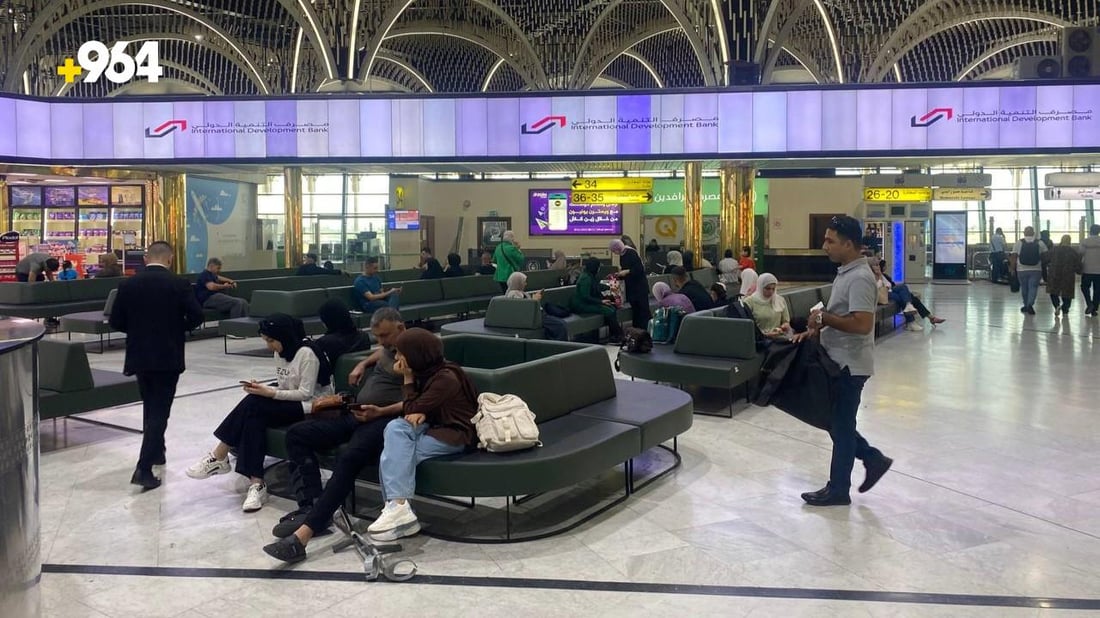
Passengers wait inside Baghdad International Airport
Central Bank cuts travelers’ monthly cash dollar allocation to $2,000
BAGHDAD — Iraq’s Central Bank has cut the monthly cash dollar allocation for travelers from $3,000 to $2,000 under new regulations it said are meant to improve foreign currency management and encourage greater use of electronic payment cards.
The bank said Wednesday the new instructions set the monthly cash allocation for each adult traveler at $2,000, down from $3,000, as part of efforts to improve the management of foreign currency sales, increase the efficiency of resource distribution and align with international banking standards.
The measure is part of a broader package of regulatory reforms aimed at ensuring foreign currency reaches all citizens while supporting stability in the cash market, the bank said. It described the changes as “purely regulatory,” meant to strengthen its ability to respond to economic shifts efficiently and sustainably while keeping pace with global developments in payment systems.
The bank said the measures encourage travelers to use electronic payment cards, including credit and prepaid cards, as “a primary and secure means” of covering travel expenses abroad, reducing reliance on cash and supporting Iraq’s transition toward a digital economy. It said the reforms are also intended to strengthen confidence in the banking sector.
Iraq provides the cash dollar allocation as part of the Central Bank’s foreign currency sales system, letting citizens buy a limited amount of U.S. dollars at the official exchange rate before traveling abroad for tourism, medical treatment, education, business or religious pilgrimages. The scheme was designed to ensure travelers access foreign currency through licensed banks and exchange companies rather than relying solely on the parallel market, while helping the Central Bank manage the country’s dollar supply.
The system has also become a target for arbitrage because of the wide gap between Iraq’s official exchange rate of 1,320 dinars per U.S. dollar and the current parallel-market rate of about 1,530. That disparity lets some people buy dollars at the subsidized official rate and resell them on the black market for a profit. The Central Bank said cutting the monthly allocation is part of a broader effort to curb such practices while steering travelers toward electronic cards, which are easier to monitor and less open to misuse.