
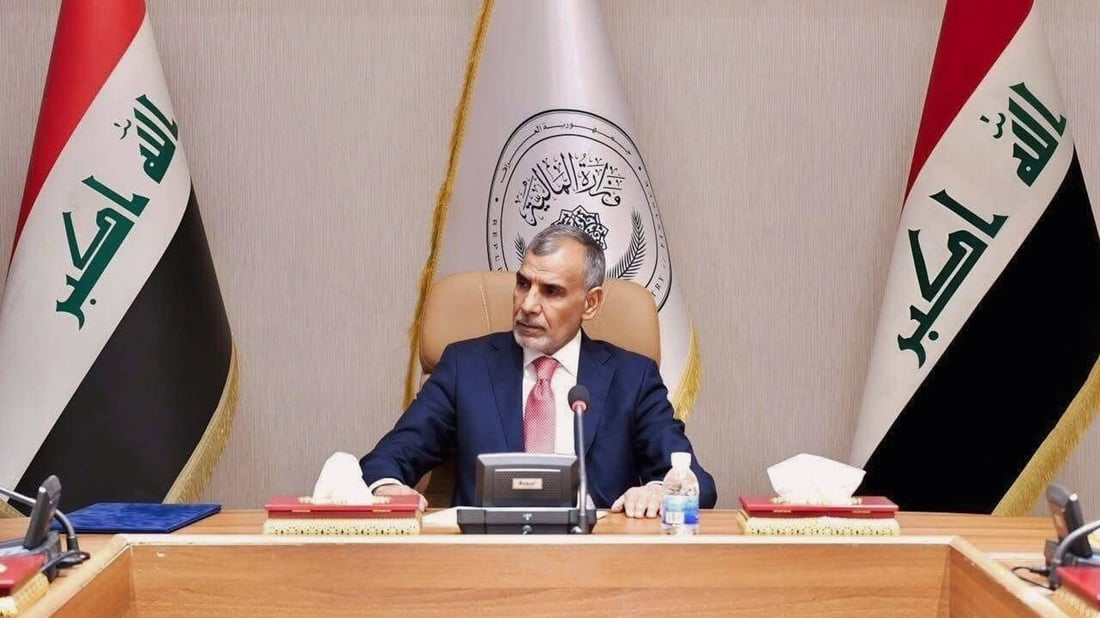
Iraq’s Finance Minister Faleh Sari
Finance minister tells British ambassador Hormuz closure is hitting the economy
BAGHDAD — Finance Minister Faleh Sari told Britain’s ambassador that the closure of the Strait of Hormuz has had direct effects on Iraq’s economy, and said the country is moving toward what he called the first program and performance-based budget in its history.
The closure has had “direct effects on the Iraqi economy, given the connection of trade movements and oil flows to developments in the region,” Sari said in a meeting with Ambassador Irfan Siddiq on economic and financial cooperation, according to a Finance Ministry statement. He said the ministry would work through the current conditions by strengthening non-oil revenues, developing financial management tools and continuing reform.
The budget approach he described links allocations to objectives, programmes and results rather than line items. Sari told his budget department three days ago to accelerate work on it. Iraq has no 2026 budget, with parliament skipping the year to concentrate on 2027 and spending governed by the one-twelfth rule, and parliament is due to give a first reading to a law on grants and borrowing.
Iraq exported 32.1 million barrels of crude and condensates in May and June for about $2.34 billion, roughly $1.17 billion a month, or about 526,000 barrels a day against roughly 3.3 million before the war. Oil provides more than 90% of federal revenue. The government confirmed in late July that Iraq is in a financial crisis and that salaries would no longer follow their previous schedule, and university staff have protested in Basra and Kirkuk over late pay.