
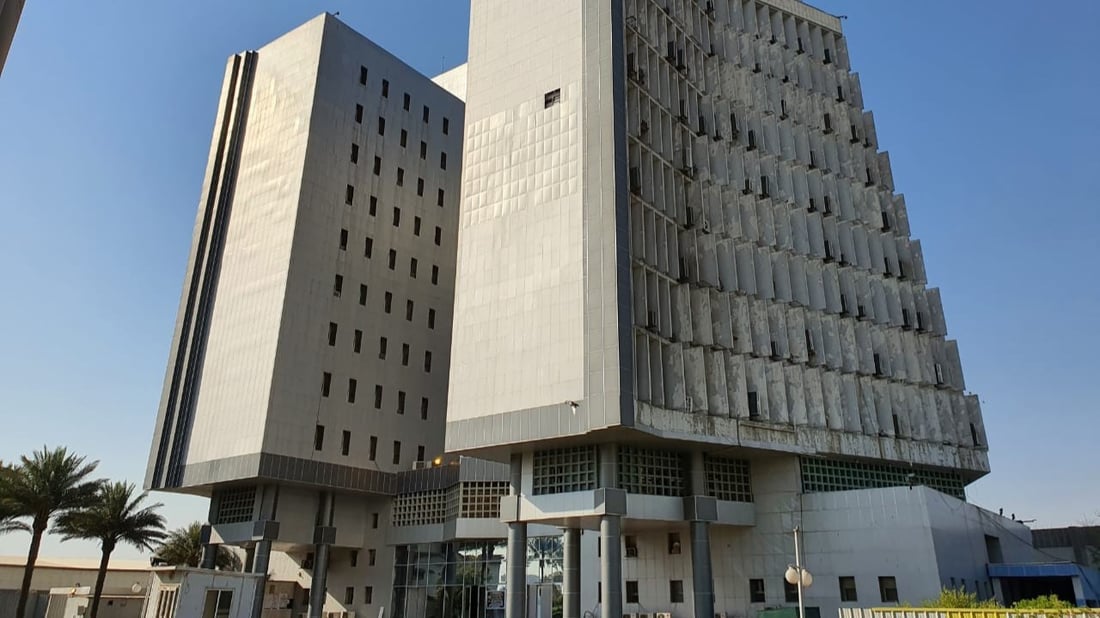
The Ministry of Finance building in Baghdad
Iraq finance minister says state must prioritize basic obligations
BAGHDAD — Finance Minister Falih Sari has told his budget department to speed up work on a program and performance-based budget prioritising the state’s basic obligations, eight months into a year in which Iraq has been operating without an approved budget at all.
Sari gave the instruction during a visit to the department, reviewing progress and the technical meetings under way with ministries and government bodies over their needs and financial data, the ministry said. He called for estimates built on “the actual needs of the state” and society, taking account of financial and economic changes and regional conditions, which he said would let resources be “directed toward priorities” and allow the budget to respond to shifting circumstances.
Iraq has no 2026 budget, with parliament skipping it to concentrate on 2027 and spending governed by the one-twelfth rule, under which the government may spend a twelfth of the previous budget each month.
The government confirmed in late July that Iraq is in a financial crisis and that salaries would no longer follow their previous schedule. July pay went out in stages from July 28, with security personnel and Popular Mobilization Forces members covered before civilian ministries, and university staff protested in Basra and Kirkuk last week over pay running late.
Officials have differed publicly on the state of the finances. Finance Committee member Mansour al-Baaiji said Tuesday that Iraq holds 109 trillion dinars in reserves, enough for 10 months of salaries. Economist Manar al-Obaidi replied that the Central Bank’s reserves cannot be treated as money available for salaries or a deficit, calling the comparison misleading. Zaidi’s financial adviser Mazhar Mohammed Salih has said Iraq will keep paying salaries even if the disruption to exports through the Strait of Hormuz continues.
Iraq exported 32.1 million barrels of crude and condensates in May and June for about $2.34 billion, roughly $1.17 billion a month — about 526,000 barrels a day against roughly 3.3 million before the war. Oil provides more than 90% of federal revenue.