
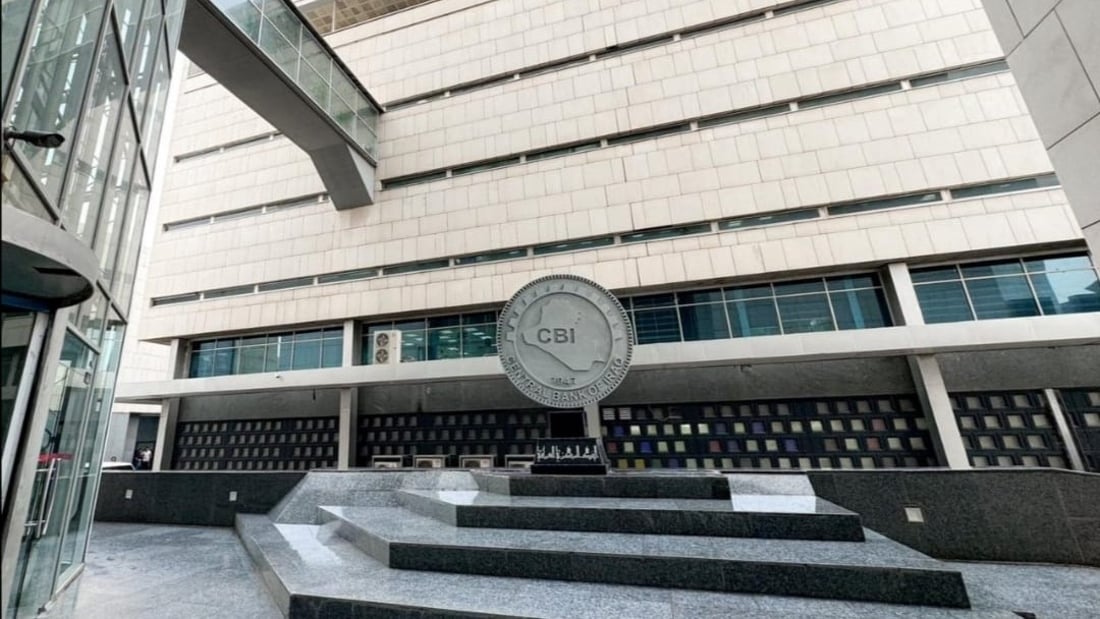
The Central Bank of Iraq Building
Media Monitor
Iraqi reserves cover about 10 months of salaries, lawmaker says after briefing
BAGHDAD — Iraq holds 109 trillion dinars (about $83 billion at the official rate) in treasury reserves, enough for roughly 10 months of public-sector salaries, a member of parliament’s Finance Committee said Tuesday after a briefing from the central bank governor.
Mansour al-Baaiji told the Iraqi News Agency the committee met Monday with Prime Minister Ali al-Zaidi, Finance Minister Faleh al-Sari and Central Bank Governor Nizar Nasser Hussein. “The financial situation is good and reassuring,” he said. “The Central Bank governor confirmed during the meeting that there are reserves of 109 trillion dinars in the treasury, and this is enough for approximately 10 months of salaries, in addition to gold bullion and revenues.” Salaries were fully secured, he said.
The 10-month estimate implies a monthly salary bill of about 10.9 trillion dinars. Officials and analysts have given widely different figures: Health Minister Abdul Hussein al-Mousawi has put it at 10.8 trillion, Jamal Kocher of the Finance Committee at 7.8 trillion and analyst Mustafa Hantoush at 7.5 trillion to 8 trillion, while Finance Ministry accounts for the first four months of the year show wages running at about 5 trillion a month. At that lower figure the reserves would last close to two years.
The government confirmed in late July that Iraq is in a financial crisis and that salaries would no longer follow their previous schedule, spokesperson Haider al-Aboudi said. July pay went out in stages from July 28, with security personnel and Popular Mobilization Forces members covered before civilian ministries, and some permanent Education Ministry staff in Basra did not receive theirs until early August. University staff protested in Basra and Kirkuk last week over pay running up to 50 days late.
Zaidi’s financial adviser Mazhar Mohammed Salih said earlier this month that Iraq would keep paying salaries even if disruption to oil exports through the Strait of Hormuz continued, describing the problem as one of when revenue arrives rather than whether the money exists.
Iraq exported 32.1 million barrels of crude and condensates in May and June for about $2.34 billion, roughly $1.17 billion a month, according to Oil Ministry figures — about 526,000 barrels a day against roughly 3.3 million before the war. Oil normally