
Adviser defends safeguards
Economists warn devaluation will raise costs and dampen demand, question budget’s export assumption
BAGHDAD — Iraqi economists warned that the devaluation of the dinar will raise costs and weigh on consumer demand, and one said the draft 2027 budget assumes oil exports of about 4 million barrels a day, above what Iraq exported even before the war. The prime minister’s financial adviser called the government’s measures a precaution against further disruption to oil revenue.
The cabinet raised the official dollar rate for individuals and non-bank financial institutions from 1,320 to 1,520 dinars on Wednesday, on the recommendation of the finance minister and the Central Bank governor. On the parallel market, where most retail prices are set, $100 was already selling for 160,500 dinars on Tuesday, above the new official rate, and passed 170,000 on Wednesday.
“Changing the exchange rate practically means a decline in the value of employees’ salaries by about 13% officially,” said Abdulrahman al-Mashhadani, head of the economics department at Al-Iraqia University. The effect could reach about 26% for goods traders price at the parallel rate, he said, and 36% once higher shipping costs from the Strait of Hormuz crisis are added.
He cited figures from the draft budget of about 217 trillion dinars in spending, oil revenue of about 140 trillion and a deficit of about 45 trillion, built on exports of around 4 million barrels a day. If exports fall short, the deficit could reach 85 to 100 trillion dinars, he said. Iraq exported about 2.6 million barrels a day in September as of Sept. 21, according to the Oil Ministry, against 3.3 to 3.5 million before shipping through Hormuz was disrupted. A weaker dinar gives the government more dinars for each dollar of oil revenue, Mashhadani said, but would not solve the problem if dollar revenue stays depressed, and repeated changes to the rate could erode confidence in monetary policy and deter investment.
The government turned to the exchange rate to generate more dinars and secure money for salaries, said economic adviser Adel al-Dulaimi, but at a cost. “Higher commodity costs and declining purchasing power will lead to lower demand in the markets,” he said, warning that weaker sales could spread to commerce, industry and jobs, and that anyone with dollar-denominated instalments would pay more.
The official change would not necessarily close the gap with the parallel market, which is driven by supply, demand and speculation, said financial markets expert Saif al-Halfi. Restoring dollar access for sanctioned banks and widening official channels for legitimate demand could ease the pressure, he said, and even if $100 reached 200,000 dinars, merchants could not pass on the full increase because sales would fall. Limiting the damage would also need tighter control of operating spending, secure supplies of essentials and support for local agriculture and industry.
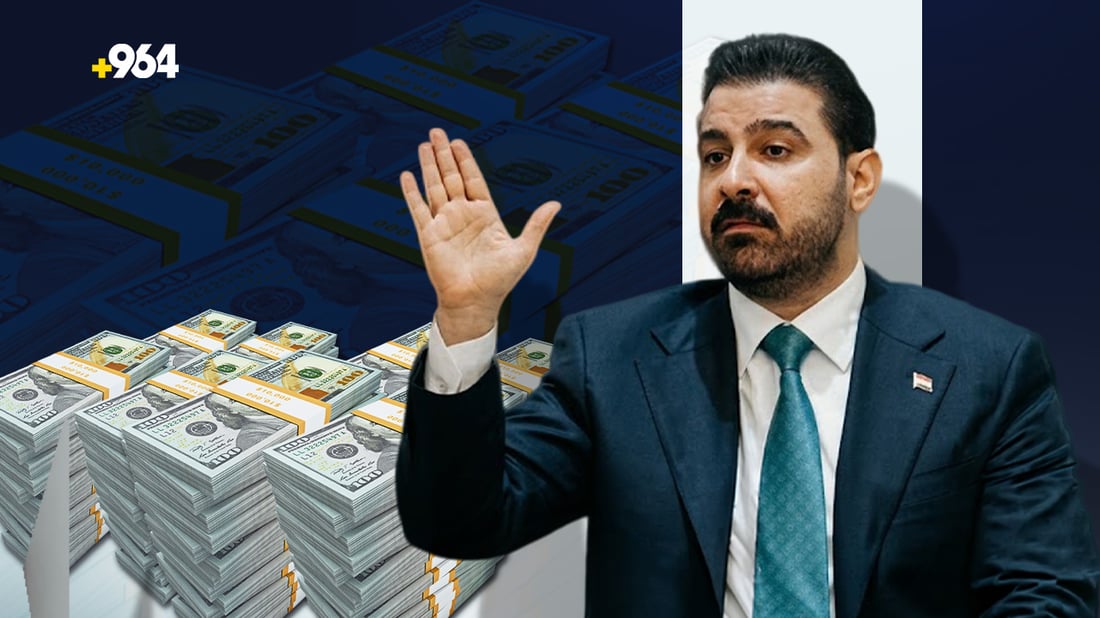
The prime minister’s financial adviser, Mazhar Mohammed Salih, said the government’s financial, customs and tax measures were meant to build a buffer against further disruption to oil exports and dollar inflows. “The measures being taken do not mean there is an imbalance in the economic situation, but rather come within the framework of advance precaution and protecting economic, financial and monetary stability,” he said. Spending on food, medicine, fuel and essential services would cushion external shocks, he said, and customs and tax measures would regulate imports, raise revenue and manage demand for dollars.
The move came a day after Finance Committee member Ikhlas al-Dulaimi said salaries were secured and reserves could cover any gap. Revenues covered only 76% of salaries and welfare in the first seven months of the year, according to economist Nabil al-Marsoumi, and the government acknowledged a fiscal crisis on July 31. It is the first change to the official rate since February 2023, when the dinar was strengthened to 1,300 after a devaluation from about 1,182 to 1,450 in December 2020.