
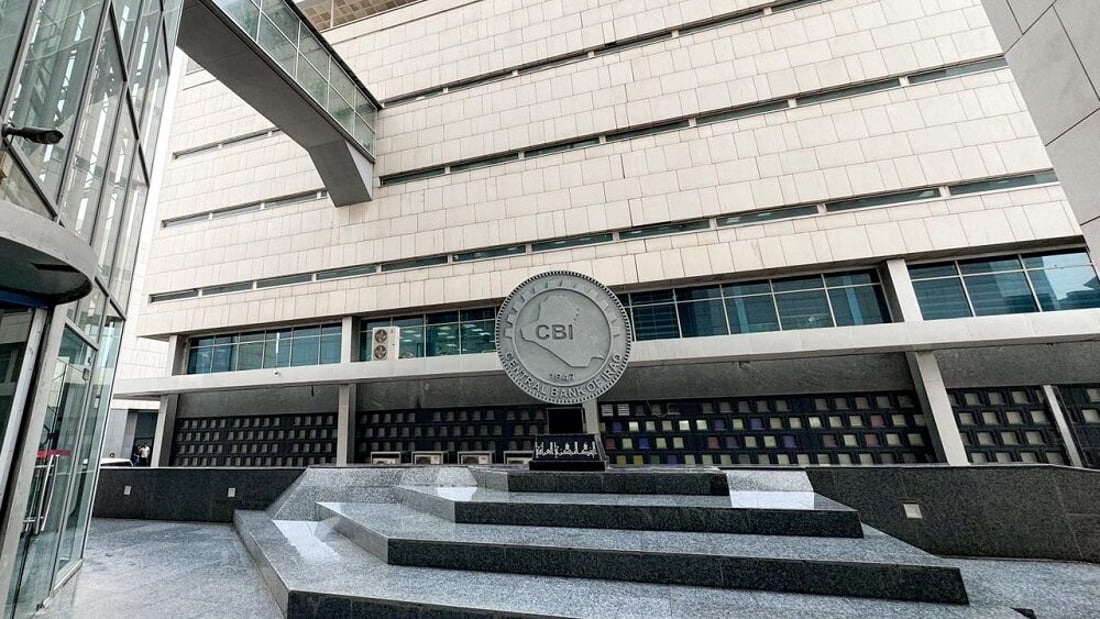
Iraq’s Central Bank Completes Transition to International Correspondent Banking System
Central Bank cites economic and fiscal pressures for devaluation, says reserves are sufficient
BAGHDAD — The Central Bank said current economic and financial conditions prompted the government’s decision to weaken the dinar’s official exchange rate, and that its foreign reserves remain sufficient to meet all monetary needs.
The change was made “in view of the current economic and financial conditions and based on the recommendation of the Council of Ministers,” the bank said on Wednesday, seeking to reassure the public of “the adequacy of its foreign reserves to meet all monetary requirements.” It would keep financing foreign trade, settling bank card transactions abroad and supplying cash dollars to travellers “without decline,” it said. Its directive issued earlier described the cabinet as having voted on recommendations from the Finance Ministry and the Central Bank.
Under the new rates, in force from the start of business on Wednesday, the bank buys dollars from the Finance Ministry at 1,500 dinars, sells them to banks at 1,510 and sets the final price to the public at 1,520, up from 1,300, 1,310 and 1,320, making the dollar about 15% more expensive at the official rate. Banks, payment companies and exchange firms were told to stop using the old rates immediately.
The parallel market jumped past 170,000 dinars per $100 after the change, reaching 170,000 in Baghdad, 180,000 in Erbil and 179,000 in Basra, against 160,500 in Baghdad on Tuesday. Lawmaker Ibtisam al-Hilali said parliament would take up the rate through the budget law, and Miqdad al-Khafaji called for an emergency session to force a reversal.
The bank gave the same assurance on reserves on Sept. 19, when the Baghdad market stood at 160,250 and it blamed the gap on speculation and regional conditions.
It is the first major change since February 2023, when the government strengthened the dinar from 1,450 to 1,300 to stabilise prices and protect purchasing power, reversing part of a devaluation in late 2020.