
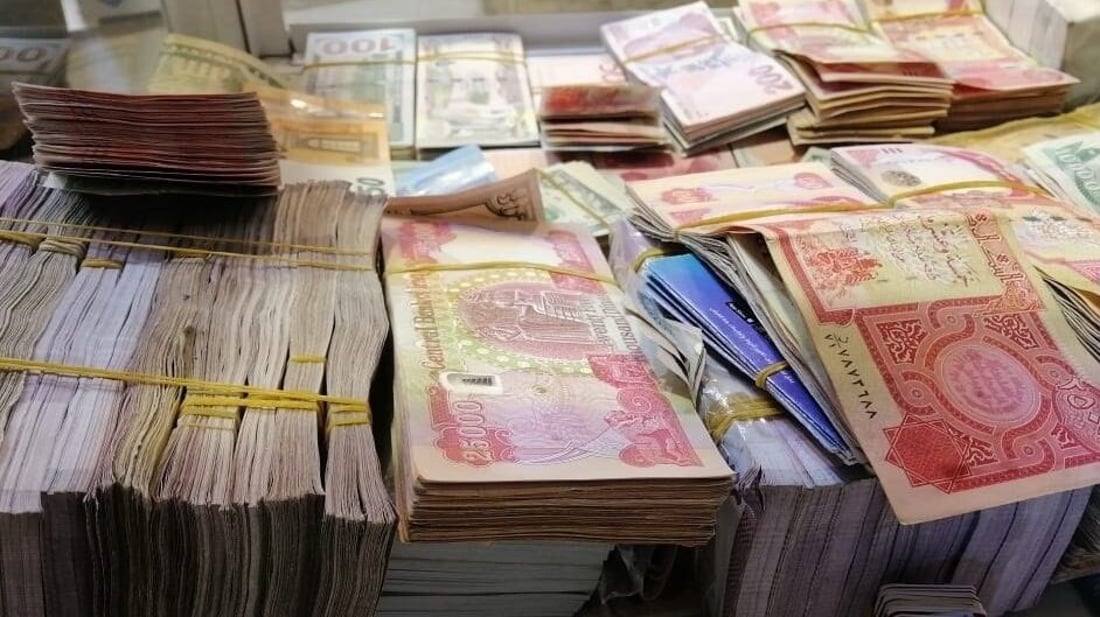
FILES: Stacks of Iraqi dinar and U.S. dollar banknotes at a currency exchange in Baghdad.
Reserves cover shortfall
Salaries secured and reserves can cover any gap, Finance Committee member says
BAGHDAD — Public salaries are secured and Central Bank reserves can cover any funding gap, Finance Committee member Ikhlas al-Dulaimi said Tuesday, as oil exports recover from the disruption to shipping through the Strait of Hormuz.
Iraq’s position had begun to improve as oil sales strengthened, she told the Iraqi News Agency, though the companies moving some exports were taking on the risk and deducting $15 to $30 a barrel. The United States had allowed oil to pass through Hormuz while Iran had not yet done so, she said, and Prime Minister Ali al-Zaidi’s meetings in New York could help ease the financial strain. Government spokesperson Haider al-Aboudi said last month that Iraq has no exemption to move oil through the strait, and that SOMO sells at the port while the tanker companies negotiate passage with whoever controls it.
Exports recovered to about 2.35 million barrels a day in August, according to SOMO, and averaged about 2.6 million in September as of Sept. 21, against 3.3 to 3.5 million before the war. Oil provides more than 90% of federal revenue.
The government acknowledged a fiscal crisis in late July, when salaries went out in stages, and revenues covered only 76% of salaries and welfare in the first seven months, according to economist Nabil al-Marsoumi. A Finance Committee member said in August that Iraq held 109 trillion dinars, about $83 billion, in Central Bank reserves. Economist Manar al-Obaidi has cautioned that foreign reserves are not budget money available for routine spending and exist mainly to support the currency.