
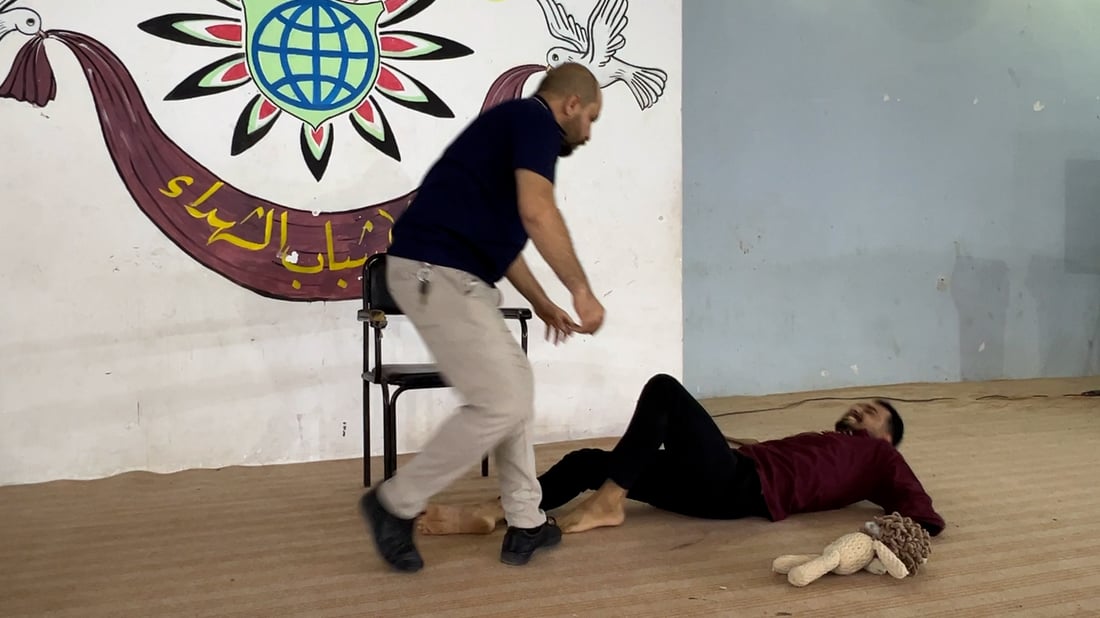
Karbala actors tested with rewritten scripts and surprise cast changes in “Under Pressure” competition
KARBALA — Young actors in Karbala spent four days dealing with rewritten scripts, sudden cast changes and next to no preparation time in a theatre competition built to see how performers cope when the plan falls apart.
Organisers of “Under Pressure,” held at the Martyrs Youth Forum theatre, deliberately disrupted rehearsals, swapping scripts, moving actors between groups and adding new demands shortly before each performance. The idea was to put actors in situations they had not prepared for and see whether they could adapt and stay in character, founder Abrial Redha told 964media.
On the second day, material participants had rehearsed was replaced and some actors were moved to other groups, forcing teams to rebuild their pieces at short notice. Some improvised their way through; others withdrew. The third day was given over to comic and dramatic improvisation, and on the last, three groups performed before a judging panel that added further challenges mid-performance.
Participants were handed simple prompts, props and materials and asked to make theatre out of them, said Ali al-Shaibani, head of the panel. The pieces drew on everyday relationships between fathers and sons, husbands and wives and other relatives, and he said limited resources could still produce worthwhile theatre when performers were able to create and adapt.
Winner Shahin Hussein Jaafar said participants sometimes had a day to write a script and build a character before arriving to find it changed again. “The name ‘Under Pressure’ truly reflected the experience,” he said. First place came with a nomination to appear in future productions alongside the other winners. Ibrahim al-Tayyar, second, said the time pressure became a source of ideas rather than an obstacle, and Ali Saad, third, performed an improvised comedy with his group without any written script.
The judges added a fourth place because the third and fourth performances were so close. It went to Mohammed Maher Ali, whose character, the “Black Mask,” stood for corruption.