
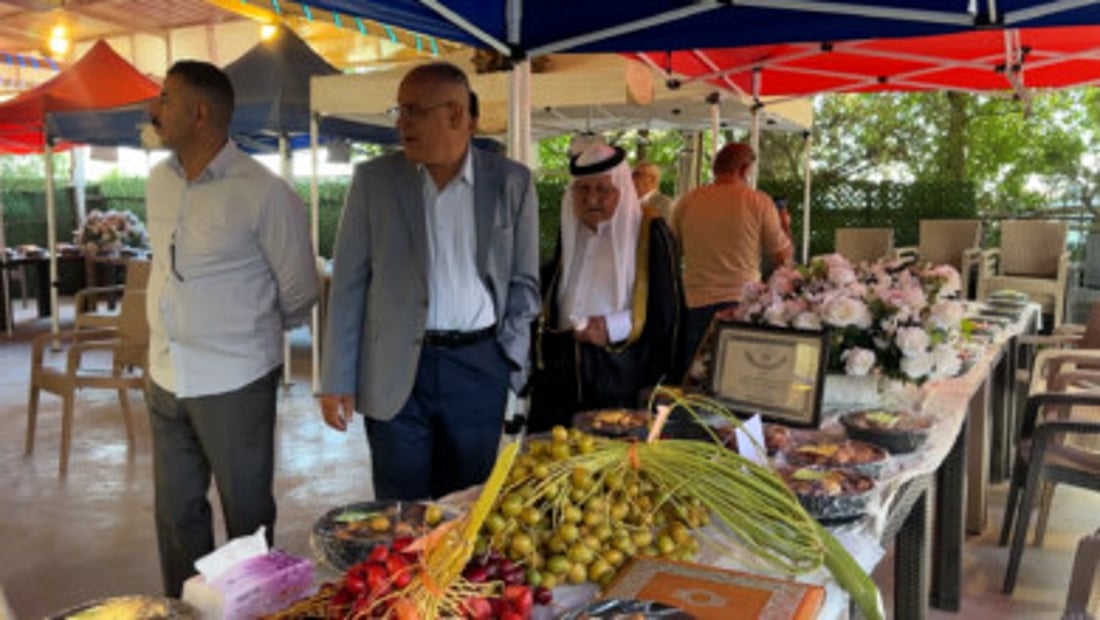
Visitors view displays of locally grown date varieties and other products at a date festival in Baqubah, Diyala governorate. (Photo: 964media)
Diyala dates nearly lost are back on show in Baqubah
DIYALA — Dozens of date varieties from Diyala’s orchards went on display at a festival in Baqubah, among them several that growers say had almost disappeared and are now being replanted.
Alongside familiar Zahdi and Khastawi were rarer dates, among them Qaranfuli, Makawi, Breim, Degal Sarah and Awnat Ayoub. Hamdi Sara brought about 60 varieties, and said some local ones are named after the people who first planted date seeds in the area years ago. The festival drew visitors from Baghdad, the south and the Kurdistan Region, with food products and palm-frond handicrafts on sale.
Qaranfuli sells for 30,000 to 40,000 dinars a kilogram, about $20 to $26, with buyers inside and outside Iraq, said Mohammed al-Mandalawi, media director at the local agriculture department, and Mandali is one of the areas that grows it. Agricultural engineer Ali Abdul Hamid showed varieties that were once common and became rare, and are now being propagated to return them to orchards. Makawi was widespread in the 1990s, he said, and his display also included Khiyara, Shuwaithi and yellow and red Breim. Scarcity can push some varieties to around 20,000 dinars a kilogram, and specialised packaging is being prepared to help storage and sales.
Gulala Garmiani came from Kalar and liked the Qaranfuli best. She hoped for similar festivals in Kalar to promote local produce and open up marketing and exports.
Iraq had more than 22 million palms in May, the Agriculture Ministry says, up from about 12 million in 2003, which it credits to new orchards, tissue-culture planting, modern irrigation and pest control. There are more than 600 local varieties, and Iraq exported more than 600,000 tonnes of dates and over 100,000 tonnes of date paste in 2025. It was once called the land of 30 million palms, with dates its second-largest export after oil, before decades of war and environmental damage thinned the groves. The Iran-Iraq war destroyed vast plantations around Basra in particular.