
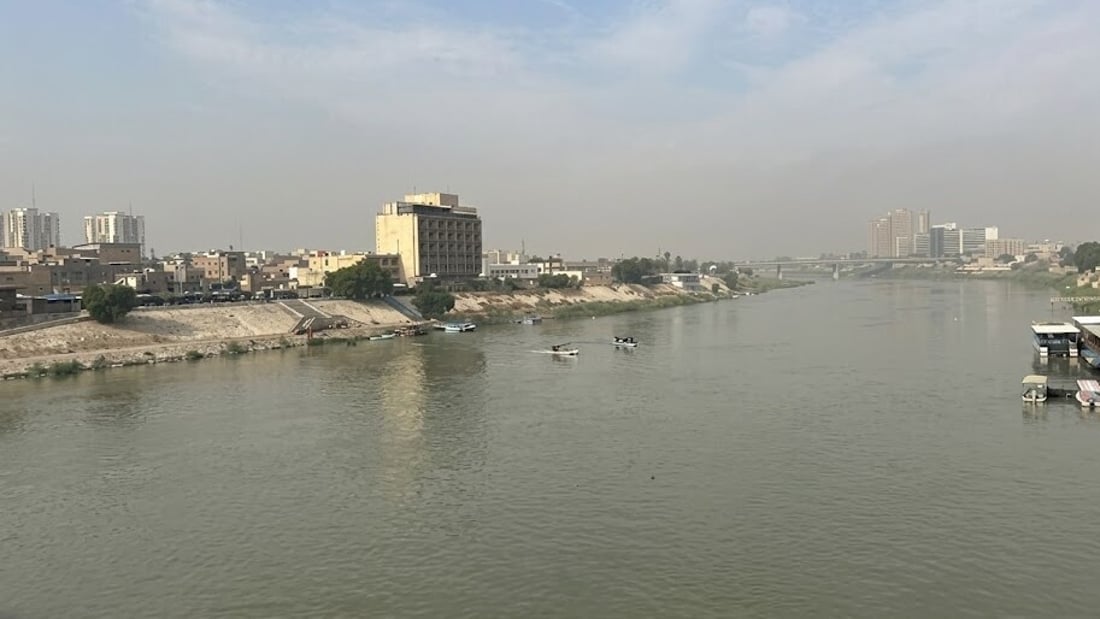
The Tigris River flows through central Baghdad
Water reserves above 31 billion cubic metres as inflows rise, ministry says
BAGHDAD — Iraq’s water reserves stand above 31 billion cubic metres after a noticeable rise in inflows on the Tigris and Euphrates, enough to meet planned agricultural needs, the Water Resources Ministry said.
“The Tigris and Euphrates rivers have seen a noticeable increase in water inflows, which has contributed to strengthening reserves and raising them to more than 31 billion cubic meters,” spokesperson Khalid Shamal told the Iraqi News Agency. “The current level of reserves is good and allows water allocations for agriculture to be secured according to the required needs.”
The ministry said in late July that storage had recovered to about 34 billion cubic metres, nearly seven times the level a year earlier, and forecast entering winter at just over 20 billion. It has not set out how the figure has moved between July and now, and a summer of irrigation releases and evaporation lies between the two.
The winter agricultural plan is being prepared on three factors, Shamal said: water available in reservoirs and how much of it can be used, projected inflows through the season, and domestic and international market indicators including crop supply and demand. “The government is working to restore Iraq’s agricultural identity and diversify crops, while also taking into account the agricultural identity of each governorate,” he said, with governorate plans set by available farmland, population and local conditions.
Allocation follows a priority order: drinking water and domestic and health uses first, then agriculture, the Shatt al-Arab and the marshes, then industry and the oil sector. The ministry is working on four areas this year — technical contact with neighbouring countries over water and distribution between governorates, removing violations affecting the water system and river boundaries, irrigation projects including closed systems, pipeline transport and subsurface irrigation, and reducing consumption in agriculture and drinking water.
More than 70% of Iraq’s inflows come from neighbouring countries, principally Turkey, then Iran and Syria. Both rivers rise outside its borders, Turkish dams cut downstream flows and Iran has dammed and diverted tributaries feeding the Tigris. This year’s recovery followed a wetter than normal winter that refilled reservoirs, lakes and parts of the southern marshes after officials warned of the worst shortage in decades, and is a partial restoration that does not resolve the structural scarcity.