
Kataib Hezbollah chief signals easing of Jurf al-Sakhar dispute
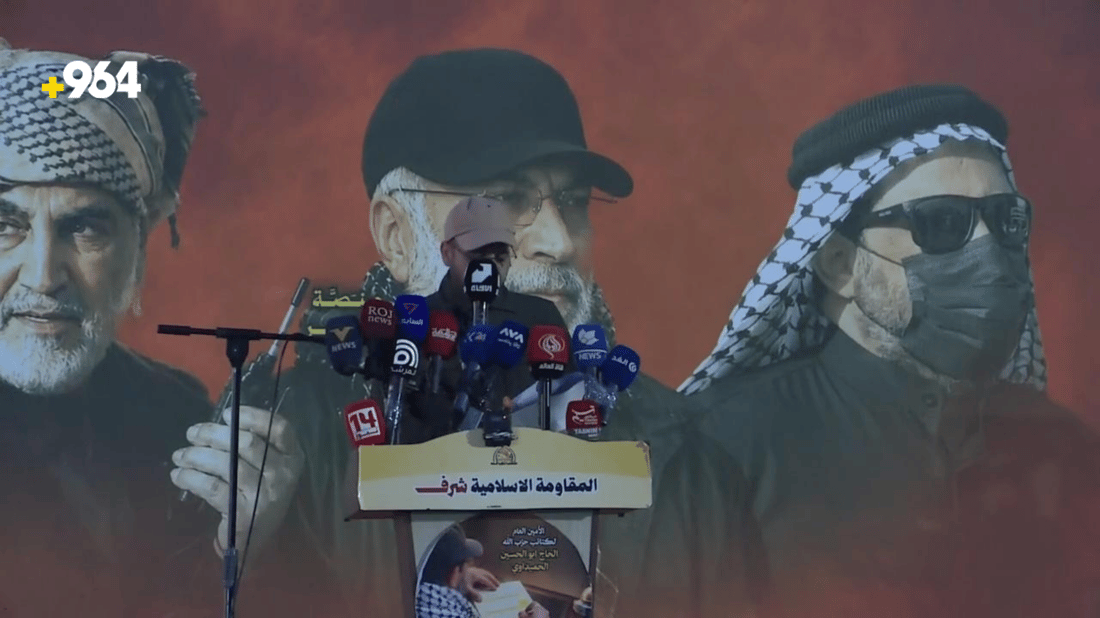
BAGHDAD — Kataib Hezbollah Secretary-General Abu Hussein al-Hamidawi said Thursday that his faction’s dispute with Prime Minister Ali al-Zaidi would be resolved through private channels and instructed his fighters to resume their normal duties, signaling a possible easing of tensions over Jurf al-Sakhar hours before a new government security command is scheduled to begin operations in the area.
In a statement read by the faction’s spokesperson from Jurf al-Sakhar on Nov. 19, Hamidawi said, “We affirm that the existing disagreements with the head of the authority will be addressed through private channels, denying our real enemies the opportunity to exploit them,” according to a translation of his Arabic remarks.
Although he did not mention Zaidi by name, the remarks referred to the confrontation between Kataib Hezbollah and the prime minister over control of Jurf al-Sakhar in Babil governorate.
Addressing his fighters, Hamidawi said, “You have been patient and have reaped the fruits of patience,” before instructing them to “return to your normal duties as they were before the alert.”
The instruction appeared to mark a shift toward de-escalation following days of warnings about a possible armed confrontation. However, Hamidawi did not explicitly announce an agreement to withdraw from Jurf al-Sakhar or confirm that Kataib Hezbollah would surrender its positions to government forces.
Earlier Thursday, Kataib Hezbollah announced that Hamidawi had met Iran’s Quds Force commander Esmail Qaani, Badr Organization leader Hadi al-Amiri and Popular Mobilization Forces Chairman Falih al-Fayyadh to discuss the Jurf al-Sakhar crisis. The faction described the outcome as good but did not disclose the details of any agreement.
In his subsequent statement, Hamidawi thanked Qaani, Amiri, Fayyadh and PMF Chief of Staff Abdul Aziz al-Muhammadawi, known as Abu Fadak, for what he described as their “honorable positions” and efforts to prevent bloodshed.
The apparent easing of tensions came hours before a new joint security headquarters is scheduled to begin operating in Jurf al-Sakhar at 6 a.m. Friday, Nov. 20. The command, headed by Lt. Gen. Ahmed Hatem Hamid, will oversee formations from the Iraqi Army, Federal Police and PMF, along with an Energy Police regiment responsible for protecting oil pipelines.
Also Thursday, Iraq’s armed forces were placed on Alert C across their formations, according to Lt. Gen. Saad Maan, head of the Security Media Cell. Officials did not publicly specify the operational measures associated with the alert or how long it would remain in effect.
Prime Minister Zaidi separately approved a security plan Wednesday to replace the force controlling Jurf al-Sakhar, dividing responsibility among the Army’s 38th Brigade, the Federal Police’s 17th Brigade and the PMF’s 72nd and 79th brigades. The Energy Police will take responsibility for securing oil pipelines crossing the area.
During a meeting Thursday with the new command’s leadership, Zaidi also ordered the swift reopening of all closed roads in Jurf al-Sakhar. The government’s deployment plan includes reopening the Musayyib-Bahbahani-Fadhiliya-Amiriya al-Fallujah road, which has remained subject to security restrictions.
The government had previously ordered armed forces into Jurf al-Sakhar on Monday and given Kataib Hezbollah a short deadline to withdraw. Government spokesperson Haider al-Aboudi did not specify when the deadline would expire, although reports suggested Friday.
On Tuesday, senior Kataib Hezbollah figure Abu Talib al-Saeedi said the faction did not intend to fight Iraqi security forces. In separate remarks reported by 964media, he also maintained that the group would not leave Jurf al-Sakhar despite the government’s demand.
The confrontation prompted divisions within Iraq’s ruling Shiite Coordination Framework. A source in the alliance said its leaders opposed sending combat troops into Jurf al-Sakhar and instead favored replacing the faction controlling the territory with other PMF formations to avoid an armed clash.
The negotiations also followed reported disagreements within Kataib Hezbollah itself. A source previously told 964media that Muhammadawi favored a negotiated handover allowing government forces to assume control of parts of Jurf al-Sakhar, while Hamidawi opposed security concessions. Thursday’s statement publicly thanked Muhammadawi for his role in addressing the dispute.
Hamidawi praised members of the PMF for supporting Kataib Hezbollah and thanked Iraqi security personnel for rejecting a confrontation between forces that had previously fought together against the Islamic State group.
He also instructed his members to continue strengthening their military capabilities, modernizing equipment and maintaining training programs, while protecting information concerning their operations and weapons.
Hamidawi reassured residents of Babil and Karbala governorates, particularly Musayyib and Iskandariya, as well as Baghdad residents and pilgrims traveling to Karbala, that Kataib Hezbollah would continue protecting them against extremist groups.
He also called on media outlets sympathetic to the faction to focus on the United States and Israel rather than internal Iraqi disputes, urging support for Iran if the country faced renewed military attacks.
The confrontation over Jurf al-Sakhar began after an intelligence report circulated Nov. 9 alleging that crude oil had been illegally extracted from pipelines crossing the area and transported in tanker trucks. Zaidi subsequently dismissed nine senior security and oil officials after a government investigation reported evidence of pipeline tampering and unauthorized oil-processing facilities.
On Thursday, a source told 964media that authorities had arrested Ali Abdul Karim al-Mousawi, the dismissed director general of the state-owned Oil Pipelines Company, following confessions made before judicial authorities concerning suspected oil smuggling in Jurf al-Sakhar. The source did not identify who made the confessions or specify the allegations against Mousawi.
Kataib Hezbollah has rejected the smuggling allegations, accusing the prime minister’s office of circulating fabricated reports. During a news conference inside Jurf al-Sakhar on Tuesday, al-Saeedi disputed the investigation’s findings and described a suspected oil-processing facility as primitive and abandoned for several months.
Jurf al-Sakhar, officially renamed Jurf al-Nasr in 2014 after Iraqi forces and allied armed groups recaptured it from the Islamic State group, has remained under tight security restrictions. Kataib Hezbollah maintains a strong presence in the area, while many residents displaced during the fighting have been unable to return to their homes.