
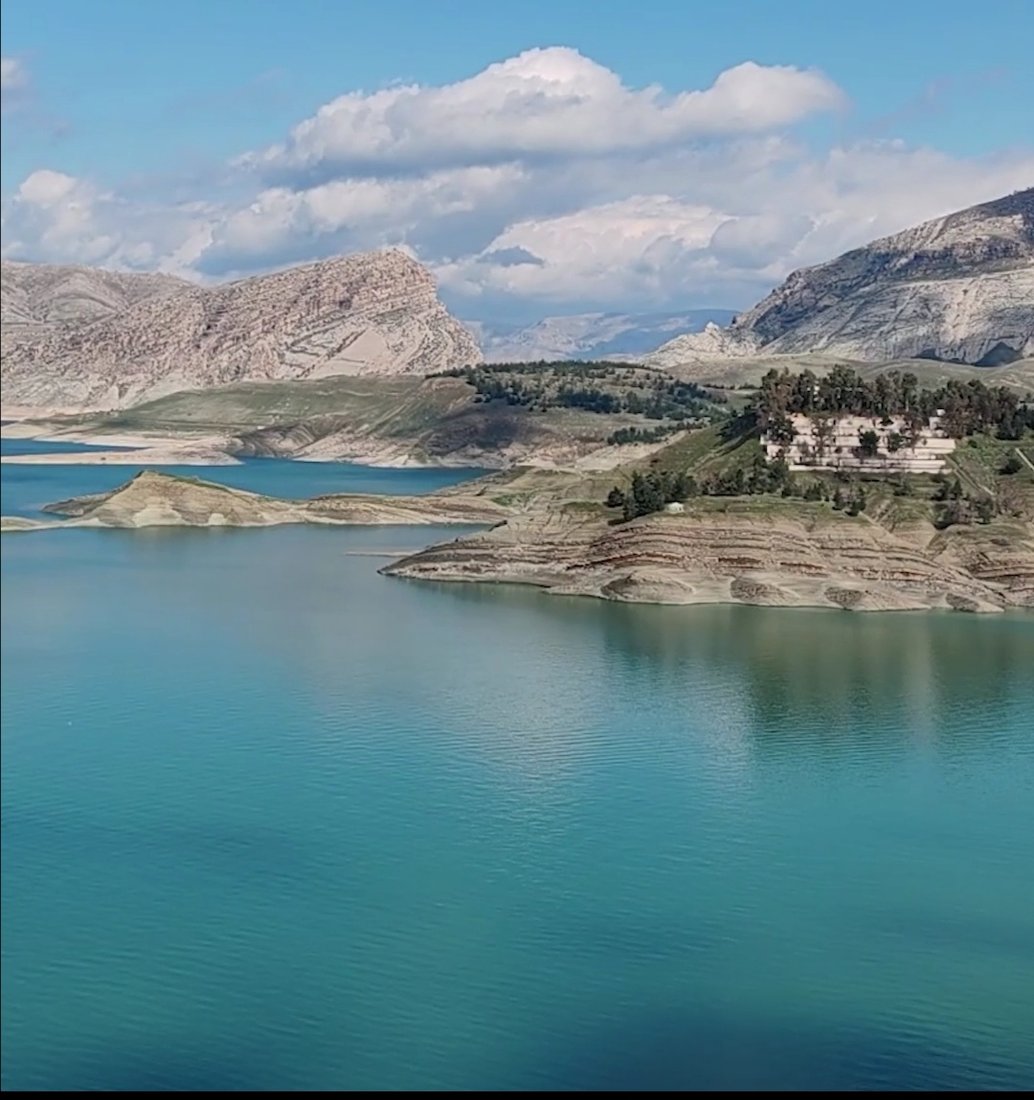
A view of the Dukan Dam, located in Sulaymaniyah. (Photo: 964media)
Water reserves rebound but the ministry expects to use 40% before winter
BAGHDAD — Iraq’s water storage has recovered to about 34 billion cubic meters, nearly seven times what it held a year ago, the Water Resources Ministry said Monday, describing reserves as in excellent condition while forecasting it will enter next winter with just over 20 billion — a drawdown of about 40% over the coming months.
Ministry spokesperson Khaled Shamal told the Iraqi News Agency that storage in dams and reservoirs reached about 34 billion cubic meters by the end of spring and the annual snowmelt, against 5 billion at the start of the previous winter season, which he called one of the lowest levels recorded since 1934. Mosul, Dukan and Darbandikhan dams are between 70% and 80% full, he said, with capacity held back for further inflows.
The recovery follows a wetter-than-normal 2025-26 winter that refilled reservoirs, lakes and parts of the southern marshes after a year in which officials warned repeatedly of the worst water shortage in decades. It is a partial restoration only, and does not resolve the country’s structural scarcity. Water Resources Minister Muthanna al-Tamimi said earlier this month that reserves had reached about 34 billion cubic meters and urged continued conservation.
Shamal said the main pressures this season are high temperatures and evaporation, breaches of water allocation rules, over-irrigation by some farmers and inefficient use by government institutions and households. Authorities are enforcing allocations through a strict rotation system in coordination with security forces and the Supreme Judicial Council, and running public awareness campaigns. The ministry has previously acted against unauthorized fish ponds and irrigation violations.
More than 70% of Iraq’s inflows come from neighboring countries, primarily Turkey, then Iran and Syria, Shamal said, describing current inflow indicators as average to good. Iraq draws most of its freshwater from the Tigris and Euphrates, both of which rise outside its borders. Turkish dams on the two rivers cut downstream flows, and Iran has dammed and diverted several tributaries feeding the Tigris. Iraq and Turkey have expanded water cooperation in recent years, and Shamal said the ministry is carrying out irrigation projects under a framework agreement with Ankara, including closed irrigation systems, pipeline transport and land reclamation.
Releases to the governorates are managed through the National Water Resources Management Center with the General Authority for Dams and Reservoirs, Shamal said, with crisis cells in each governorate handling shortages and flooding. He said the ministry is balancing drinking, domestic, industrial and environmental demand against the agricultural plan, the restoration of the marshes and the Shatt al-Arab, and measured groundwater use. Improved availability has supported a partial recovery in the marshlands, though environmental officials say levels remain below what full restoration requires.