
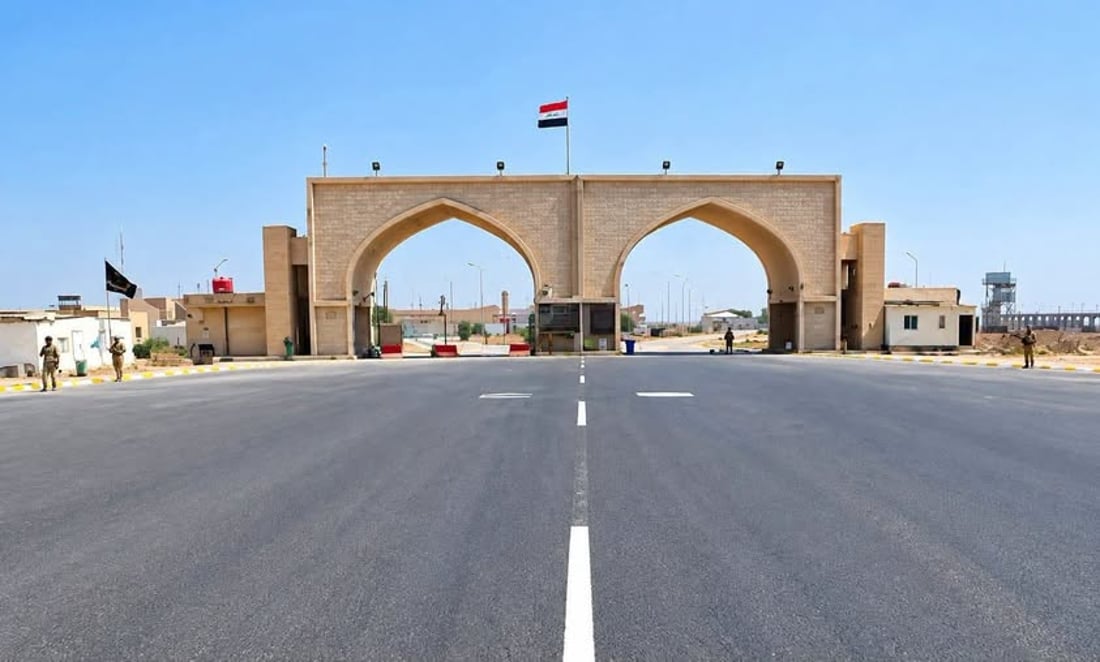
The al-Sheib border crossing between Iraq and Iran in Maysan governorate.
Media Monitor
Adviser says Iraqi crossing with Iran closed to curb drugs, fake currency
BAGHDAD — Iraqi government adviser Abdul Amir Taiban said Wednesday that the closure of the al-Sheib border crossing with Iran was a necessary measure to prevent drugs and counterfeit currency from entering Iraq, denying that the decision resulted from U.S. pressure or efforts to impose a blockade on Iran.
In a televised interview, Taiban said Iraqi authorities had recorded violations at border crossings, including the smuggling of drugs and counterfeit currency. He attributed the activities to individuals and traders operating on the Iranian side of the border, saying Iraqi authorities must take action to protect the country’s economy and prevent drug trafficking. “In Nasiriyah and Amarah, we are suffering from drugs entering from Iran, as well as counterfeit money,” Taiban said. “Are we supposed to stand by while uncontrolled groups bring drugs and counterfeit money from Iran and destroy our economy?”
He specifically referred to counterfeit 25,000-dinar banknotes and US dollars, saying the printing methods used to produce them made detection more difficult. “This is more dangerous than missiles, because this money and these drugs destroy Iraq,” he said. “Missiles, if they enter, are used in the ongoing war, but counterfeit money and drugs kill the Iraqi people.”
Taiban rejected suggestions that Washington had pressured Baghdad to close border crossings with Iran as part of efforts to enforce sanctions. “I rule out American pressure on the government to close the crossings with Iran to implement a blockade,” he said. “We have many border crossings with Iran, and all of them are open. If the reason were related to a blockade, all crossings would have been closed.”
He said Iraq shares approximately 1,400 kilometers of border with Iran, with trade and thousands of delegations moving between the two countries. Taiban called on Iranian authorities to take stricter measures against individuals involved in smuggling, distinguishing their activities from the actions of the Iranian government. “There are violations from the Iranian side against Iraq,” he said. “What do you call someone bringing counterfeit money into Iraq? Or someone else trying to bring drugs into Iraq?”
“The government did not close the al-Sheib crossing for no reason,” he said. “There must be something that requires its closure, and the government must take action to address the situation.” He also referred to reports that other crossings could face similar measures as authorities introduce additional controls.
Iraq’s government said Wednesday that the al-Sheib border crossing with Iran in Maysan governorate had been closed because its ‘technical and logistical’ facilities were not ready for continued operations, offering the first official explanation for the shutdown.
The explanation follows Tuesday’s reports that al-Sheib would close at 6 a.m. Wednesday to both goods and travelers until further notice. An official source had said the decision came under directives from Prime Minister Ali al-Zaidi and that other crossings with Iran would be closed gradually.
Iraq’s Border Ports Authority has announced the arrest of two Iraqi travelers in separate cases involving attempts to bring counterfeit currency into the country from Iran through border crossings in Basra and Maysan governorates.