
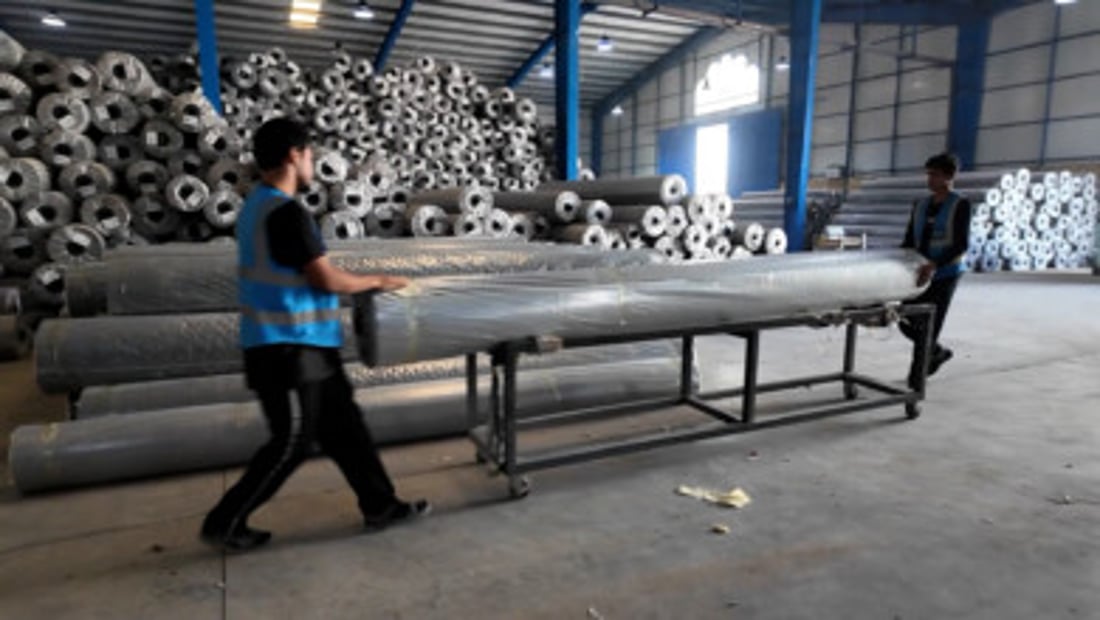
Najaf factory denies selling Turkish carpets as Iraqi-made
NAJAF — A Najaf carpet factory accused by importers of passing off nearly finished Turkish carpets as Iraqi-made has denied the charge, saying it imports only raw materials and makes its carpets from scratch.
“We do not import carpets that are 95% finished. We import raw materials and manufacture them from scratch until they become 100% finished products,” Safaa Abdul Rahman Abd, director of the National Textile Factory, part of the al-Dos Group of Companies, told 964media.
Dozens of carpet and flooring traders and importers from several governorates protested in Najaf’s Aden neighborhood on Wednesday. They accused the factory of importing carpets that are 95% finished, only cutting and packaging them and selling them under a local brand to claim customs exemptions and protections meant for domestic manufacturers. They demanded an investigation into what they called a “fake factory.”
964media visited the factory after the protest and spoke to its managers and workers.
“The factory is monitored by the relevant authorities, including the Ministry of Industry and Minerals, the General Directorate of Industrial Development and the General Customs Authority,” Abd said. He said the factory imports raw materials according to requirements set by the directorate, and customs officials oversee their movement from the border to the factory.
He also criticized people who had visited and filmed the factory, without saying who they were. “Some parties that visited and filmed the factory did not highlight the actual production, despite the presence of workers and functioning production lines. Instead, they focused on some old, obsolete machines that have no production value,” he said.
Ali Khudair, the factory’s production manager, said it runs four main production lines at full capacity and employs 80 to 85 workers, most of them graduates who had been looking for work. He said it produces about 120,000 square meters of carpet a day and has exported to Egypt, Jordan, Kuwait and Saudi Arabia.
His count of production lines matches neither figure the traders gave. At the protest, Amir Jawhar, a Baghdad carpet trader, said government exemptions initially covered two production lines but that the factory now claims to run seven. He urged the Industry Ministry, the General Customs Authority and the Border Ports Authority to investigate its imports and check its manufacturing.
Ali Abdullah, a carpet trader from Najaf, called for a parliamentary investigation into whether the factory can meet domestic demand before it receives protections that could hurt competing businesses.
“If the factory cannot meet 100% of production needs, why should traders, workers and citizens be treated unfairly?” he said.
The protesters urged Prime Minister Ali al-Zaidi and the ministries concerned to set up a technical committee to examine the factory’s production lines, customs classifications and eligibility for exemptions.
The dispute comes as Iraq applies customs measures to protect domestic industry. Tariffs on selected imports were meant to make Iraqi manufacturers more competitive and stop the dumping of foreign goods, the Trade Ministry said in February, after traders protested in Baghdad and Basra, joined by merchants from Najaf, Karbala and Kut, warning that higher import costs would push up prices and leave goods stuck at ports.