
(Photo: 964media)
Farmers in Karbala stick with cheaper Zahdi dates that keep for a year
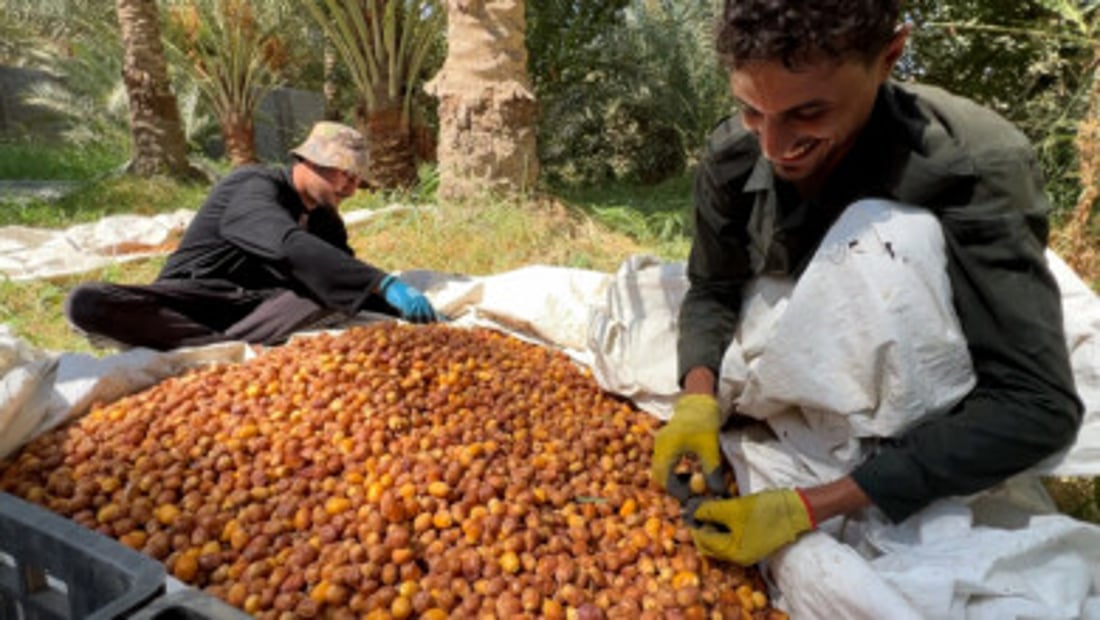
KARBALA — Date farmers in Karbala’s Hussainiya area are sticking with the Zahdi variety even though it sells for a fraction of the price of Barhi, because it survives harsh weather, keeps for up to a year without refrigeration and sells abroad from Asia to North Africa.
Zahdi sells for less than 1,000 dinars (about 60 cents) a kilogram, against around 2,500 dinars (about $1.50) or more for Barhi, but farmers say lower storage costs and less spoilage make it the safer crop. “The most important advantage for farmers is that Zahdi dates do not require refrigeration,” orchard owner Ahmed Jassim al-Masoudi told 964media. The fruit withstands heat and cold, repeated rain, humidity and dust, and can be packed in boxes or bags and stored for a year, he said. Barhi needs cold storage and can spoil within days if left out or caught in the rain.
Hussainiya’s orchards also grow Barhi, Tabarzal, Khastawi and Sultani, and some farmers have planted other varieties, but Zahdi dominates. An orchard may have thousands of Zahdi palms and only around five of some other varieties, Masoudi said.
Farmers can sell Zahdi at several stages. Ripe dates go in bags of up to 25 kilograms or branded 10-kilogram boxes. Semi-ripe dates, known locally as kharmoush, are sold still on the cluster in boxes of 2 to 10 kilograms and fetch more than ripe fruit. Zahdi is also made into date syrup, and fruit unfit to eat is sold as animal feed.
Traders from western Iraq, including Rawi and Kubaisi merchants, and buyers from Diyala and elsewhere buy from Hussainiya and ship to India, Bangladesh, Egypt and Morocco, Masoudi said. A ton of Zahdi sells for around 700,000 dinars (about $420), and farmers expect it to reach about 1 million dinars (about $600) if export traffic through the Strait of Hormuz improves.