
(Photo: 964media)
Nasiriyah calligrapher warns of declining traditional craft as digital design takes over
DHI QAR — From his office overlooking Nasiriyah’s corniche, calligrapher Bassem Al-Mahdi has continued working with ink pens and digital design screens since 1991. His career spans more than three decades, including years spent working in Libya before returning to his hometown, where he developed 14 digital typefaces inspired by square and traditional Kufic scripts.
Speaking to 964media, Al-Mahdi described the decline of handwritten signs on commercial storefronts as digital design software increasingly replaces traditional calligraphy. It has prompted most calligraphers to close their workshops, with only a few remaining. He said preserving what remains of this artistic heritage requires institutional support and specialized exhibitions that encourage the talents of younger generations.
Al-Mahdi told 964media that he began working in Arabic calligraphy in 1991 and has relied on it as his main source of income ever since. He said his experience developed over the years, including a period of work and residence in Libya, where he began using computers and design software. After returning to Iraq, he continued working in advertising, illuminated signage and Arabic calligraphy.
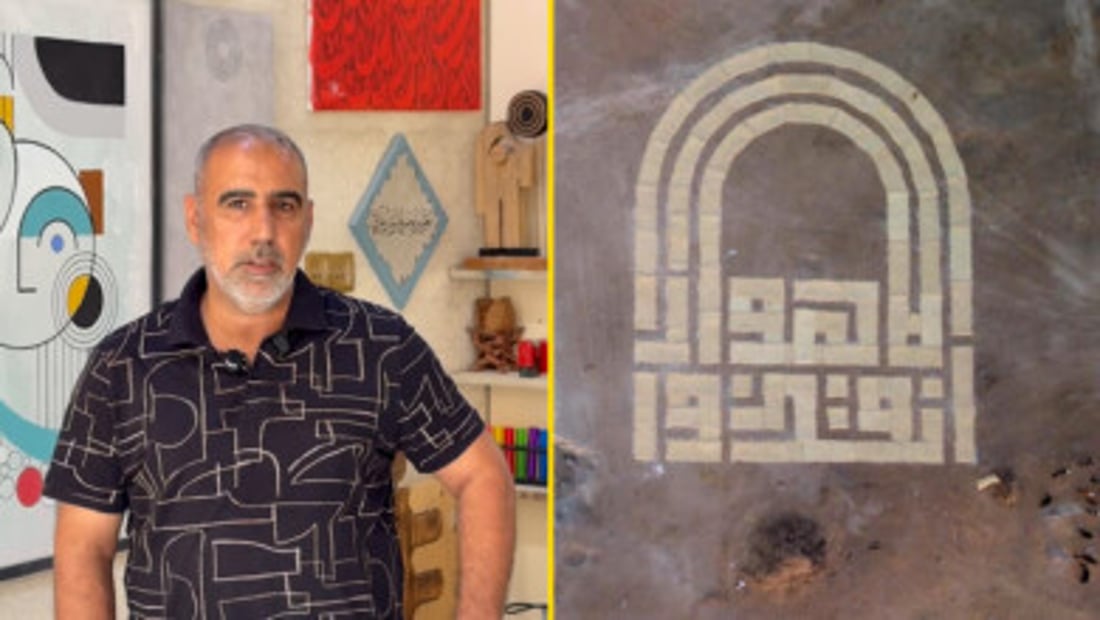
He said the styles closest to his experience are Kufic scripts, particularly square Kufic and traditional Kufic, alongside other forms of Kufic calligraphy. He explained that his interest was not limited to practicing calligraphy through traditional methods but also extended to designing digital typefaces. He has completed 14 typefaces since 2008.
Discussing the presence of Arabic calligraphy in Nasiriyah, Al-Mahdi said that despite the city’s historical and cultural standing, Arabic calligraphy does not have a widespread presence. He attributed this to limited institutional support, a lack of individual initiatives among some calligraphers and the need to develop working tools and keep pace with changes in the field.
He explained that the introduction of computers and modern design software brought major changes to the profession. Shop owners can now obtain ready-made designs or produce their advertisements digitally without hiring a calligrapher. This has prompted a number of practitioners to close their offices or move into computer-based design, while others continue practicing handwritten calligraphy and participating in competitions and artistic activities.
Al-Mahdi said handwritten signs are still requested by some customers, although their presence has declined compared with printed and illuminated designs. He noted that, to his knowledge, the office of calligrapher Ahmed Shakir is among the few that continue this type of work in Nasiriyah.
He said young people remain interested in Arabic calligraphy and are trying to develop their skills and showcase their work. However, the more widespread trend among them is toward digital design because of the growing demand for it. Opportunities to display calligraphic works remain limited, with few specialized art exhibitions held in the governorate.
Regarding support, Al-Mahdi said calligraphers in Nasiriyah lack organizations willing to adopt their work and provide opportunities for participation and development. He explained that they rely primarily on individual efforts, even in activities organized by Arabic calligraphy associations, which themselves require continued institutional support.
Discussing his works, Al-Mahdi spoke about his experience creating a Kufic calligraphy artwork across a large area of the marshlands. He described it as one of the projects that helped introduce his work to others, saying it covered approximately 2,000 square meters, measuring about 50 meters in length and 40 meters in width.
He also highlighted his interest in digital typeface design, a field he believes remains relatively uncommon in Iraq. He said he began working in this area in 2008 and has continued developing his experience to the present day, seeking to combine his expertise in Arabic calligraphy with the capabilities of digital design.
Al-Mahdi concluded by emphasizing that the future of Arabic calligraphy in Nasiriyah depends on calligraphers’ ability to continue working and developing their tools, alongside the provision of support and exhibitions that allow them to display their work, while preserving handwritten calligraphy as an artistic practice with aesthetic characteristics that cannot be reduced to digital designs.
The influence of new technologies is widespread. In June, In Najaf, some of the calligraphers who once hand-lettered banners for Ashura letter gravestones instead, as cheap imported flags and AI-generated designs push their craft to the margins. Calligrapher Abdul Amir Hussein said Chinese-made banners in particular had hit the market for handmade work. “Many customers prefer ready-made banners because they are cheaper and immediately available,” he said.
There has been calls to preserve the calligraphy. Speakers at a cultural panel in Baghdad in November 2025 urged preservation of Arabic calligraphy’s classical integrity, rejecting any attempt to alter the shape or structure of letters and calling the script a “red line.”
Islamic calligraphy, particularly Quranic writing, has long been revered across the region as both an artistic and spiritual expression. Scripts such as Kufic, Naskh, and Thuluth have evolved over centuries, each holding deep cultural and aesthetic significance.