
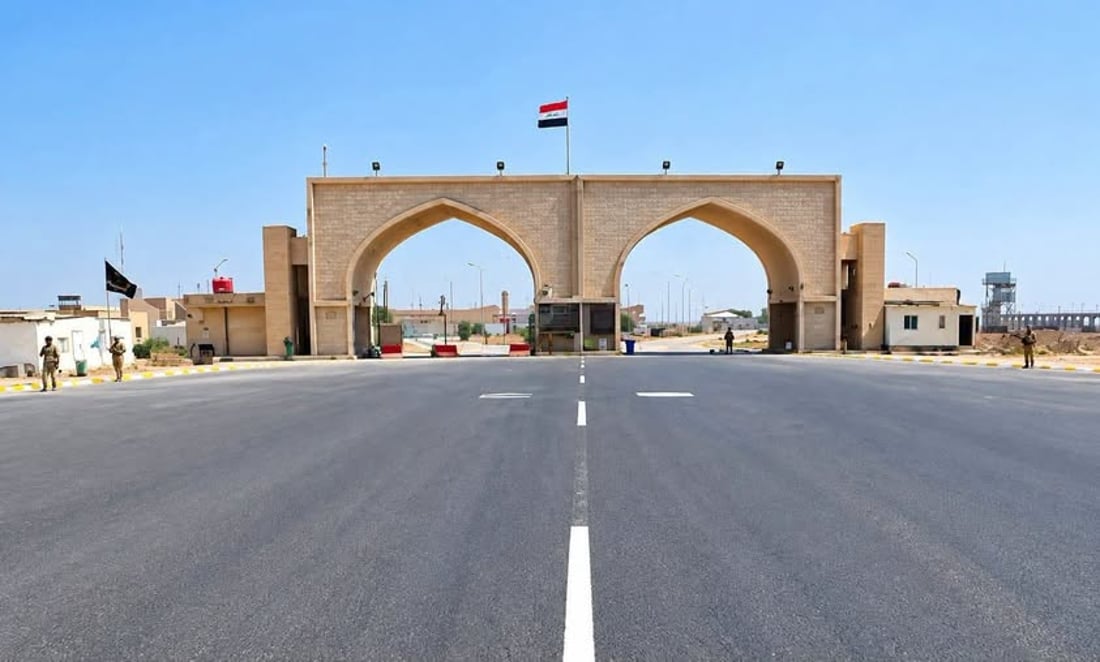
The al-Sheib border crossing between Iraq and Iran in Maysan governorate.
Iran embassy rejects PM adviser’s drug-smuggling claim over Sheib border closure
BAGHDAD — Iran’s embassy in Baghdad on Saturday rejected as false a claim by an adviser to Iraq’s prime minister that the Sheib border crossing was closed to stop drugs and counterfeit currency coming in from Iran, and called on Iraqi authorities to take a position on remarks it said could harm relations.
“The Embassy of the Islamic Republic of Iran in Iraq strongly denies the false allegations made by Abdul Amir Taiban, adviser to the Iraqi prime minister, regarding the closure of the Al-Sheib border crossing under the pretext of the spread of drugs and counterfeit currency,” the embassy said on X. “The embassy expects the relevant authorities to take a position on allegations that harm relations between the two countries.”
Taiban said in a televised interview on Wednesday that the closure was needed to keep drugs and counterfeit currency out of Iraq, and denied it was the result of U.S. pressure or an attempt to blockade Iran. Authorities had recorded smuggling of drugs and counterfeit money at border crossings by individuals and traders on the Iranian side, he said. “In Nasiriyah and Amarah, we are suffering from drugs entering from Iran, as well as counterfeit money,” Taiban said. “Are we supposed to stand by while uncontrolled groups bring drugs and counterfeit money from Iran and destroy our economy?”
The government has given different accounts of the closure. An official source said on Tuesday that the crossing in Maysan would close to goods and travelers from 6 a.m. Wednesday on Prime Minister Ali al-Zaidi’s instructions and that other crossings with Iran would be closed gradually. Government spokesperson Haider al-Aboudi said on Wednesday that the crossing’s technical and logistical facilities were not ready for continued operation. Zaidi said in an interview on Friday that closing the borders would hurt both countries because of the volume of Iranian exports entering Iraq.