
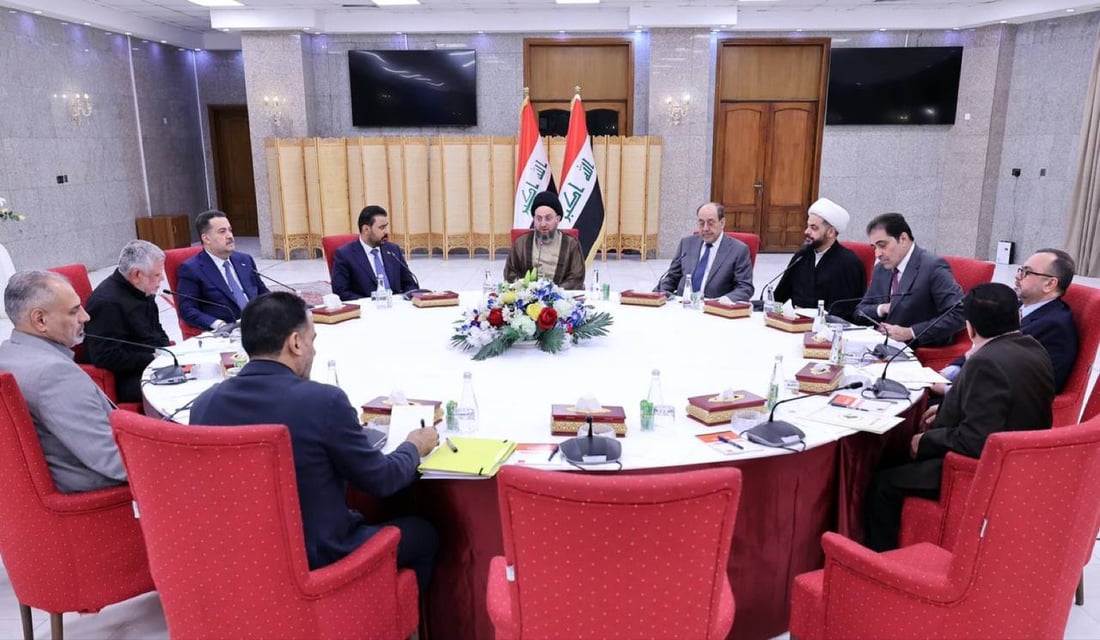
FILES: Iraq’s Coordination Framework during a regular meeting in Baghdad
Coordination Framework urges ‘comprehensive de-escalation’ after coalition exit
BAGHDAD — The Coordination Framework, Iraq’s ruling Shiite alliance, called on all parties to commit to “comprehensive de-escalation” at a meeting Friday at the Government Palace, the prime minister’s media office said.
The meeting, held at the invitation of Prime Minister Ali al-Zaidi, focused on current political and security developments and the requirements of the period following the U.S.-led coalition’s withdrawal.
The Framework stressed “the importance of continuing to strengthen the state of institutions and the rule of law.” It praised factions for what it called “responsible positions” in the public interest through their commitment to an agreement document, which the statement said was the result of efforts by several parties in recent months.
The alliance thanked its weapons policy committee and said the committee should “continue its work at the same pace until June 30, 2027,” which the statement described as the agreed final deadline for “implementing a constitutional provision concerning weapons.”
The Framework also said the coalition had “honored its commitment to withdraw from Iraq within the agreed timeframe” after its role in combating terrorism.
Zaidi formally declared the end of the coalition’s mission against the Islamic State group on Wednesday, 12 years after it began, telling a Sovereignty Day ceremony in Baghdad that Iraq now takes full responsibility for its own security. On Thursday, he announced that the government would begin disarming non-Iraqi armed groups and bring factions’ weapons under state control by June 30, 2027.
Sept. 30 also marked the start of Zaidi’s plan for the armed factions: a 90-day halt to attacks, followed by six months to hand over weapons. State of Law leader Nouri al-Maliki had said last week that the weapons program and timetable would be announced on Sept. 30.
Two factions that reject the process said last week they would act after Sept. 30. Ashab al-Kahf said any foreign presence on the ground or in the air would “face a military response” from Wednesday night, and a Kataib Hezbollah security official said the group would monitor Iraqi airspace and try to shoot down aircraft it considers hostile.
The mission ended under a 2024 agreement between Baghdad and Washington. Coalition forces left their bases in federal Iraq in January, including Ain al-Asad Air Base and the Joint Operations Command headquarters, and the remaining presence in the Kurdistan Region, which supported operations in Syria, has now left Erbil Air Base, the last coalition base in Iraq.