
Prices fall too
Storms cut Hit date yields by nearly a third, farmers say
ANBAR — Date palm yields in Hit, in western Anbar governorate, have fallen from about 100 kilograms per tree last season to 70 kilograms this year after storms, strong winds and rain damaged the crop, farmers and traders told 964media.
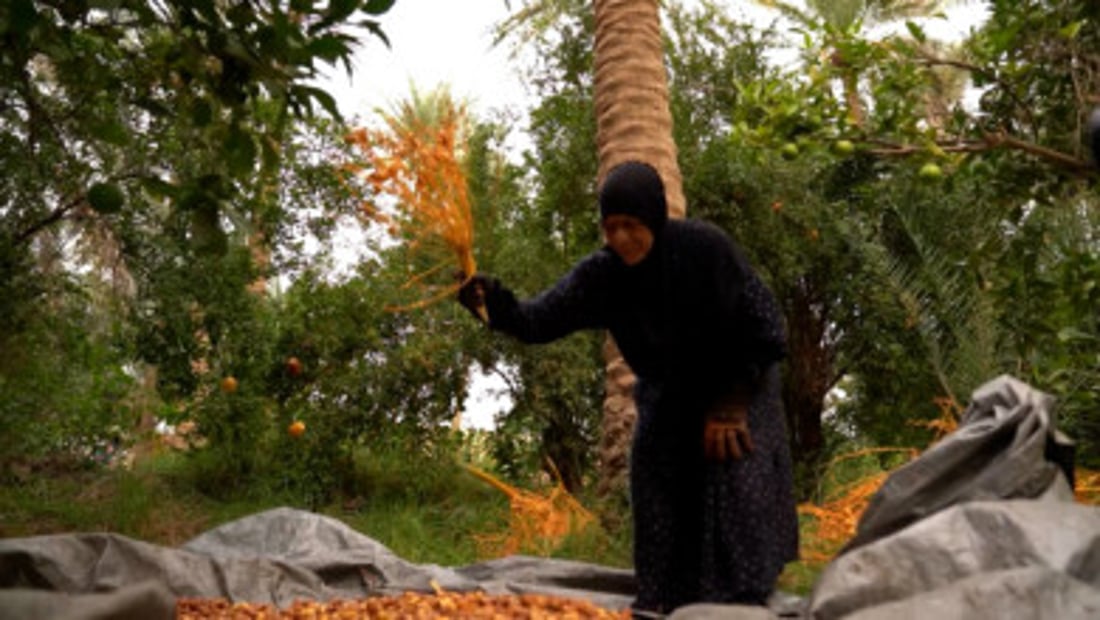
Large quantities of dates, particularly the Zahdi and Khastawi varieties, fell from the trees and spoiled, leaving some fit only for animal feed. Zahdi is a hardy, cheaper date that keeps without refrigeration, while Khastawi is a soft, higher-priced variety.
“Before the storms, winds and rain, each palm produced 100 kilograms, but now it produces 70 kilograms, meaning a loss of 30 kilograms,” farmer Saud Suleiman told 964media. “After the wind and rain, the dates fell to the ground and were no longer suitable for trade. They could only be used as animal feed because they had spoiled and lost quality.”
Zahdi suffered the most because much of the crop fell to the ground, while rain also damaged Khastawi, he said.
Prices have dropped as well. Khastawi used to sell for 600,000 to 650,000 dinars (about $360 to $380) a metric ton, but buyers are now unwilling to pay 500,000 dinars (about $300), and prices sometimes fall below that, Suleiman said.
Date trader Zuhair al-Kubaisi said this season had been harder than last year because of the weather and problems affecting regional trade. “Last year, each palm produced no less than 100 kilograms, but this year most are producing only 65 to 70 kilograms,” he said. “A small number of palms produced between 100 and 120 kilograms.”
Traders who contracted to harvest orchards expecting 10 tons have collected only seven this season, said Kubaisi, adding that the harvest typically runs from about Sept. 25 to Nov. 1. “A trader takes an orchard expecting it to produce 10 tons, but because of this year’s weather conditions, it produces only seven,” he said. “Ten has become seven, and the profit you expected is gone.”
Kubaisi also cited disruption in the Strait of Hormuz and regional conditions that have made dates harder to market than last year. The Hormuz disruption has rerouted food imports overland and raised costs.
Atheer Hammoudi, head of the Hit Agriculture Department, said preliminary estimates put the district’s date production at about 30,000 tons this season, with final figures due after the harvest. He cited falling prices, marketing difficulties and agricultural pests as the main challenges for growers.
When the harvest began in August, the department expected about 30,000 tons and farmers reported better quality and quantity than the previous year.