
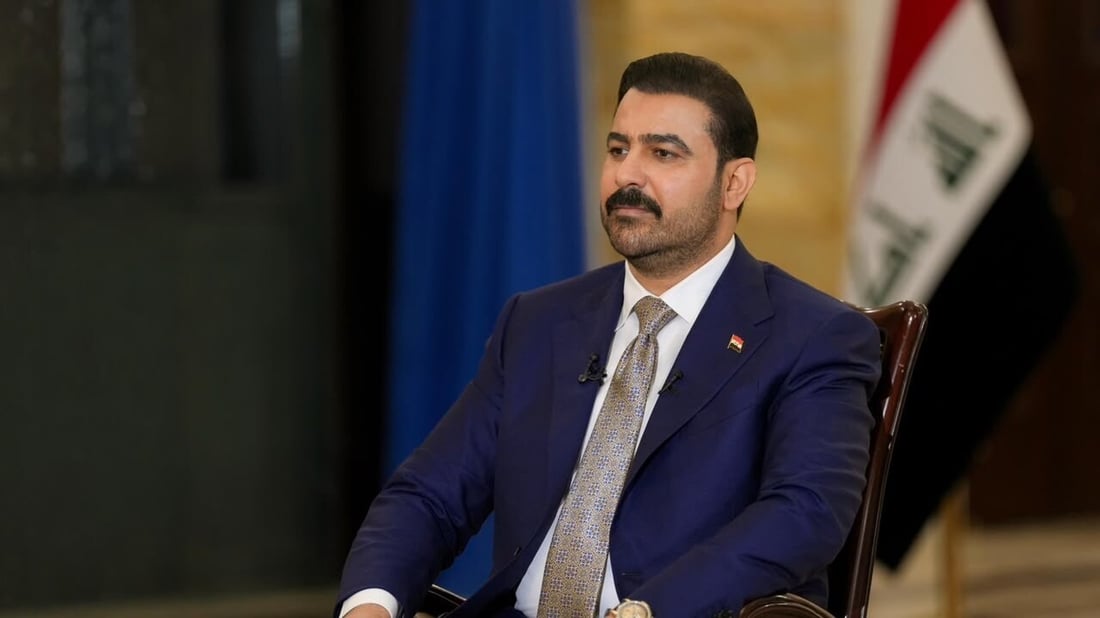
Iraqi Prime Minister Ali Al-Zaidi
Iraq ‘will not be a party to any war,’ PM says
BAGHDAD — Iraq will not be drawn into any war and is committed to keeping weapons only in the hands of the state’s security forces, Prime Minister Ali al-Zaidi said Friday, days after his government began closing border crossings with Iran.
“Iraq will not be a party to any war. It is a meeting ground, not a source of aggression,” Zaidi told Al-Iraqiya TV. “Both Iran and the United States need Iraq’s role. We support de-escalation and will continue working to end the crisis.” Sovereignty remained a priority, he said. “Achieving full sovereignty is a decision, not an option. Results are what matter, and there is no alternative to keeping weapons exclusively in the hands of the security forces.”
Closing the borders would hurt both countries because of the volume of Iranian exports entering Iraq, Zaidi said. The Sheib crossing with Iran was closed to goods and travelers on Wednesday morning until further notice, on Zaidi’s instructions, an official source said on Tuesday, adding that other crossings would be closed gradually. Government spokesperson Haider al-Aboudi said the closure was meant to fix technical and logistical shortcomings at the crossing.
Najaf International Airport has reopened to flights from Iran, and Iraqi Airways is operating its services, Zaidi said. Najaf suspended all flights to and from Iran on Sept. 25 after the U.S. Treasury sanctioned 27 Iranian airlines on Sept. 8, and Iraq later secured a U.S. exemption allowing Iranian airlines, except Mahan Air, up to 40 flights a day.
The disruption in the Strait of Hormuz had affected countries beyond Iraq, Zaidi said, and Baghdad had hoped for an exemption because of its close relations with Tehran. Oil Minister Basim Mohammed Khudair al-Abadi said on Monday that Hormuz was one of Iraq’s three export routes and that exports had risen above 3.4 million barrels a day this month. Exports are fluctuating with conditions, Zaidi said, and the government is building a pipeline network to give it more flexibility. “Iraq is an important country, and our plans to increase oil production will strengthen our international relations and cooperation with major countries.”
His visit to Saudi Arabia had been planned in advance, Zaidi said, and his government remained committed to its relations with Riyadh and the Gulf. During the Oct. 14 visit he told Crown Prince Mohammed bin Salman that Iraq would not allow its territory to be used to launch attacks on Saudi Arabia or other countries in the region.
“We are pressing ahead with our efforts to combat corruption. Turning a blind eye to corruption makes it impossible to build a state,” Zaidi said. “Our fight against corruption is not over, and further anti-corruption operations are to come.” Corruption was not confined to any religious or ethnic group, he said, accusing some political figures of cooperating in corruption despite their political differences. Those jailed had been convicted on evidence and confessions, substantial sums had been recovered, and oversight bodies were still auditing government activity and referring findings to the courts, he said. Several sitting lawmakers have been convicted in the campaign, which grew out of information attributed to former Deputy Oil Minister Adnan al-Jumaili.
Keeping the old exchange rate would have left future governments with problems “that would be impossible to resolve,” Zaidi said, adding that Iraq was working toward a clearer economic identity instead of what he called a hybrid economic system. Since Oct. 7, the Central Bank buys dollars from the Finance Ministry at 1,500 dinars, sells to banks at 1,510 and sets the public rate at 1,520, up from 1,300, 1,310 and 1,320. Zaidi told the parliament speaker and committee chairs on Oct. 8 that devaluation was necessary to keep paying salaries without more borrowing.