
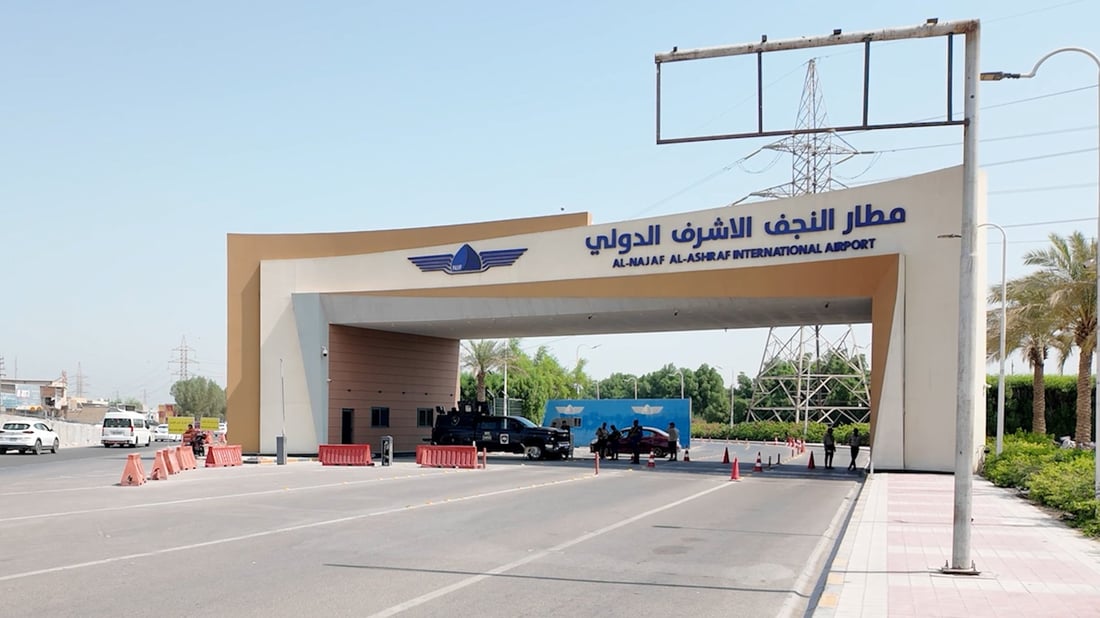
The entrance to Najaf International Airport in Najaf city.
US exemption clears 40 daily Iranian flights at Najaf, excluding Mahan
BAGHDAD — Iraq said Friday it had secured a U.S. exemption allowing Iranian airlines, except Mahan Air, to operate 40 flights a day to and from Najaf International Airport, expanding an earlier waiver that covered only Iraqi Airways.
Prime Minister Ali Faleh al-Zaidi’s media office said the agreement followed a series of contacts with relevant parties aimed at restoring air travel for medical treatment, religious visits, tourism and other civilian purposes. The government thanked Washington for what it called a positive response to Iraq’s request.
“Air travel is not merely movement between two airports, but a bridge for communication between peoples,” Zaidi said, pointing to patients seeking treatment, pilgrims and families trying to reunite.
The earlier exemption was announced only days ago. Government spokesperson Haider al-Aboudi said Sept. 29 that an arrangement reached in Zaidi’s talks with the Trump administration allowed Iraqi Airways to carry passengers between Najaf and Iran, while Iranian airlines remained barred from Iraqi airports. Reuters reported at the time that the waiver would run for one month. Friday’s statement did not say how long the new exemption would last.
Iranian airline operations in Iraq were disrupted after the U.S. Treasury sanctioned 27 Iranian carriers on Sept. 8. Private ground-handling firms at Iraqi airports then stopped servicing Iranian aircraft over concerns about exposure to U.S. sanctions, according to Iraqi officials, and Najaf airport suspended all flights to and from Iran on Sept. 25. Baghdad then opened direct talks with Washington seeking exemptions for medical treatment, education, religious visits and other civilian travel.
The suspension hit Najaf’s travel sector immediately. Local tourism companies told 964media that Iranian airlines had previously operated roughly 50 daily flights between Najaf and destinations including Tehran, Mashhad, Isfahan and Rasht, and warned that relying on Iraqi Airways alone would leave a large gap in capacity and drive up fares.
Mahan Air, which the U.S. Treasury sanctioned in 2011, remains excluded. Zaidi said Iraq would keep using its foreign relations to ease travel restrictions and maintain connections serving humanitarian, tourism and economic needs.