
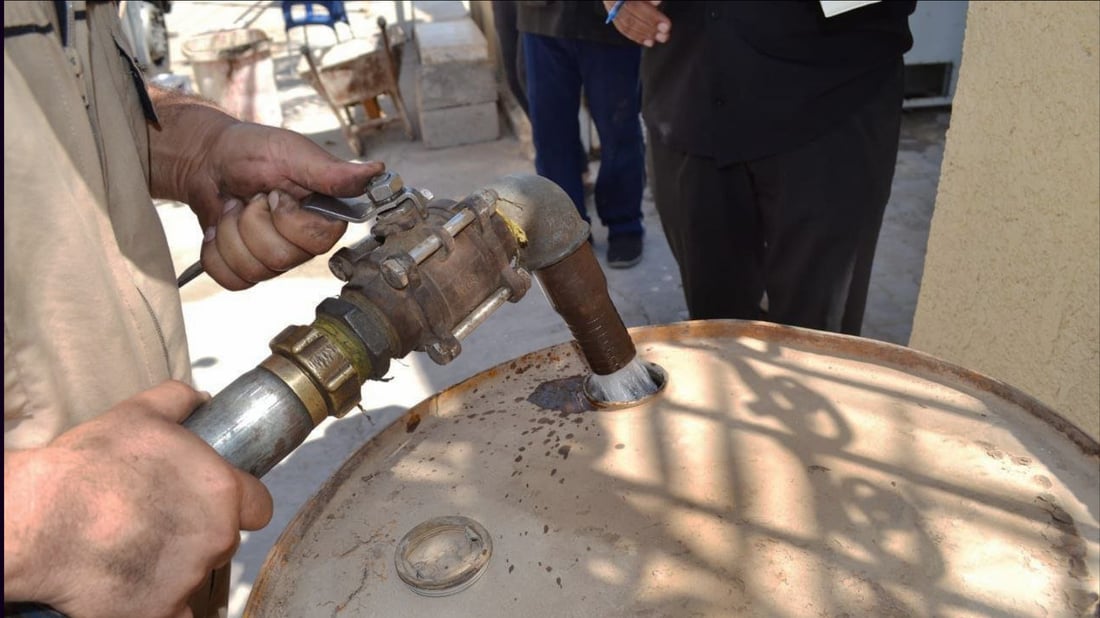
Fuel is transferred into a metal barrel during household kerosene distribution in Erbil
Heating allocations
Iraq’s PM Zaidi orders subsidized winter kerosene for the Kurdistan Region
BAGHDAD — Prime Minister Ali al-Zaidi on Sunday ordered the release of the Kurdistan Region’s allocation of subsidized kerosene for the winter, the Oil Ministry said, without saying how much fuel the Region would receive or when.
Oil Minister Basim Mohammed Khudair al-Abadi told the state-owned Oil Products Distribution Company to speed up the steps needed to supply the allocation, the ministry said in a statement. It did not give the subsidized price households will pay.
The order came a day after the company opened the winter’s first federal kerosene allocation in Baghdad and the central and southern governorates. Families there can buy 100 liters each with an electronic fuel card.
Parliament on Sept. 21 called on the government to secure kerosene for the Region, urging a review of supplies and extra allocations before winter. Lawmakers also asked for electronic tracking of fuel from depots to filling stations and for monthly reports on refinery output, imports and strategic reserves.
On Thursday, the ministry said Iraq’s strategic reserves of kerosene and cooking gas would cover domestic demand through the winter. It did not say how large the reserves are.
Kerosene, known locally as white oil, is the main heating fuel for most households in the Kurdistan Region, where winter temperatures drop sharply in the mountains. For the 2025-2026 winter, the Kurdistan Regional Government set an allocation of 200 liters per household at a subsidized 103,500 dinars (about $78 at the time). Distribution started in high-altitude areas of Erbil, Sulaymaniyah, Halabja and Duhok governorates.
By Jan. 4, 2026, the Region’s Ministry of Natural Resources said nearly 135 million liters had gone to 674,501 families. Another 415,222 households were still waiting for their share.
Federally supplied kerosene reached the Region’s cities from January, at 100 liters for 31,000 dinars (about $23 at the time). In March, distribution resumed in Sulaymaniyah after a halt of more than a month. Local officials said about 9 million liters of a planned allocation of more than 19 million had reached the governorate.