
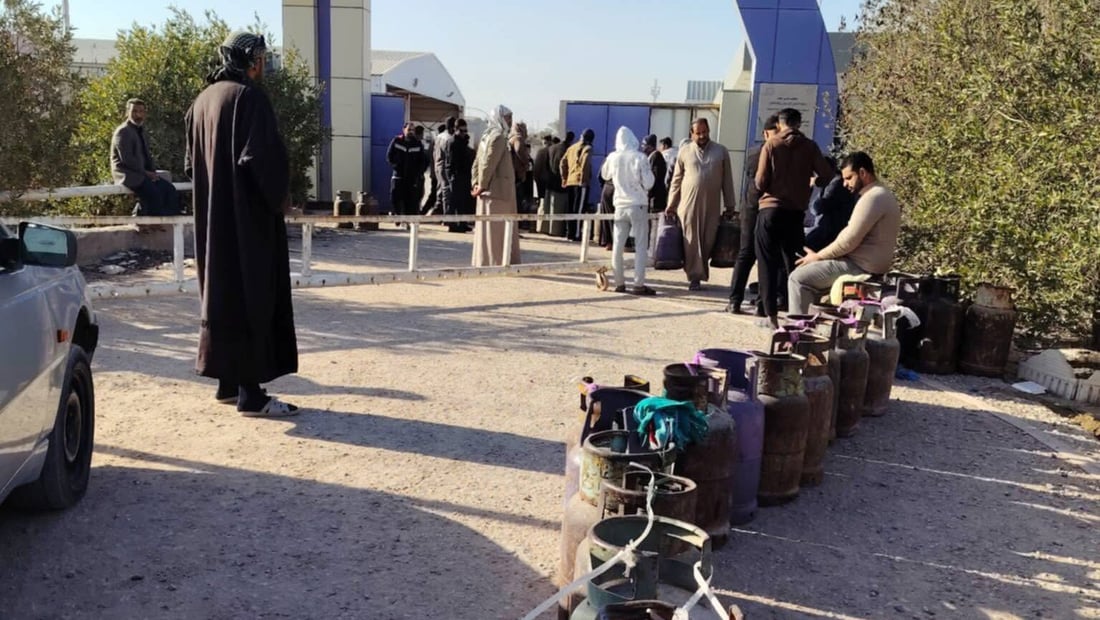
Residents queue with empty cooking gas cylinders outside a government-run gas filling plant in Najaf governorate in January 2026. Photo by 964media.
Iraq says kerosene and cooking gas reserves will last the winter
BAGHDAD — Iraq has enough kerosene and cooking gas in reserve to meet domestic demand through the winter, the Oil Ministry said Thursday, months after cooking gas shortages hit at least 13 governorates.
“There is a strategic reserve of kerosene and cooking gas,” ministry spokesperson Salim al-Rikabi told the state-run Iraqi News Agency. “This reserve is sufficient to cover domestic needs in the winter season.”
Rikabi did not say how large the reserves are. Earlier this month, he told the state-run newspaper Al-Sabah that the ministry had secured a strategic kerosene reserve as part of early preparations for winter and was still adding to it.
Fuel reserves have come under scrutiny from lawmakers. In September, parliament asked the government to report every month on refinery output, imports and strategic reserves. It also asked for kerosene to be secured for the Kurdistan Region before winter. Days earlier, Oil Minister Basim Mohammed Khudair al-Abadi had told parliament that strategic gasoline stocks had fallen to about 107 million liters from around 350 million.
In January, the state-run General Company for Gas Filling and Services denied reports of a cooking gas shortage and said it held ample reserves. By April, shortages had been reported across at least 13 governorates, with long queues forming and mobile vendors disappearing from some areas.
The ministry responded that month by launching a fuel card system for cooking gas, allocating two cylinders per family each month. In the Kurdistan Region, the price of a cylinder had reached 40,000 dinars (about $26 at the time).
Most households in Iraq and the Kurdistan Region depend on 11-kilogram gas cylinders for cooking and heating water. The cylinders are filled at specialized plants supplied with gas produced at domestic oil fields and are usually sold by retailers at government-set prices.
Iraq also distributes subsidized kerosene for heating each winter, at prices far below market levels. In October 2025, the ministry opened that year’s allocation at 150 dinars a liter (about 11 cents at the time), with 100 liters per family in the northern governorates of Nineveh, Kirkuk, Salah al-Din and Anbar, where temperatures drop earlier.