
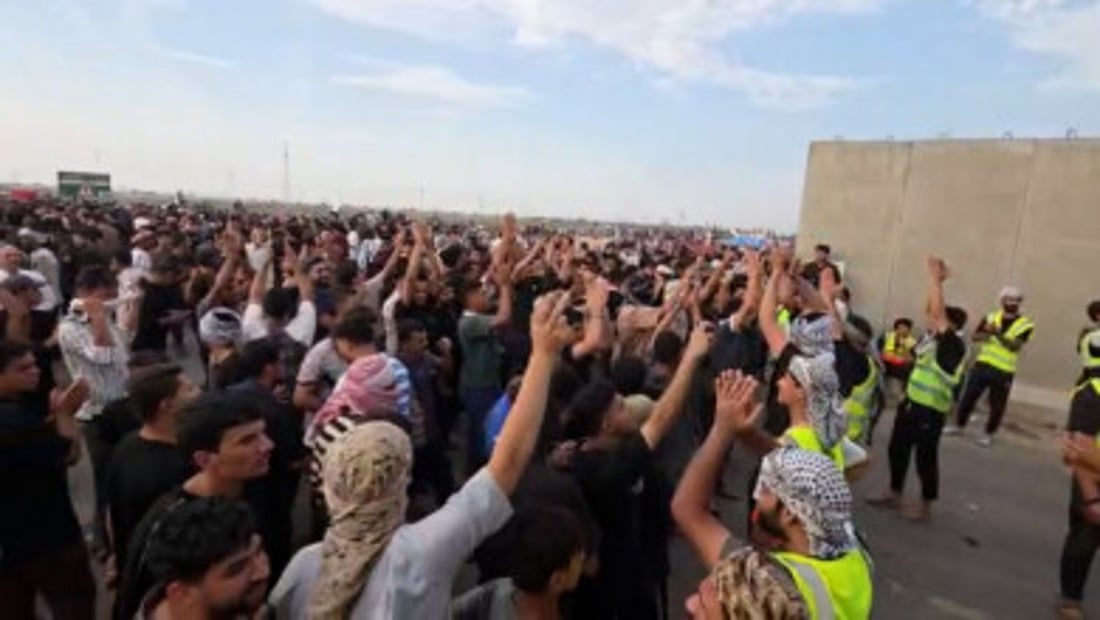
Basra protesters shut West Qurna 1 oil station, set 3-day deadline
BASRA — Protesters from tribes and communities in Basra’s northern Qurna and Sadiq districts shut down Station 8 at the West Qurna 1 oil field on Tuesday, demanding better public services, living conditions and jobs for residents who live near oil facilities.
The protesters gave the federal and local governments three days to respond. They called the closure of Station 8 the first step in an escalation and warned that they would shut all the oil fields in the area if the deadline passed without action.
The demonstration began on the Ya Hussein road in solidarity with protest movements across northern Basra’s districts. Participants said their communities still lacked services and jobs despite living next to the oil fields, and called on the authorities to act immediately.
Residents of Sadiq district returned to protest sites on Friday and pitched sit-in tents near the entrance to West Qurna 1. They said work on services had stalled and pledged to stay until their demands were met.
Haitham al-Mansouri, who leads the movement in the district, told 964media the protesters wanted work resumed on a bridge linking Sadiq with Ezz al-Din Salim district, jobs for unemployed young people and the rebuilding of the road between Qurna and Basra city, known locally as “Death Street” for its frequent crashes.
Basra Governor Asaad al-Eidani on Sunday rejected any escalation near oil fields after meeting the committee organizing the Sadiq sit-in. In a statement, he said residents had the right to protest within the law and without encroaching on public or private property, but that some demands, including jobs for Basra residents, rested with the federal government rather than the local one.
Eidani said the local government would not allow any escalation that could affect work at the fields, and that it had paid for its service projects in Sadiq from border-crossing revenue.
Earlier on Tuesday, Basra lawmaker Uday Awad urged Prime Minister Ali al-Zaidi to visit the governorate and meet leaders of the protest movement in its northern districts.
“The moment requires listening to the voice of citizens and dealing with their demands in a national spirit, in a way that strengthens mutual trust and preserves Basra’s security and stability,” Awad wrote on Facebook.
Awad leads the parliamentary bloc of Sadiqoun, the political wing of Asaib Ahl al-Haq, an Iran-aligned armed group whose forces operate within the Popular Mobilization Forces.
Protests over jobs and services recur in Basra, Iraq’s main oil-producing governorate. In September, graduates seeking oil sector jobs blocked state oil company sites in Basra. In February 2025, three protesters were injured in clashes at the entrance to the West Qurna 2 field, also in northern Basra.
West Qurna 1, one of Iraq’s largest oil fields, has been operated by China’s PetroChina since ExxonMobil left in early 2024. It was producing about 600,000 barrels a day in November 2025, according to the state-run Iraqi News Agency.