
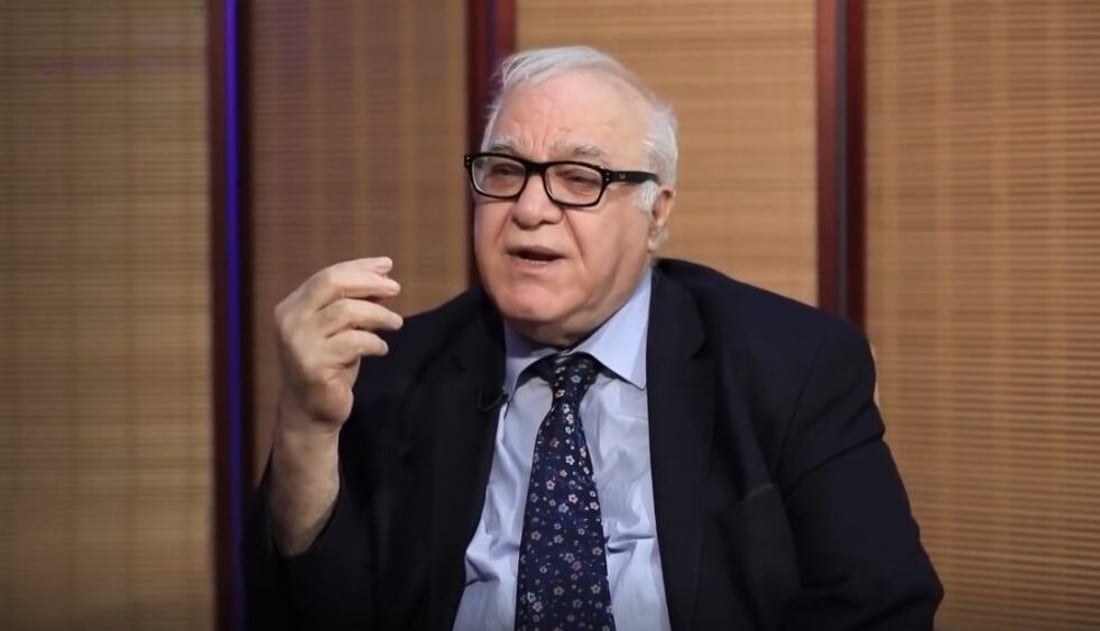
Prime Minister’s financial adviser Mazhar Mohammed Salih
Media Monitor
Salaries to keep being paid even if Hormuz stays shut, adviser says
BAGHDAD — Iraq will keep paying salaries, pensions and welfare benefits even if disruption to oil exports through the Strait of Hormuz continues, the prime minister’s financial adviser said Thursday, describing the crisis as a problem of when revenue arrives rather than whether the money exists.
The government gives “absolute priority to sovereign spending, foremost among it the salaries of employees, retirees and social welfare,” Mazhar Mohammed Salih told the Iraqi News Agency. It will reorder spending priorities, postpone non-essential expenditure and manage liquidity to keep salaries flowing “even under temporary financial pressures,” he said. The difficulty is “primarily related to the timing of revenue inflows rather than a permanent shortage of resources.”
Asked about prolonged disruption at Hormuz, he said pressure on public finances would grow but “that scenario does not necessarily mean salaries will stop. The state possesses tools to deal with temporary crises, including managing financial reserves, rearranging spending priorities, short-term borrowing and activating domestic debt instruments.”
Salih said the Central Bank would keep supporting stability by managing liquidity in the banking sector and facilitating government financing through legal mechanisms without compromising its independence, which could include helping banks buy treasury bills and bonds while avoiding direct monetary financing except in exceptional legal circumstances. The government would also lean on higher non-oil revenue, treasury liquidity, domestic borrowing and, if needed, concessional external borrowing. He said the measures should not affect the Central Bank’s foreign currency reserves.
Restoring oil revenue is “the most important factor” in regaining fiscal balance, he said, adding that Iraq should diversify export routes through regional border crossings and pipelines. “The duration of the crisis depends on the speed of restoring oil revenue flows, oil prices, regional and international developments, as well as the efficiency of public financial management. If the crisis remains limited to a temporary liquidity shortage, the measures are also likely to be temporary.”
Iraq exported 32.1 million barrels of crude and condensates in May and June for about $2.34 billion, roughly $1.17 billion a month, according to Oil Ministry figures — an average of about 526,000 barrels a day against roughly 3.3 million before the war. Oil normally provides more than 90% of federal revenue.
The government confirmed last week that Iraq is in a financial crisis and that salaries will no longer follow their previous schedule, spokesperson Haider al-Aboudi said. July pay went out in stages from July 28, with security personnel and Popular Mobilization Forces members covered before civilian ministries, and some permanent Education Ministry staff in Basra did not receive theirs until early August.
Officials and analysts differ widely on what the state owes each month. Health Minister Abdul Hussein al-Mousawi has put the salary bill at 10.8 trillion dinars, Jamal Kocher of parliament’s Finance Committee at 7.8 trillion and analyst Mustafa Hantoush at 7.5 trillion to 8 trillion, while Finance Ministry accounts for the first four months of the year show wages running at about 5 trillion. Kocher has called for the Central Bank to create money and Hantoush for a 10 trillion dinar borrowing law.