
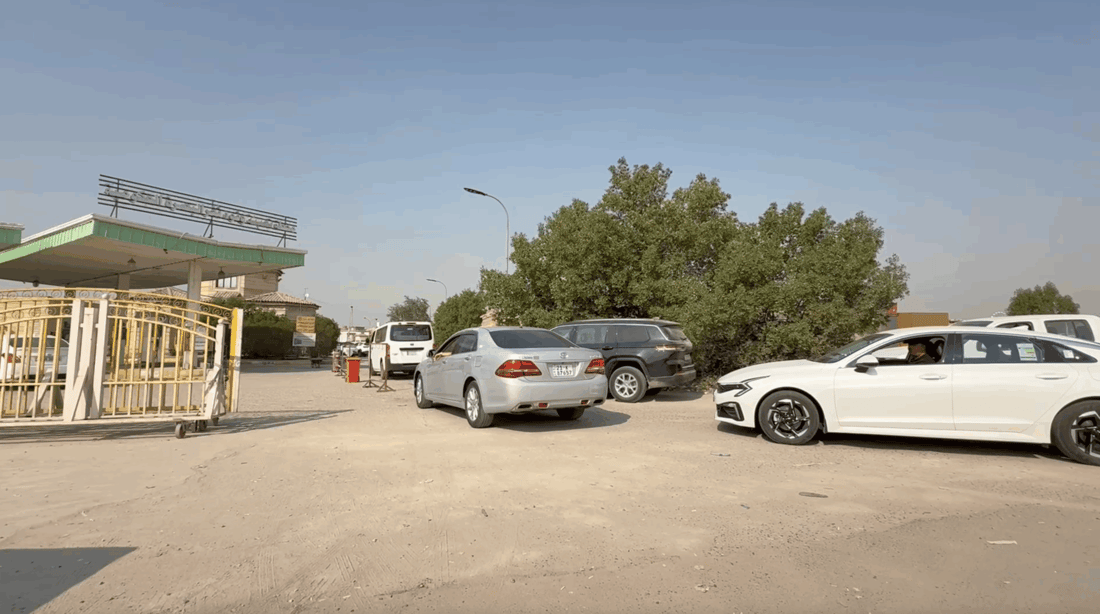
Drivers line up outside a fuel station in Basra during the ongoing premium gasoline shortage.
Iraq needs 5 million litres of imported petrol a day, says oil minister
BAGHDAD — Iraq must import at least 5 million litres of petrol a day to cover the gap between what it produces and what it burns, the oil minister told parliament, ten months after the government declared self-sufficiency and ordered imports stopped — and strategic stocks have fallen by more than two thirds.
Stocks that once stood at around 350 million litres are now about 107 million, Basim Mohammed Khudair said. Oil Products Distribution Company figures presented to lawmakers showed petrol production averaged 28.857 million litres a day in August against consumption of 34.54 million, with imports of 3.907 million a day. That leaves roughly 1.8 million litres a day still being drawn from reserves, at which rate the remaining stock would last about two months.
The government ordered a halt to petrol imports in November 2025, saying domestic production had reached self-sufficiency. By June the ministry was acknowledging a shortfall of 4 to 5 million litres a day after a foreign company withdrew from the Fluid Catalytic Cracking project at the southern refineries over security concerns, and it said the gap was being covered from stocks. In July Khudair said Iraq was self-sufficient in diesel and kerosene but not petrol.
Total petroleum product output has risen by about 4 million litres a day to roughly 37 million, he said, but petrol still falls short. The ministry agreed in August with Japan’s JGC to resume the FCC work, and says the unit will add about 5 million litres a day once running — roughly the volume now being imported. Iraq is seeking more petrol from Jordan, Saudi Arabia and the United Arab Emirates, and European supplies routed through Syria.
The shortage has put queues at filling stations in several governorates, which the ministry blamed on the production gap and delays to imported cargoes during the regional crisis. The Oil Ministry refused a Kurdistan Regional Government request for extra supply this month, citing reserves at their minimum critical level. Lawmakers called for shortages in Nineveh, Kirkuk and the Kurdistan Region to be addressed, for fuel to be secured for farmers at the start of the season and for kerosene to be stocked for winter.
Parliament Speaker Haibat al-Halbousi said fuel shortages are unacceptable for an oil-producing country, calling on the ministry and refineries to present plans to raise output, rebuild strategic stocks and reach lasting self-sufficiency.