
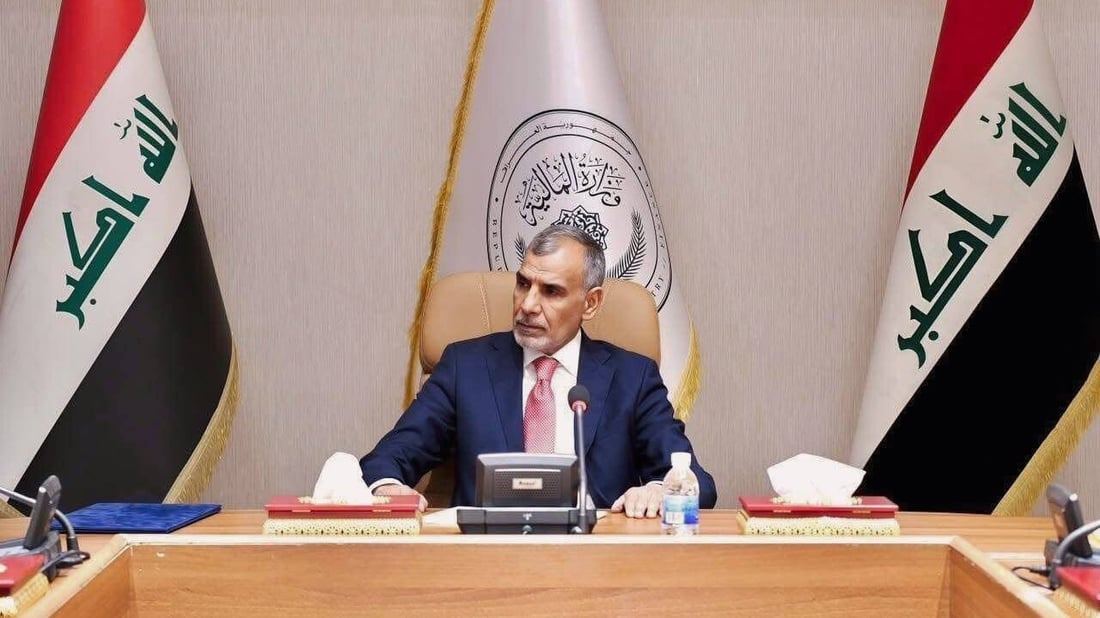
Finance Minister Faleh Al-Sari
Daily laborers included
Contract workers to be made permanent in 2027 budget
BAGHDAD — Contract employees and daily wage workers will be moved onto the permanent government payroll under the 2027 federal budget draft, the finance minister said, without saying how many people or what it will cost.
Falih al-Sari announced it at a meeting of the Higher Committee for Budget Preparation. The step followed work by ministry departments including “an inventory of the numbers and data, calculating the financial costs resulting from their permanent appointment, and securing the necessary financial allocations,” the ministry said. Sari said the file had moved “from the stage of demands to the stage of official procedures” by being placed in the draft. Neither the count nor the cost was published.
It would add to an already heavy payroll. The state spends 7.7 trillion dinars a month, about $5.8 billion at the official rate, on salaries and payments reaching an estimated 40 million people, with close to 4 million public employees, 62% of them in the security and military apparatus. The government acknowledged a fiscal crisis in late July and July salaries went out in stages.
The commitment was previously promised for 2026. Parliament’s Finance Committee said in June that the ministry had agreed to include daily wage workers and several categories of contract staff, among them workers under Decision 315, Education Ministry contracts, food-security contracts and posts allocated to governorates. No 2026 budget was passed and Iraq has been operating under the one-twelfth spending rule, with the previous law covering 2023 to 2025 and expiring at the end of last year.
The government revived the file in late August, when spokesperson Haider al-Aboudi said counting and costing had begun for the 2027 budget. A member of parliament’s Security and Defence Committee said on Thursday that all Interior Ministry contract workers were expected to be included, with lawmakers seeking dedicated allocations. The bill is due in parliament by Oct. 15, and Sari has described the aim as a programme and performance-based budget linking spending to priorities and measurable results.