
Alternative Export Routes
Iraq pushes Mediterranean pipeline to cut Hormuz reliance, deputy PM says
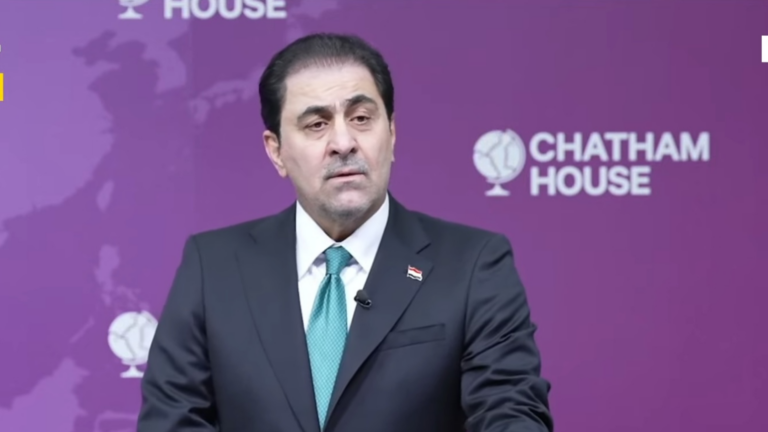
LONDON — Iraq is pursuing a pipeline to carry crude from Basra to Syria’s Mediterranean port of Baniyas so it can rely less on the Strait of Hormuz, Deputy Prime Minister for Energy Affairs Mohsen al-Mandalawi said Wednesday.
Mandalawi was opening a session on Iraq’s energy future at Chatham House’s annual Iraq Initiative conference. He said the government aimed to raise the capacity of the oil link between Iraq’s southern fields and the north to 2 million barrels a day.
“The tensions in the Strait of Hormuz have demonstrated that energy security is not measured by production volumes alone, but by the flexibility of export routes and the continued flow of supplies to global markets,” Mandalawi said.
The planned Basra-Haditha-Baniyas line would let Iraq send part of its crude toward the Mediterranean, mainly to European markets, when Gulf shipping is disrupted, he said.
Iraq produces nearly 5 million barrels a day and exports about 3.6 million, Mandalawi said, and the government aims to raise production to 7 million barrels a day within two years. Opec+ has set Iraq’s production quota at 4.431 million barrels a day through December.
Mandalawi’s two-year timetable is shorter than the one Prime Minister Ali al-Zaidi gave on Monday. Zaidi told a Kurdistan Regional Government delegation in Baghdad that production would reach 7 million barrels a day in 2030 and 10 million in 2032, his office said.
The plans also include raising export capacity at the southern ports from 2.6 million to 5 million barrels a day and strengthening the existing route through Turkey, Mandalawi said.
He said the new export network would need substantial long-term investment, international partnerships and a better investment climate in Iraq.
The government is in the final stages of signing major contracts with ExxonMobil, Chevron and other international oil companies to develop fields and raise production, Mandalawi said. He invited foreign companies to invest in Iraq’s undeveloped oil and gas reserves, saying much of the country’s energy wealth remained untapped.
Iraq signed a memorandum of understanding with Syria in July to pursue a crude export pipeline to Baniyas. A memorandum sets out an intention to cooperate and is not a construction contract. The Oil Ministry said at the time that a consortium of the U.S. companies Chevron and TI Capital and Qatar’s UCC would carry out the project.
Zaidi and Syrian interim President Ahmed al-Sharaa discussed exporting up to 2 million barrels a day through the line in Damascus on Oct. 28. Oil Minister Basim al-Abadi has described the Syrian line as one branch of a wider network: a pipeline from Basra to Haditha in Anbar, with one branch from Haditha to Baniyas and another north to Fishkhabur in Duhok governorate, where it would join the pipeline to Turkey.
Last Thursday, Zaidi promised to remove every obstacle to the pipeline at a meeting with representatives of the U.S. and multinational companies taking part. The government has not announced a construction timetable, cost or financing.
Baghdad has looked for new export routes since the U.S.-Israeli war with Iran disrupted shipping through the Strait of Hormuz, Iraq’s main outlet, from Feb. 28. Exports fell from more than 99 million barrels in February to 18.6 million in March. Abadi said exports recovered to more than 3.4 million barrels a day in October, though most shipments still go through the Gulf.
Iraq exported crude to the Mediterranean before, through the Kirkuk-Baniyas pipeline, which opened in 1952 with a capacity of about 300,000 barrels a day. Iraq shut the line in 1982 after Syria sided with Iran in the Iran-Iraq war and reopened it in 2000. It has been out of service since it was damaged during the 2003 U.S.-led invasion.