
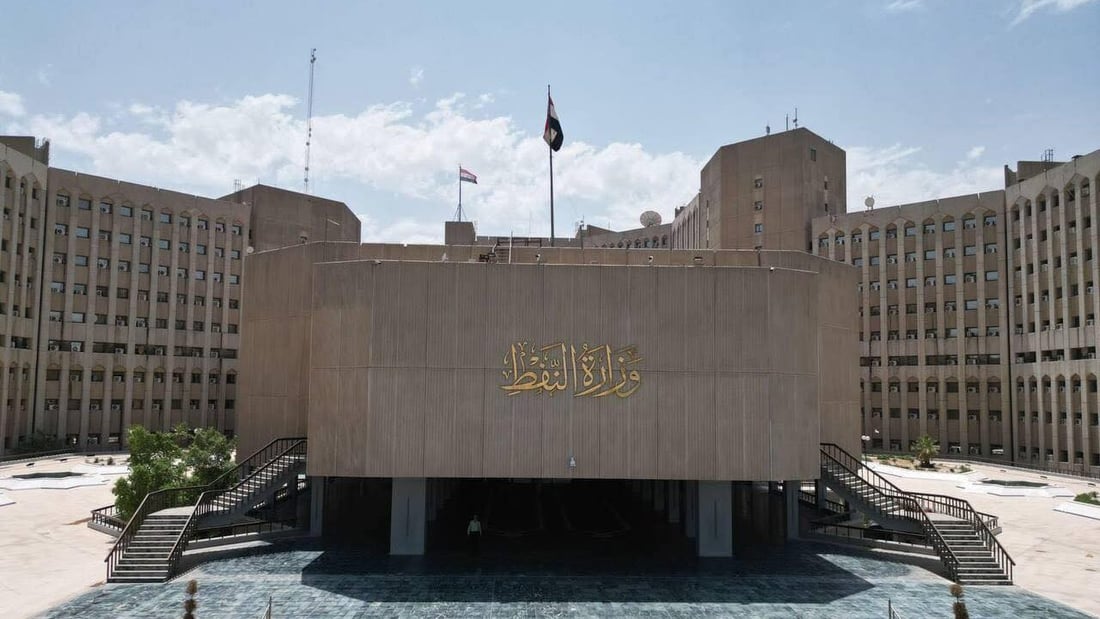
Iraq's Ministry of Oil headquarters
Iraq signs deal to pursue Mediterranean oil export pipeline through Syria
NEWSROOM — Iraq has signed a memorandum of understanding with Syria to develop a crude oil export pipeline linking Iraqi oil fields to Syria’s Mediterranean port of Baniyas, a project backed by Prime Minister Ali Al-Zaidi that officials say is intended to diversify Iraq’s export routes.
Iraq exports the vast majority of its crude through terminals in the Persian Gulf, making the country’s oil shipments vulnerable to disruptions in the Strait of Hormuz. Previous pipeline routes through Syria ceased operations decades ago because of regional conflicts and political instability. Successive Iraqi governments have discussed reviving a Mediterranean export route, but none of those plans have moved beyond the planning stage.
The Prime Minister’s Media Office said the memorandum was signed under Al-Zaidi’s patronage with the Syrian government, “regarding the establishment of a crude oil export pipeline through Syrian territory to the port of Baniyas on the Mediterranean Sea,” the office said.
The Iraqi Oil Ministry said the agreement aims to establish what it described as a “vital energy corridor” connecting Iraqi crude production to international markets via the Mediterranean.
The ministry said the project falls “within a strategic vision to strengthen the energy sector’s infrastructure and expand Iraqi oil export outlets by establishing a pipeline extending to the Syrian Mediterranean coast, contributing to diversifying export routes and supporting energy security.”
A memorandum of understanding outlines an intention to cooperate but is not a final construction contract. Cross-border pipeline projects typically require engineering studies, commercial agreements, environmental assessments, financing arrangements and approvals from multiple governments before construction begins.
The ministry said the project will be carried out by a consortium comprising U.S. companies Chevron and TI alongside Qatar’s UCC.
Iraqi authorities did not provide a timeline, estimated cost or expected completion date for the pipeline.
The ministry said the project is expected to “enhance economic cooperation between Iraq and Syria, open new investment opportunities in the energy sector, support regional trade and energy movement.”
The memorandum of understanding came amid Zaidi’s visit to Washington, where he held talks with President Donald Trump at the White House and met Defense Secretary Pete Hegseth and Treasury Secretary Scott Bessent. Those discussions focused on expanding economic cooperation and U.S. investment, security cooperation and Iraq’s transition after the planned conclusion of the U.S.-led coalition mission in September.
Iraq’s finances were hit hard by this year’s war between Iran and U.S.-Israeli forces. Oil production fell sharply after the closure of the Strait of Hormuz cut southern export routes, with exports dropping from nearly 100 million barrels in February to 18.6 million in March and revenues falling from more than $6.8 billion to about $1.95 billion. Because oil accounts for most state income, the disruption quickly translated into pressure on public finances.
Earlier this month, Iraq’s cabinet approved a package of oil and electricity measures, clearing the way for major deals with U.S. and Qatari companies, including an agreement with Chevron to raise crude output and a study of two long-planned export pipeline routes.
It also authorized Basra Oil Company to enter preliminary agreements with a consortium of U.S.-based Capital TI, Qatar’s UCC and Chevron, which will study and compare two proposed strategic export pipeline routes: Basra-Haditha-Kirkuk-Ceyhan and Basra-Haditha-Baniyas. The studies would carry no financial or contractual obligation for the ministry at this stage, the cabinet said, and it left open the option of adding a state-owned company to the group.