
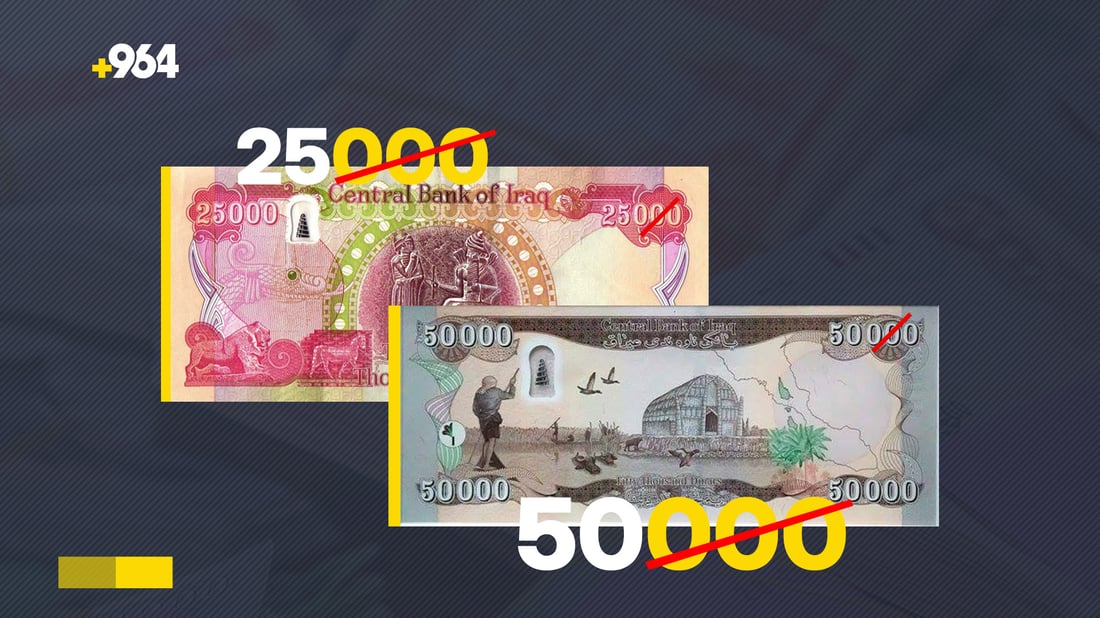
Talk of removing zeros from the dinar is driving people to buy dollars, economist says
BAGHDAD — Public discussion by officials about removing zeros from the dinar has pushed Iraqis to buy dollars as a hedge, helping drive the parallel market rate to its highest recent levels, the economist Amr Hisham said.
Statements about redenomination had shifted expectations, he told the state newspaper Al-Sabah. “Some citizens turned to acquiring dollars, or what is known as an investment portfolio,” he said, describing people reading the discussion as a signal that the value or structure of the currency might change.
The rate was around 158,700 dinars per $100 on Sunday against roughly 150,000 a week earlier, he said, a fall of about 5.5%. Baghdad exchange shops were selling at 160,250 on Saturday, with Erbil and Basra close to 159,500, and the rate was below 155,000 earlier this month. The official rate is 1,320 dinars to the dollar, or 132,000 per $100.
The Central Bank denied on Aug. 26 that it had printed new banknotes with zeros removed, saying reports of currency ready for circulation had no official basis. It did not rule out a future redenomination but said any such project would need an official decision and several legal, regulatory and technical stages. It warned that unverified information about monetary policy could confuse people and damage their financial interests. Removing zeros is a redenomination and would not by itself change purchasing power or inflation, as the economist Mahmoud Dagher noted in 2024.
Hisham listed other pressures: regional tensions, rumours of a change in the exchange rate, and traders buying dollars on the parallel market to avoid the ASYCUDA customs system, the electronic platform used to process and monitor import transactions. A delayed shipment of dollars into Iraq, and rumours about the delay, added demand, he said, as did the cut in the traveller allocation from $3,000 to $2,000 a month in July, particularly for people travelling for medical treatment. Some traders were speculating short-term, pushing the price up in expectation of a fall. He called on authorities to counter rumours and stop traders exploiting the uncertainty.
Reserves remain at reassuring levels, he said, though sustained pressure over several months could worsen conditions. The Central Bank said on Saturday that its reserves were sufficient to meet demand and blamed speculation, expectations and the exploitation of regional conditions for the rise.