
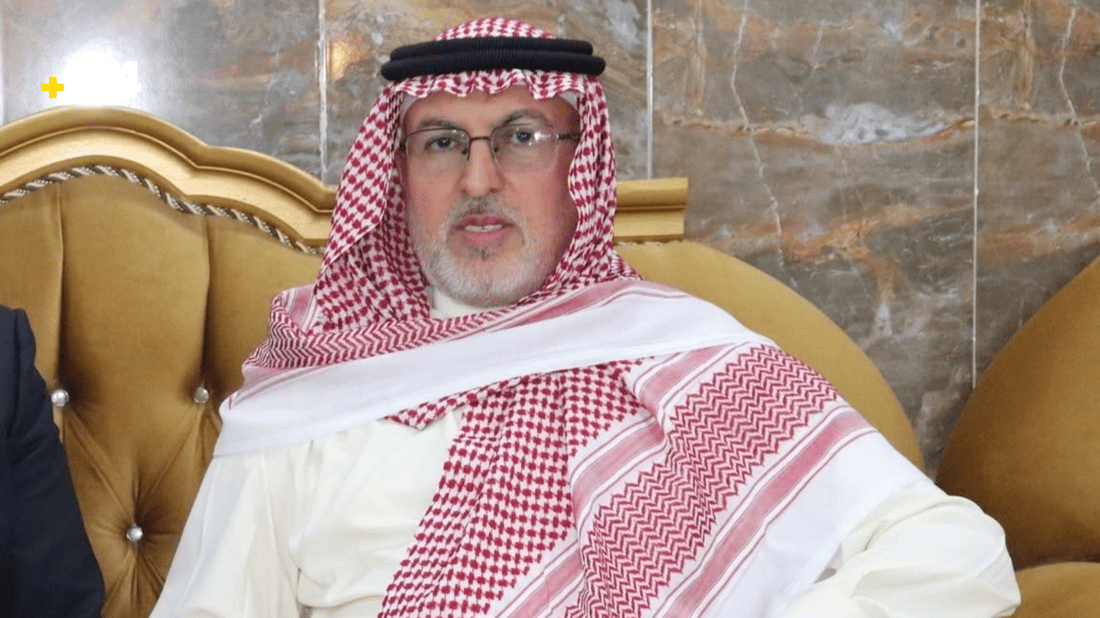
Men with ‘Syrian accents’ drove slain former MP Alwani from Beirut hotel, Iraq says
BAGHDAD — Former Iraqi lawmaker Ahmed al-Alwani checked out of a Beirut hotel less than an hour after arriving and left in a white Range Rover with people who spoke with Syrian accents, Iraq’s chief security spokesperson said Thursday.
Lt. Gen. Saad Maan, head of the Security Media Cell, gave the account to the state-run Iraqi News Agency. He said the details came from constant contact with Iraq’s ambassador in Beirut and from security inquiries. He also said the Lebanese owner of the apartment where Alwani’s body was found has been detained as a precaution.
According to Maan, Alwani flew from Erbil to Beirut on a Middle East Airlines flight on Nov. 5. Surveillance footage showed that he arrived normally and was carrying an ordinary passport, Maan said. He took a taxi from the airport to a hotel near Raouche, a seafront district of Beirut, and checked into his room.
Less than an hour later he checked out. When the staff asked him why, he said friends had arrived for him and he was going with them, Maan said.
Questioned by security forces, the hotel’s owners said the people spoke with Syrian accents and that Alwani got into a white Range Rover with them, Maan said. “According to the details the hotel owners gave, it appeared that his relationship with them was close,” he said.
Maan did not identify the people. He said Alwani called his family twice, the last time from the apartment he had gone to with them in Tariq al-Jdideh, a mainly Sunni district of Beirut.
Alwani’s media office has given a different account. On Wednesday it said that, according to the information available to it, he did not stay at any hotel on the day he arrived. It said surveillance footage showed people leaving the apartment at 4:55 p.m., 14 minutes after his flight landed, and that they may have returned around 11 p.m. before leaving the building at 11:57 p.m.
The office said its last call with Alwani came at 9:05 p.m., when he said he had arrived in Beirut and was moving from the airport to his residence. Maan did not address the office’s account.
Bashar al-Dulaimi, the director of the media office, told the Saudi newspaper Okaz that Alwani had been preparing to attend the Iraq Initiative conference in London on Wednesday. Instead, Alwani told him he had to make a necessary trip, without saying where or why, and asked him to postpone his appointments, Dulaimi said.
The case came to light on Tuesday morning, Maan said, when Azhar al-Alwani, the former lawmaker’s cousin and brother-in-law, called Ambassador Mohammed Reda al-Husseini to ask about his disappearance. The embassy filed a formal report with Lebanon’s security agencies so an investigation could begin, since there was no sign at that point that he had been killed.
That evening, the director of Lebanon’s General Security, Maj. Gen. Hassan Choucair, told the ambassador that an unidentified body had been found in an apartment in Tariq al-Jdideh, Maan said. Early information suggested the dead man was Syrian, because a Syrian had rented the apartment.
The owner was detained because he should have held the tenants’ identity papers, Maan said. According to the owner, the renters told him they would not stay long, paid him $200 a night instead of $100 and promised to pay the rest and hand over their papers two days later.
The owner went back on Sunday to collect the rest of the rent and found no one there, and found no one again on Monday, Maan said. When he noticed an unusual smell, he called the police, who opened the apartment and found the body inside.
Husseini went with the consul, embassy staff and Alwani’s relatives to the government hospital in Zahle, in the Bekaa Valley, to see the body. It had begun to decompose and had lost some of its features, and the relatives could not be sure it was him, Maan said.
Lebanon’s top prosecutor, Judge Ahmed Rami al-Hajj, ordered a DNA test and asked for a first-degree relative to come, Maan said. On Wednesday morning the relatives checked the body again and identified it as Alwani’s. Husseini said the same day that the body was Alwani’s but that a DNA match was still needed before it could be taken to Baghdad.
Alwani’s son, Talha al-Alwani, arrived in Lebanon on Wednesday afternoon and gave a DNA sample, Maan said. Investigators also took his statement on when his father left, why he made the trip and whether the family knew the people he met.
Lebanese Prime Minister Nawaf Salam condemned the killing on Wednesday and praised the judicial and security agencies working to uncover its circumstances. Beirut “cannot remain an arena for crime and lawlessness,” he said.
Maan said the Iraqi National Intelligence Service was working closely with the embassy. He said many people had rushed to make sectarian remarks without regard for the country’s interest, some of them well-known figures who gave statements and interviews to the media. He did not name them, and said judicial action against those who stirred up sectarian rhetoric was possible.
“We regret Alwani’s death, but it is not right to exploit people’s blood to achieve interests at the expense of the nation’s security,” Maan said.
Earlier Thursday, the Security Media Cell called the killing “a heinous and condemned crime” in a statement and said the case should be handled under the law before investigations were complete. It said the committee set up to combat sectarian, ethnic and racial rhetoric had picked up incitement around the case and would take legal action against anyone found to have spread speech that targets the country’s communities, incites hatred or threatens civil peace.
Prime Minister Ali al-Zaidi approved the committee on Sept. 2. Maan chairs it and led its first meeting on Sept. 8.
Alwani, a Sunni former MP from Anbar, played a prominent role in the 2012-2013 protests against the government of Nouri al-Maliki, then prime minister. Security forces arrested him on Dec. 28, 2013, in a raid on his Ramadi home that killed his brother and several guards. A court sentenced him to death in 2014 for killing two soldiers, and he was freed in 2025 under Iraq’s General Amnesty Law.
Iraqi authorities are waiting for the DNA result before sending the body home, Maan said. Lebanese authorities have not publicly named any suspect, said how Alwani died or given a motive for the killing.