
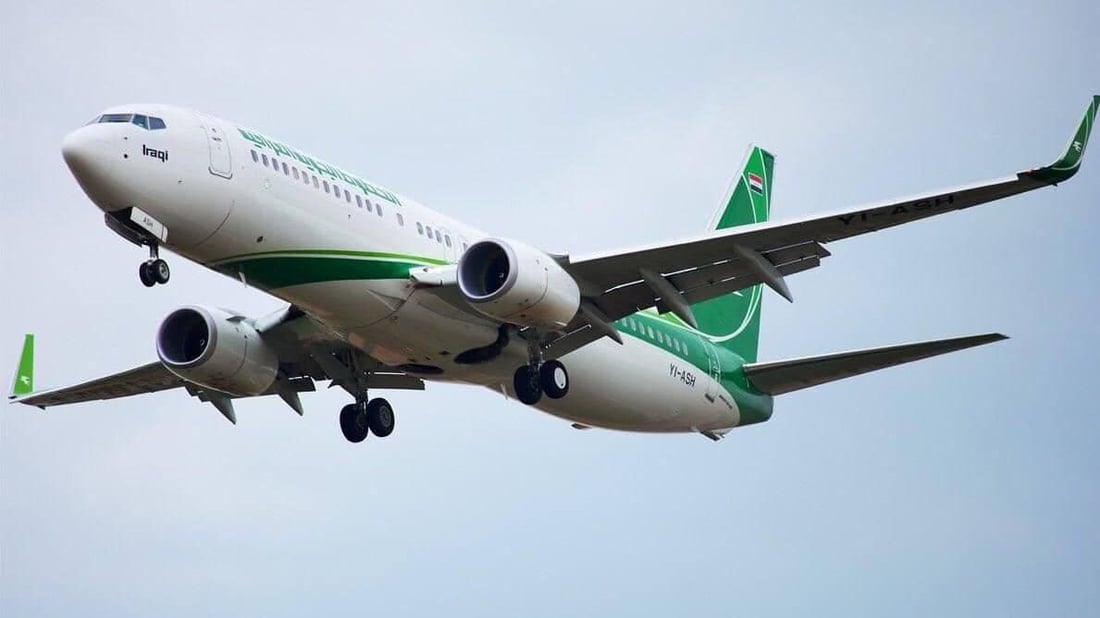
An Iraqi Airways passenger plane prepares to land at an airport.
Iraqi official blames private handlers for Iranian flight halt
BAGHDAD — An Iraqi official said Wednesday that private ground-handling companies, not the government, stopped servicing Iranian aircraft over fear of U.S. sanctions, a day after another official said airports had been instructed to stop receiving Iranian flights.
“The Ministry of Transport bears no responsibility for not receiving Iranian aircraft, nor does the Civil Aviation Authority,” the official told state media. The handling firms are private companies contracted by Iranian airlines to load and unload baggage and board passengers, the official said, and “these companies are the ones that apologized to the Iranian airlines for providing their services out of fear of being subjected to sanctions.” Airports rent space to such firms for fees but do not intervene in their contracts, and the aviation authority only grants approvals under reciprocal arrangements with Iran and international rules, the official said.
That account differs from what an Iraqi official told Al Jazeera on Tuesday: that airports had been instructed to stop receiving Iranian aircraft from midnight, and that the Foreign Ministry had told the Transport Ministry to halt support for Iranian aviation at Iraqi airports. Two government sources told AFP on Monday that Iraq would enforce the ban from dawn Tuesday in compliance with the U.S. Treasury decision. The government has issued no official statement.
Iran’s Civil Aviation Organization said Tuesday that Baghdad and Muscat airports would stop receiving Iranian flights from midnight and that talks were under way to redirect Baghdad-bound services to Najaf. “Starting at 24:00 tonight local time, Baghdad and Muscat airports will not receive Iranian flights,” its spokesperson said, adding that other routes including Istanbul would continue. A separate Iraqi source told Al Arabiya Al Hadath that Najaf could be exempted.
Travel agencies told 964media the effect was already showing. In Baghdad, bookings on Iranian carriers had fallen by as much as 70%, some fares had been cut by about half and passengers were asking about refunds. In Najaf, agency owners said around 90% of their business depended on Iranian airlines and warned that a long suspension would push travellers onto lengthy overland journeys to Mashhad and Qom.
U.S. Treasury Secretary Scott Bessent said on Monday that Iranian airlines would effectively cease international operations from Sept. 23 as sanctions on Iran’s aviation sector took hold. The Badr parliamentary bloc warned the government on Tuesday against complying and demanded that it publicly state its position.