
Deadline Thursday
Maysan council chief threatens civil disobedience unless Iraq’s al-Sheib border with Iran reopens
MAYSAN — The head of Maysan’s governorate council threatened Sunday to launch a civil disobedience campaign and block the roads linking the governorate to the rest of Iraq unless the government reopens the al-Sheib border crossing with Iran by Thursday, Oct. 29.
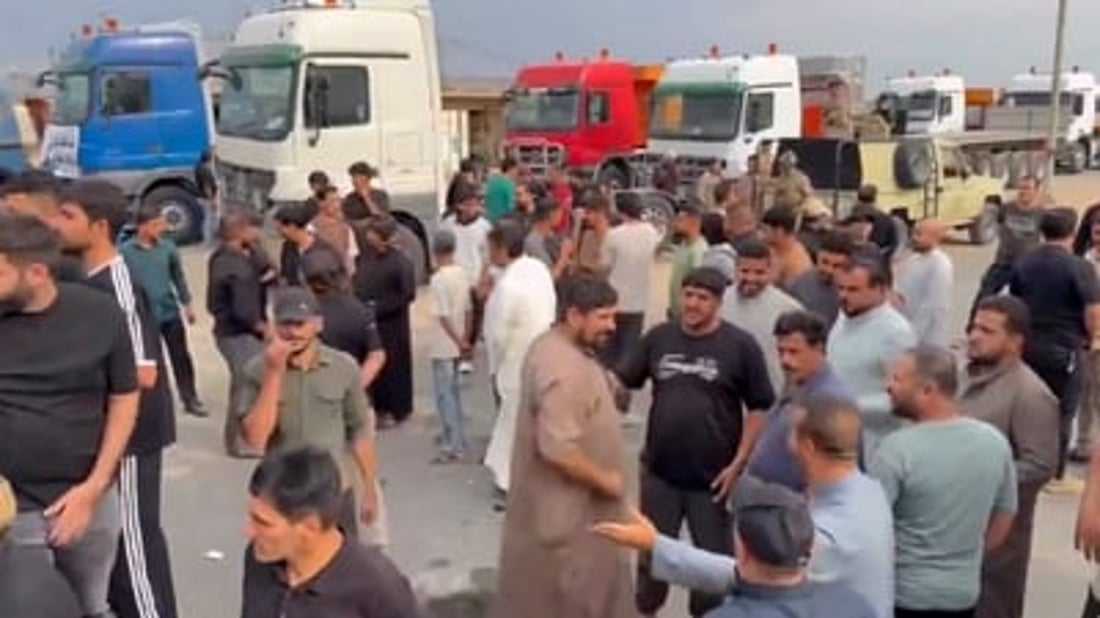
Mustafa Idair al-Muhammadawi made the threat at a news conference during a protest by dozens of truck drivers at the crossing, who demanded that Prime Minister Ali al-Zaidi reverse the closure, which they say has disrupted trade and put thousands of livelihoods at risk.
If no agreement is reached by Thursday, residents will declare civil disobedience and block all roads linking Maysan to other governorates, Muhammadawi said. The protesters were only a small share of the governorate’s residents, he said, but their demands reflected wider concern about the economic cost of the shutdown.
“Four thousand citizens depend on this crossing for their livelihoods. What will these families do without an alternative?” he asked.
Muhammadawi said he had joined the protest as a Maysan resident rather than in his official capacity, and accused the government of jeopardizing families who depend on cross-border trade. He also asked why Maysan should bear the economic cost of any attempt to put pressure on Iran, without offering evidence of outside pressure behind the decision.
He urged Maysan’s lawmakers to find a solution, saying it had been agreed on Saturday to pursue the matter through parliament.
Al-Sheib closed at 6 a.m. on Wednesday, Oct. 21, to goods and travelers under Zaidi’s instructions, and truck drivers first protested the closure on Thursday, calling the crossing a lifeline for Maysan’s economy and asking why other crossings with Iran remained open.
The government has given differing explanations. Spokesperson Haider al-Aboudi said the crossing needed technical and logistical upgrades, while government adviser Abdul Amir Taiban said the closure was meant to stop drugs and counterfeit currency from entering Iraq and denied it was taken under U.S. pressure or to impose a blockade on Iran.
Iran’s embassy in Baghdad on Saturday rejected Taiban’s smuggling claims as false and urged Iraqi authorities to respond to remarks it said could damage relations. Tehran had earlier said it received no advance notice of the closure, which Iraqi officials dispute.
Lawmaker Karim al-Muhammadawi, a member of parliament’s Security and Defense Committee, has challenged the government’s technical explanation, saying the crossing was operational and vital for agricultural imports and local jobs. Zaidi said Friday that closing the borders would hurt both Iraq and Iran because of the volume of trade between them.