
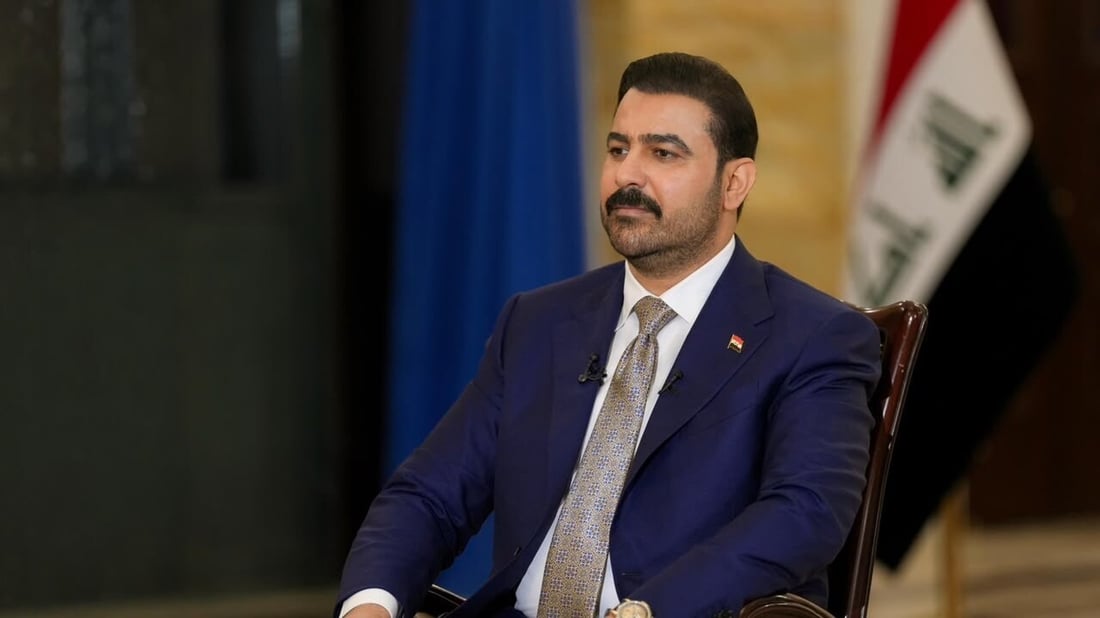
Iraqi Prime Minister Ali Al-Zaidi
Iraq’s envoy confirms Zaidi’s unannounced Iran visit in ‘efforts toward de-escalation’
BAGHDAD — Prime Minister Ali al-Zaidi made a private, unannounced visit to Iran to ease regional tensions and defuse the risk of war, Iraq’s ambassador in Tehran, Yasser al-Hajjaj, said Monday.
Hajjaj told the state-run Iraqi News Agency that the trip was private and had not been announced. He did not say when Zaidi traveled or whom he met.
“Iraq is not on the sidelines of what is happening in the region. Rather, it is actively pursuing its supreme national interests under the leadership of Prime Minister Ali al-Zaidi, directing its diplomatic efforts toward de-escalation, preventing further escalation and strengthening regional stability,” Hajjaj said.
Iranian Foreign Ministry spokesperson Esmail Baghaei said Monday that Tehran had not sent Washington a new proposal and that its existing plan still stood. Iran remains in regular contact with the mediators, Pakistan and Qatar, he said. He listed Iran’s demands as an end to the U.S. naval blockade of its ports, the lifting of sanctions, the release of frozen Iranian assets and an end to the war.
Zaidi told President Donald Trump in a phone call on Thursday that Iraq would not allow its territory to be used to launch attacks on neighboring countries, the prime minister’s media office said. The statement did not say what Trump told him.
The call came two days after the U.S. midterm elections, as Qatari mediators pursued indirect talks between Washington and Tehran. On the day of the midterms, Trump told Fox News that U.S. forces had hit an anti-aircraft facility on Iran’s Qeshm Island, near the Strait of Hormuz, and described it as a minor attack.
On Friday, Foreign Minister Fuad Hussein proposed to Iranian Foreign Minister Abbas Araghchi that a committee of regional foreign ministers visit Tehran and Washington, the Iraqi Foreign Ministry said.
Zaidi made his first official visit to Tehran in July, when he met Iranian President Masoud Pezeshkian and said Iraq would not allow any threat against Iran to originate from Iraqi territory.
Shipping through Hormuz, Iraq’s main export route, has been disrupted since the U.S.-Israeli war with Iran began on Feb. 28, and the conflict has continued at varying intensity despite a ceasefire announced in April.