
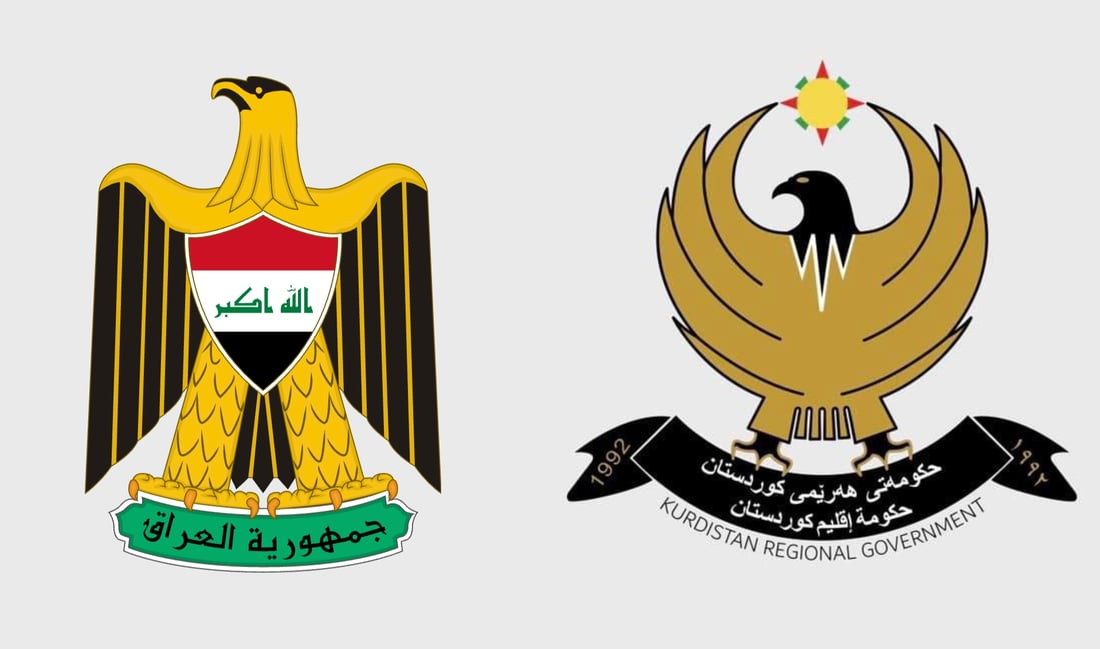
Emblems of the Iraqi Federal Government (left) and the Kurdistan Regional Government (right).
KRG accuses Baghdad of distorting oil dispute, cites militia attacks and dollar embargo
ERBIL — The Kurdistan Regional Government’s Ministry of Natural Resources accused the federal government Sunday of misrepresenting the reasons behind the halt of crude oil exports through the Iraq-Turkey Pipeline, saying Baghdad’s account “distorted the issue” and sought to “mislead public opinion.”
The ministry said the federal Oil Ministry “did not discuss all dimensions of the problem,” pointing to two primary barriers it says Baghdad has refused to acknowledge.
The first is economic: the KRG accused Baghdad of imposing a “suffocating embargo” since January by refusing to allow dollars to reach Kurdistan Region traders under the pretext of implementing the ASYCUDA digital customs system — a move it says has brought trade to a complete halt. The ministry said Baghdad refused to grant the region adequate time to implement the system despite repeated requests.
The second is security: the ministry said attacks by what it called “outlaw militias” on oil and gas fields and energy infrastructure across the region have halted production entirely. “As a result of these terrorist attacks, production has stopped and there are no oil products left in Kurdistan to be exported abroad,” it said. It accused Baghdad of failing to respond effectively, alleging that many of the attackers “receive salaries in Baghdad and are armed and funded” by the federal government — while salaries for Kurdistan Region employees arrive late and below the required amount.
The Kurdistan Region has faced at least 200 drone, missile and rocket attacks since the war began Feb. 28, according to Community Peacemaker Teams – Iraqi Kurdistan. Several oil and gas facilities have been hit, including the strategic Khor Mor gas field in Sulaymaniyah, which has been offline since the start of the conflict.
The KRG said it has “expressed its readiness in every way to save Iraq and the Kurdistan Region from this crisis” and called for specialized teams from both sides to sit down and reach a quick resolution. “Kurdistan will no longer be oppressed,” the statement said.
The pipeline, which runs from northern Iraq through the Kurdistan Region to Turkey’s Mediterranean port of Ceyhan and has a capacity of around 900,000 barrels per day, had been shut for more than two years before resuming in September 2025 under a deal that transferred export operations to SOMO, Iraq’s state oil marketer. That agreement was itself the product of years of disputes between Baghdad and Erbil over control of oil production, revenue sharing and the legal framework governing Kurdish exports — disputes that the current crisis has brought back to the surface with renewed urgency.