
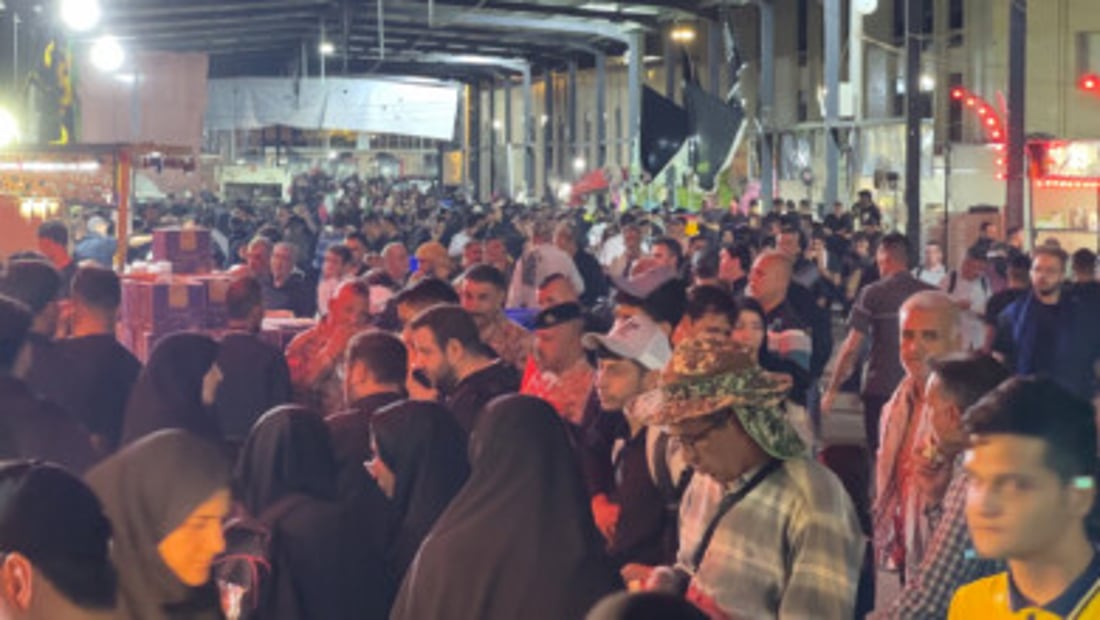
Iranian pilgrims enter Iraq through the Al-Mundhiriyah border crossing in Diyala en route to Karbala for the Arbaeen pilgrimage. (Photo: 964media)
En route to Karbala
Iranian pilgrims say the war has not deterred them from Arbaeen
DIYALA — Nearly 100,000 Iranian pilgrims had crossed into Iraq at the al-Mundhiriyah border crossing by Sunday midnight, and those arriving said the conflict with the United States had not changed their plans.
“My journey to Iraq was without any obstacles,” said Zahra Shahvardi, a pilgrim from Tehran. “The war did not affect my decision to come. The only motivation is visiting Imam Hussein.” She said volunteers at the crossing provided “food, drinks and everything we need,” and that she and her husband would spend a week in Iraq.
Mohammad Bahramian, from Damghan, thanked Iraqis for their hospitality and said the war had not affected his participation, though he said the crossing “needs more toilets and bathrooms.” He planned five days in Karbala and Najaf. Hakim Imani, from Karaj, called the services excellent and comprehensive and described Khanaqin as one of the most generous cities in welcoming pilgrims. “What is being said about the war affecting the movement of pilgrims is not true,” he said. “The circumstances do not prevent us from performing the pilgrimage.”
Earlier this month an attack on the Iranian side of the Shalamcheh crossing was reported to have killed two people and wounded 11 in the arrivals hall during the pilgrimage season. Operations there resumed the same day.
Volunteers from Khanaqin have set up tents outside the passport hall offering food, drinks and rest areas. Abbas Mohammed, who runs one of them, said 15 to 20 mawakib, or volunteer service groups, operate inside the small reception area and about 65 more are spread across the crossing, providing water, meals, juice, tea, prayer areas and places to rest. “The pilgrim receives everything they need as soon as they enter and does not need to stop at the beginning of the journey,” he said.
He said official figures showed 98,323 pilgrims had entered through al-Mundhiriyah by midnight Sunday and about 9,500 had returned to Iran, and that coordination between security, health and service agencies and the volunteer groups had kept the movement running without recorded security or health incidents.
Arbaeen falls on the 40th day after Ashura, marking the killing of Imam Hussein, grandson of the Prophet Muhammad, at the Battle of Karbala in 680. Millions travel to Karbala to visit his shrine, many on foot, with many also stopping in Najaf at the shrine of Imam Ali.
Najaf police have adopted a security and intelligence plan dividing the governorate into 10 security zones, with joint operations rooms involving security forces, the Popular Mobilization Forces and government agencies, a police spokesperson said Thursday. Iraq’s Higher Committee for Mass Pilgrimages reviewed security and public-service plans earlier this month, including arrangements at border crossings. During the 2025 pilgrimage the Imam Hussein Shrine authority said more than 22 million took part, while Najaf authorities said 17 million entered that governorate.