
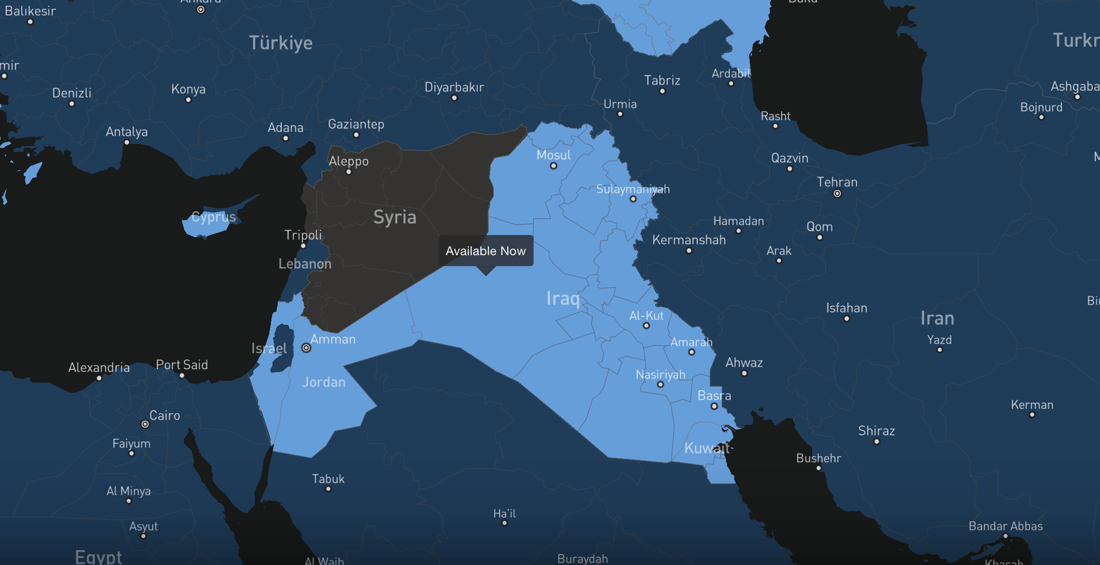
A screenshot from the Starlink website shows Iraq following the launch of the satellite internet service in the country. (Screenshot: Starlink)
Iraqi regulator says Starlink data isn’t in Qatar, concedes there is no gateway in Iraq yet
BAGHDAD — Starlink’s licence is now official and its service legal in Iraq, the Communications and Media Commission said, rejecting claims that Iraqi users’ data sits in Qatar and saying authorities can identify every terminal and its owner.
“Starlink’s license has become official and operating under it is legal in Iraq, and there are subscription requests on the company’s website,” Baligh Abu Kalal, head of the commission’s executive authority, told the Iraqi News Agency. The first subscriptions have been activated after delays for security reviews, and equipment will keep being delivered to people who ordered it.
“The security regulation attached to the Starlink license ensures Iraq’s full control over the data,” he said, adding that authorities hold detailed information on active terminals and their owners and have a direct link with Starlink to identify devices operating in Iraq. “What is being raised about Iraq’s data being in Qatar is inaccurate, and we have full control over the data.”
He also said Starlink had planned to build access gateways inside Iraq only after two years, and that growing demand had led the commission to negotiate earlier installation using Iraqi infrastructure. Without a gateway in Iraq, traffic from Iraqi users lands at gateways elsewhere.
Communications Minister Mustafa Sanad said in August that there was no Starlink ground station in Iraq and that traffic was routed through Qatar, adding that the company had proposed waiting two years. The commission said at launch on July 29 that a security annex gave the prime minister’s office, the National Intelligence Service, the National Security Service and the National Cybersecurity Center oversight of users and devices.
Before the licence, Starlink terminals were treated as unlicensed equipment. Sanad put the number operating illegally at about 42,000; Abu Kalal put the pre-launch user base at about 200,000 people on some 40,000 devices, and customs seized 24 terminals at Baghdad airport in June. Sanad said this month the ministry had accelerated its fibre rollout and faster packages in response.