
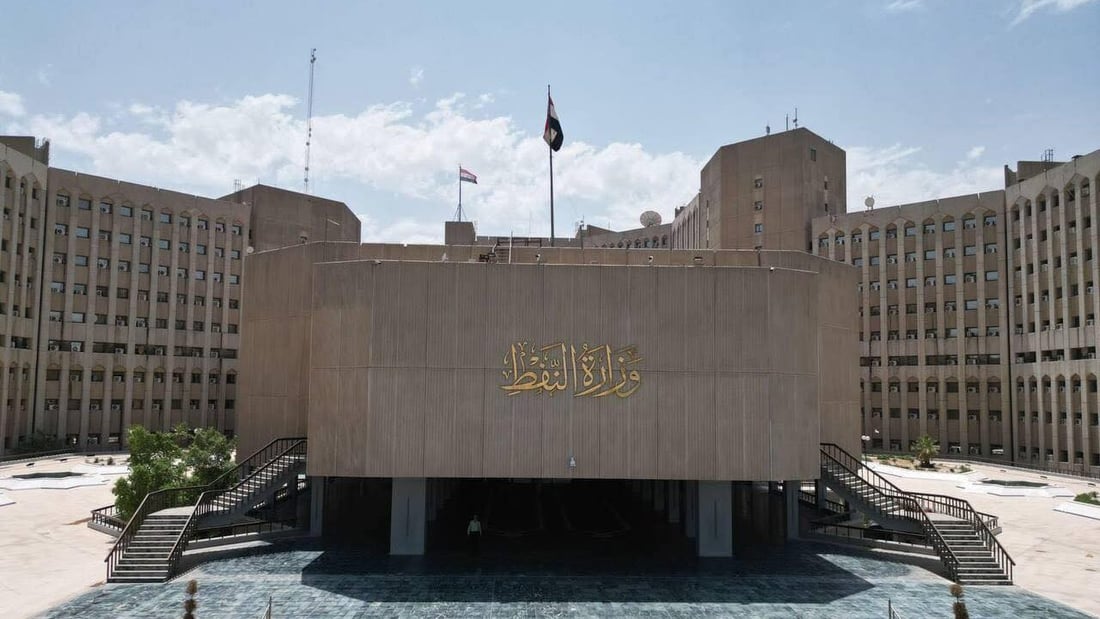
Iraq's Ministry of Oil headquarters
Iraqi oil ministry says Kurdistan Region refusing resumption of exports through key pipeline
BAGHDAD — The Kurdistan Regional Government’s Ministry of Natural Resources has refused to resume crude exports through the northern pipeline to Turkey’s Ceyhan port despite Baghdad’s request, Iraq’s Oil Ministry said Sunday.
The ministry said it had proposed exporting up to 300,000 barrels per day through the pipeline — including at least 200,000 barrels from Kurdistan Region fields — in addition to crude previously exported before the current crisis. The pipeline’s total capacity stands at around 900,000 barrels per day.
Baghdad said it has been in continuous contact with the KRG’s Ministry of Natural Resources since the start of the regional crisis and confirmed its readiness to restart shipments. The Oil Ministry said the KRG has placed several conditions it described as “unrelated” to crude oil exports.
According to reports, those conditions include an end to a de facto dollar embargo Baghdad has imposed on the Kurdistan Region and a resolution to the dispute over imposing the ASYCUDA digital customs system on KRG-controlled border crossings.
The ministry warned that delays would deprive Iraq of revenues that could partially offset losses from halted southern shipments, and renewed its request for an immediate resumption “based on the supreme national interest and in accordance with the constitution and the federal budget law.”
The standoff comes after shipments from southern terminals near Basra were disrupted when regional conflict involving Iran slowed tanker traffic through the Strait of Hormuz, cutting off Iraq’s main export route to global markets. The northern pipeline, which runs through the Kurdistan Region to the Mediterranean, is one of the few alternatives that bypasses the Gulf entirely.
Exports through the pipeline have been repeatedly interrupted over the past decade due to disputes between Baghdad and Erbil over oil production, exports and revenue sharing. Most recently, shipments were halted for more than two years after a 2023 arbitration ruling before resuming in 2025 under an agreement that transferred export operations to SOMO, Iraq’s state oil marketer, allowing Kurdistan Region crude to again flow to Ceyhan.