
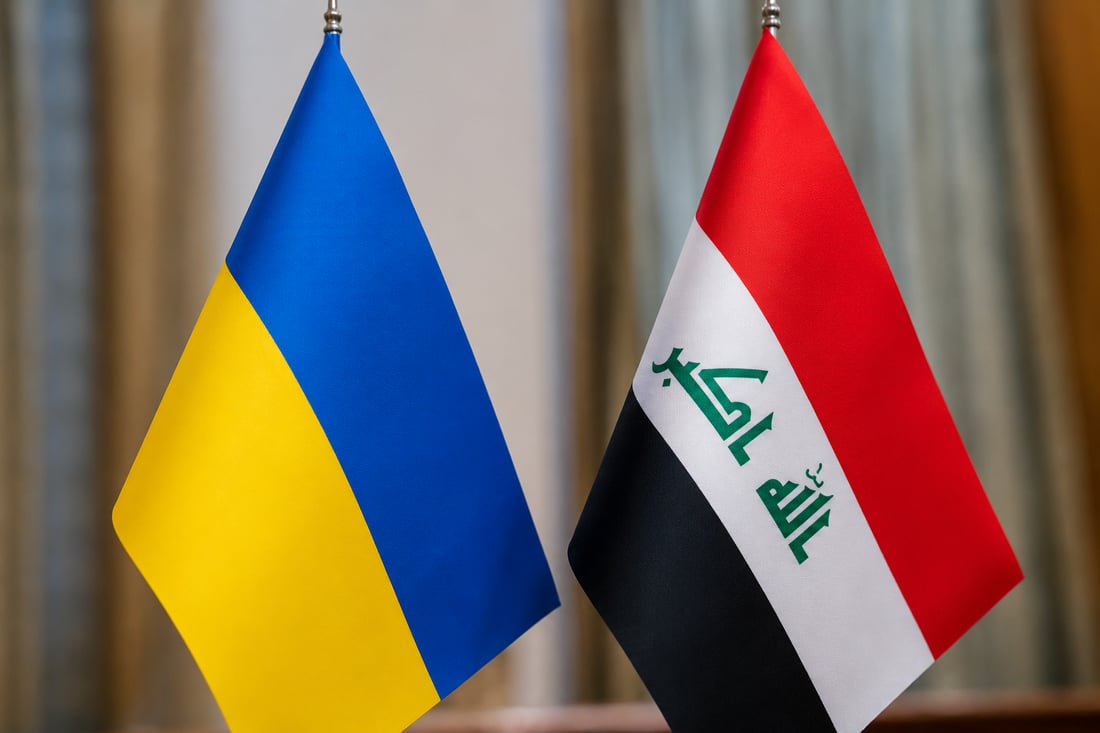
Ukrainian and Iraqi flags side by side
Ukraine rejects Iraqi claim that detainees confessed to attacks on behalf of Kyiv
BAGHDAD — Ukraine on Tuesday rejected an allegation by Iraqi National Security Adviser Qasim al-Aboudi that people detained in Iraq had admitted working for Kyiv and attacking Iraqi facilities, saying Baghdad had produced no evidence and had raised nothing through diplomatic channels before he spoke on television.
Aboudi told Dijlah TV on Monday that authorities had uncovered groups carrying out limited strikes. “There is Ukrainian intervention in Iraq, and we are discovering groups carrying out limited shelling operations. They are cells working for Ukraine,” he said. “We arrested a group of people — they are few — and they admitted that they work for Ukraine. They targeted some Iraqi facilities with shelling.”
Dijlah TV is owned by Prime Minister Ali al-Zaidi.
Asked what interest Ukraine would have in Iraq, he said: “That is the question — what does Ukraine have to do with it? That is why I tell you the file is complicated. It requires extensive investigation before we accuse this side or that.” He did not identify the facilities, give dates for the alleged attacks or set out evidence for the reported confessions.
Ukraine’s Foreign Ministry said in a statement dated July 28 that it rejects “the unfounded and unsubstantiated allegations” and that no facts support them, “a point the Iraqi official himself acknowledged in his interview.” It said Kyiv learned of the accusations from a live broadcast rather than through official contacts, and called it “unacceptable and irresponsible for a senior official of a friendly state” to make such statements without an evidentiary basis. It said it continues to regard Iraq as an important partner and remains committed to political, economic and humanitarian cooperation.
The ministry also said the remarks align with Russian narratives aimed at discrediting Ukraine and undermining its relations in the Middle East, and urged Iraqi authorities to address the allegations and prevent state institutions from spreading what it called disinformation.
Aboudi’s comments came a day after Iran vowed to respond to a Ukrainian strike in the Caspian Sea.Ukraine said Saturday it had hit vessels carrying military cargo linked to Iran, as well as a warship. Tehran said the attack killed one sailor and wounded another, summoned Ukraine’s chargé d’affaires and called it a hostile and criminal act in violation of the U.N. Charter. Foreign Minister Abbas Araghchi said Sunday it could not go unanswered and accused Israel of provoking it, without providing evidence. Ukraine’s ambassador to Israel said the vessel carried drone and missile components bound for Iran; Tehran said it was carrying civilian goods.
Ukrainian President Volodymyr Zelensky separately alleged that Russia had been passing satellite imagery of Gulf states and U.S. military sites to Iran, saying surveillance on July 19 and 20 covered airbases in Bahrain, Jordan and Kuwait.
Iran and Ukraine have been at odds since 2022, when Tehran supplied Russia with the drones Moscow has since used in large numbers against Ukrainian cities. Iraq and Ukraine have no history of publicly alleged hostilities.
In the same interview, Aboudi said between 3,000 and 5,000 Iraqis are believed to have travelled to Russia to enlist in its forces, and that about 200 bodies remain there. He said authorities had uncovered offices in southern governorates recruiting Iraqis for the war, approaching them with offers of work, study places, housing or marriage before placing them under military contracts.
Iraqi authorities have previously announced arrests of suspected recruiters, two of whom received life sentences. Courts have brought such cases under anti-trafficking law and provisions barring citizens from joining foreign armed forces without government approval. Baghdad is also seeking the return of Iraqis held prisoner in Ukraine. “There are many Iraqi prisoners in Ukraine, and communication is continuing to bring them back,” Aboudi said.