
Media Monitor
Iraq weapons deal awaits PM’s signature amid alleged US pressure, Huqooq bloc says
BAGHDAD — A committee of the ruling Shiite Coordination Framework has agreed with Iraq’s armed factions on regulating their weapons, but Prime Minister Ali al-Zaidi has not signed the deal for fear of U.S. pressure, a Kataib Hezbollah-linked lawmaker said.
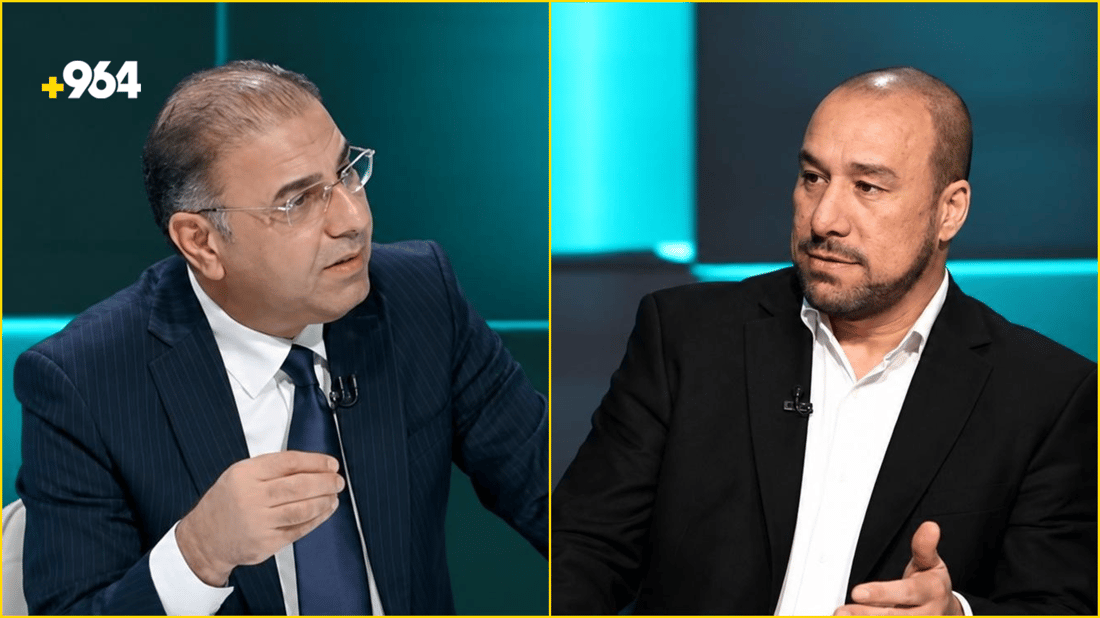
Saud al-Saadi, head of the Huqooq bloc in parliament, said in an interview on Al-Rabia TV that the agreement covered regulating weapons, respect for Iraq’s sovereignty and an end to attacks on Iraqis, whether faction members or soldiers. The Huqooq Movement is affiliated with Kataib Hezbollah, an Iran-aligned armed faction that the United States designated a terrorist organization in 2009.
The negotiations produced a formula both sides accepted, Saadi said. A committee of the government, the factions, the Popular Mobilization Forces and the Framework was to oversee it.
“Who says there are understandings between the government and the factions? In fact, a committee from the Coordination Framework reached understandings with the factions and agreed on a number of issues and provisions,” he said.
“According to the information available, Prime Minister Ali al-Zaidi has not signed it so far,” Saadi said. “There is an agreement and an understanding, and a consensual formula has been reached between these parties, but the agreement has not been signed.”
He challenged the government to make public any deal the prime minister had approved. “If there is an agreement signed by the prime minister, let them announce it,” he said.
Saadi put the delay down to concern over Washington’s reaction. “There is fear of embarrassment and American pressure: will the Americans approve or not? It appears the Americans have not approved,” he said.
The government has not published the text of any agreement with the factions. Hussam al-Hasani, spokesperson for the Hikma Movement, which is part of the Framework, said in an interview published Oct. 26 that some faction leaders had signed the factions’ de-escalation agreement with the government themselves and that others had authorized someone to sign for them. It is not clear whether Saadi was describing the same agreement.
Regulating weapons is the term the factions and the Framework use. The government and Washington have demanded that weapons be restricted to the state. “This agreement provides for regulating weapons, and this is a necessary and important first step. Are the factions uncontrolled gangs threatening security, society and state institutions?” Saadi asked.
He cited Zaidi in support. “Al-Zaidi acknowledged in his latest interview that there are no threats to foreign companies. Therefore, the factions are disciplined. They are a deterrent force that helped the state clear the territory,” Saadi said.
He said the deal was also meant to protect Iraqis from attack. “The agreement was supposed to guarantee that sovereignty would not be violated and that Iraqis, whether from the factions or the army, would not be targeted,” he said.
He warned that any new attack would be answered. “If an attack occurs, violating sovereignty, airspace or individuals, there will certainly be a response,” he said.
Saadi also accused Washington of interfering in Iraq’s affairs and criticized the government’s handling of relations with the United States. “Our national vision is based on adherence to the Iraqi Constitution, which states in Article 1 that Iraq is one state with full sovereignty,” he said.
He questioned whether Iraq controlled its own land, airspace and waters. “The question is whether full sovereignty has been achieved on the ground, in the sky and at sea in Iraq, or whether there are dictates, attacks and violations of sovereignty on land, at sea and in the air, along with economic restrictions, security threats, foreign sanctions, flight bans and border crossing closures,” he said.
“The closure of border crossings came under American pressure and at the desire of Tom Barrack, the architect of the Iraqi and Syrian scene,” Saadi said, referring to the U.S. special presidential envoy to Iraq and Syria. He asked whether such decisions reflected “a purely Iraqi vision” or “foreign dictates and American threats.”
The government closed the al-Sheib crossing with Iran in Maysan governorate on Oct. 21, saying its technical and logistical facilities were not ready. Government adviser Abdul Amir Taiban denied that the closure came under U.S. pressure.
Saadi also accused Gulf, American and Israeli media that broadcast in Arabic of using their money and resources to shape public debate in Iraq.
He said the government had failed to push back. “The government should have registered its objection and resorted to diplomatic means through the Foreign Ministry, approached the United Nations and the Security Council, and reconsidered agreements with the American side, which violates sovereignty,” he said.
Iraq marked Sovereignty Day on Sept. 30, when the U.S.-led coalition’s mission in the country ended. Saadi called the celebrations a contradiction. “The government declared a sovereignty day, and political forces celebrated Sovereignty Day. It then became clear that the Americans, whom they had described as friends, were enemies of Iraq, and that sovereignty had been achieved with the Americans’ departure from Iraq. This is a contradiction and a double standard,” he said.
“For us, it is a day of withdrawal, not the achievement of full and comprehensive sovereignty,” Saadi said. He asked why, if sovereignty had been achieved as the parties claim, they “allow America and Israel to violate Iraqi airspace.”
The Framework on Oct. 19 reaffirmed its commitment to bringing weapons outside state control under government authority by June 30, 2027, and authorized Zaidi’s government to take the measures needed to meet the deadline. It did not say how it would respond to factions that refuse.
The government’s disarmament roadmap calls for a 90-day suspension of attacks from Sept. 30, followed by a six-month handover of weapons, with the process due to end by June 30, 2027. Zaidi has also pledged to disarm non-Iraqi armed groups in the country. Kataib Hezbollah and Harakat al-Nujaba have refused to hand over their weapons.